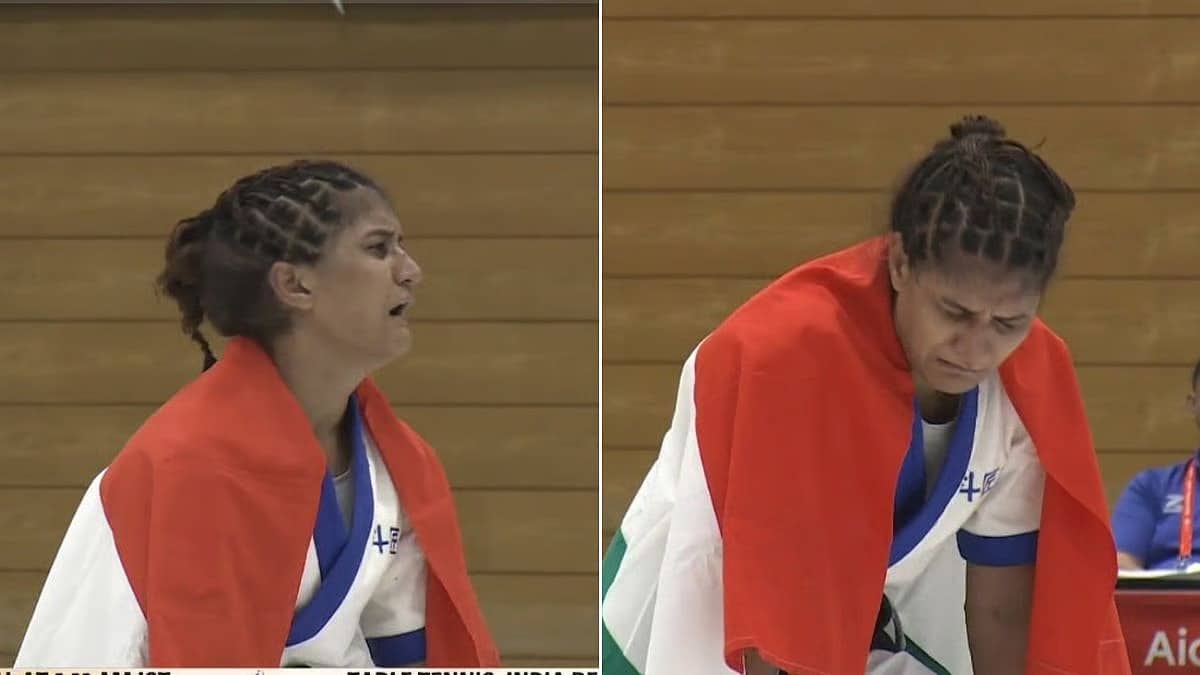
TOKYO: Indian Athlete Suchika Tariyal looses her calm after her defeat against her Singaporean rival in the Aisan Games.
In a dramatic turn of events at the Asian Games, Indian athlete Suchika Tariyal displayed unsportsmanlike behavior by refusing to accept her defeat and staging a strong protest.
Competing in the 60 kg category mixed martial arts semifinal against Singaporean opponent Hui Hoon, Suchika faced disappointment after a hard-fought bout.
With the regulation time ending in a tied score, the Indian camp challenged the decision.
However, following a rigorous review, the judges upheld their initial ruling, confirming the defeat because Suchika was over the weight limit by 700 grams, as tournament regulations explicitly state that in the event of a tie, the victory is awarded to the lighter athlete.
Rather than accepting the outcome with grace, Suchika refused to shake hands with her victorious opponent or the referee, sparking widespread discussion about the true essence of fair play and competitive integrity.
The Psychology and Impact of Unsportsmanlike Behavior in Modern Sports
The integrity of competitive athletics relies heavily on mutual respect, adherence to rules, and the gracious acceptance of both victory and defeat.
When athletes fail to display sportsmanship, the consequences extend far beyond a single match, damaging the core values that make athletic competition meaningful.
Indian athlete displays unsportsmanlike behavior at Asian Games reminds the global sporting community that emotional maturity is just as vital as physical training.
Competitive pressure can often overwhelm athletes, leading to frustration when outcomes do not align with expectations.
However, refusing to shake hands or acknowledge a referee’s verdict undermines the foundational respect governing organized sports.
Such actions not only tarnish the individual’s reputation and that of their national delegation, but they also send a negative message to younger generations watching from the sidelines.
Fans look to elite competitors as role models of resilience, discipline, and honor. When athletes openly reject official decisions or disrespect their opponents, it erodes public trust in officiating and diminishes the celebratory spirit of international tournaments.
Cultivating emotional regulation and respecting the rules under high-stress conditions remains an essential responsibility for every competitor.
ALSO READ: Pakistan Beat Uzbekistan 5-1 to Secure Second Asian Games Hockey Win
Ultimately, true athletic greatness is defined not only by medals won, but by how an individual handles adversity and defeat, proving that Indian athlete displays unsportsmanlike behavior at Asian Games serves as a cautionary tale for maintaining dignity in competitive arenas.