QUETTA: Authorities in Balochistan province have arrested the father of a three-year-old girl after an alleged child marriage involving a 60-year-old man came to light in the district of Chaman.
Balochistan Chief Minister Mir Sarfraz Bugti took notice of the case after details of the alleged marriage emerged on social media. Police said they have yet to arrest the 60-year-old man who allegedly married the child.
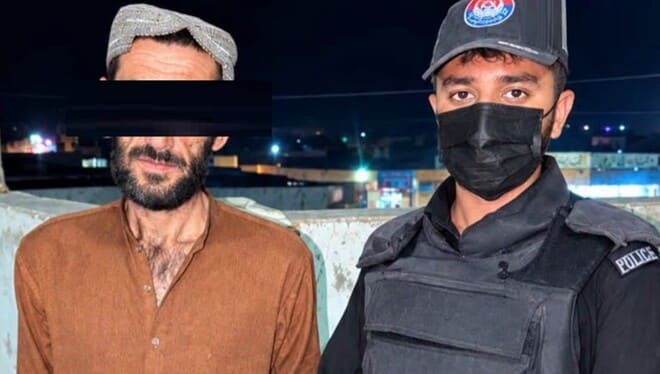
Deputy Commissioner Chaman Habib Bangulzai said police arrested the girl’s father, Abdul Baqi, in Chaman.
The case is linked to the killing of the girl’s 15-year-old half-sister, Shukria Bibi, who was allegedly murdered about 10 days ago in Killi Samali near Kuchlak, on the outskirts of Quetta.
Father’s account
Before his arrest, Abdul Baqi told a local vlogger in Pashto that he had arranged Shukria Bibi’s marriage when she was 13. He said he received 1.5 million rupees ($5,400) as walwar, a customary payment made by the groom’s family to the bride’s family in some Pashtun communities.
He said he used the money to buy a house.
According to Abdul Baqi, Shukria faced violence after the marriage. He also said her in-laws repeatedly pressured him to arrange the marriage of another young daughter to Shukria’s father-in-law.
He said he eventually agreed to marry his three-year-old daughter to the 60-year-old man for 2.5 million rupees.
Abdul Baqi claimed that the man brought a cleric with him, who conducted the alleged marriage ceremony.
Later, he said, the man demanded that another daughter, believed to be about seven or eight years old, be married to him instead. Abdul Baqi said Shukria was repeatedly assaulted to pressure her family into accepting the new arrangement.
Police officials, however, said Abdul Baqi came from an extremely poor family and was addicted to drugs.
They also said Abdul Baqi had married the widow of his elder brother after his brother died. As a result, Shukria Bibi was his niece and stepdaughter, while his other daughters were his biological children.
In an initial statement to police, Abdul Baqi said poverty had pushed him to seek walwar money by arranging Shukria’s marriage. He later agreed to another marriage within the same family after pressure from her in-laws.
Shukria Bibi’s killing
The alleged child marriage came to light after police began investigating Shukria Bibi’s death.
Police said they found her body in Killi Samali, near Kuchlak, about 10 days ago. A medical examination found severe injuries on her body.
Police arrested her husband, Kamran, also known as Abdul Sattar, and registered a murder case.
According to the first information report, Kamran told investigators that he became angry after Shukria looked outside the house through a doorway. He allegedly struck her with an iron rod and killed her before changing her clothes and taking her to hospital.
Police arrested him with the alleged murder weapon. They later handed the investigation to the Serious Crimes Investigation Wing.
Relatives said Shukria had been married at the age of 13, about two years ago.
A police official also said Kamran faces a separate murder case over the killing of his former mother-in-law.
Shukria’s mother told a local media outlet that Kamran had repeatedly abused her daughter and threatened other members of the family. She also alleged that Kamran’s father had pressured the family to arrange the marriage of another young daughter to him.
What is walwar?
Walwar is a centuries-old customary practice in parts of Pashtun society. Under the tradition, the groom’s family pays an agreed amount to the bride’s family when a marriage is arranged.
Supporters of the practice have traditionally viewed the payment as part of the marriage arrangement and a means of supporting the bride’s family.
However, critics say excessive payments can lead to the exploitation of vulnerable families. They argue that, in some cases, the practice can effectively turn marriage into a financial transaction, particularly when young girls are married to much older, disabled or already-married men in return for large sums of money.
Rights activists and social workers have also linked such practices to forced marriage and, in some circumstances, human trafficking when families arrange marriages without considering a child’s age or consent.
In addition, critics say high walwar payments can delay marriages for young men from poor families and may expose women to abuse or taunts from in-laws who regard them as having been “bought.”
In recent years, local jirgas and community leaders in Pashtun-majority areas of Balochistan have also spoken out against excessive walwar payments. Some have called for families to avoid the practice and reduce the financial burden of marriage.
Government response
Chief Minister Bugti ordered authorities to investigate the alleged marriage after the case gained attention on social media.
Shahid Rind, the chief minister’s special assistant for information, said no person involved in the case would be considered above the law.
He said police and district authorities had been directed to accelerate efforts to arrest the main suspect and any other people involved. Authorities were also instructed to ensure the child’s protection and provide justice.
Police said the 60-year-old man remained at large.
What does the law say?
Balochistan’s provincial assembly approved legislation last year to prohibit child marriage, despite opposition and protests from the religious party Jamiat Ulema-e-Islam.
Under the law, anyone under 18 is considered a child.
An adult man who marries a person under 18 can face two to three years in prison and a fine of 100,000 to 200,000 rupees. The law also provides similar penalties for parents, guardians and others who arrange, encourage or promote a child marriage.
A Nikah registrar or cleric who conducts such a marriage can face up to one year in prison and a fine of up to 100,000 rupees.
The offence is cognizable, non-bailable and non-compoundable, meaning authorities can arrest suspects without a warrant in accordance with the law, bail is restricted, and the parties cannot end the case through a private settlement.
Health risks
Medical and social experts say child marriage can have serious consequences for children’s physical and mental health.
Dr Aminullah Khilji, a paediatrician at Quetta’s Bolan Medical Complex, said marriage before the age of 18 can affect a girl’s physical and psychological development.
He said it can also increase the risks of pregnancy-related complications, maternal and child deaths, domestic violence and psychological trauma.
Meanwhile, lawyer Qamar-un-Nisa said legislation alone was not enough.
She said authorities must ensure effective enforcement while communities should raise awareness about the harmful effects of practices that can contribute to child marriage.