LAHORE: Pakistan’s Interior Minister Mohsin Naqvi has called for a fundamental “reset” of the country’s administrative system, arguing that successive governments have failed to deliver essential public services despite decades of policy changes and development plans.
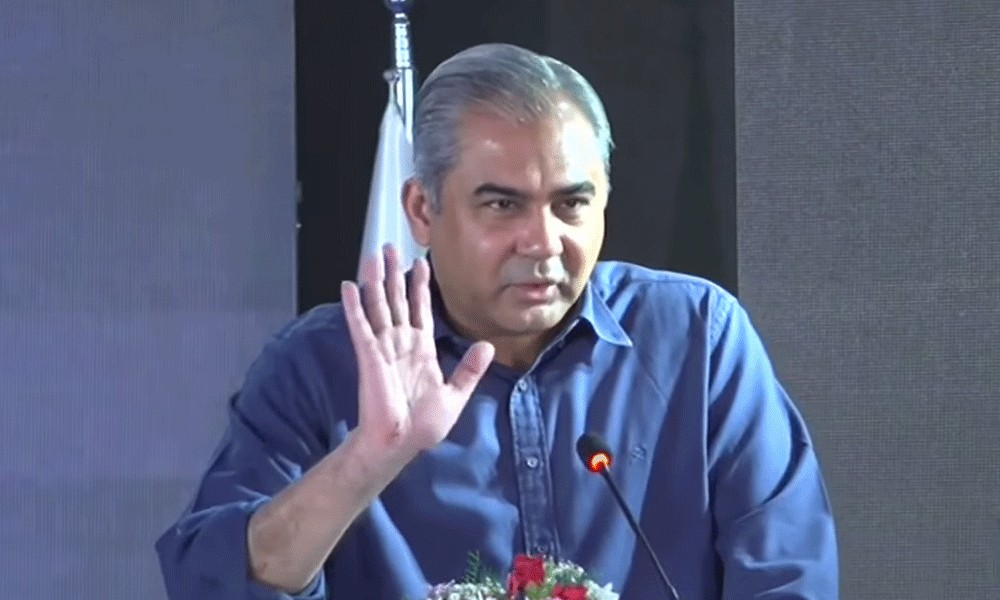
Speaking at a National Policy Dialogue seminar at the University of Management and Technology in Lahore, Naqvi stressed that his proposed “reset” did not mean abolishing the existing system or replacing any particular government or political arrangement.
Instead, he said, Pakistan needed to reassess an administrative structure that has operated for nearly 79 years and correct the weaknesses that have prevented the state from delivering effectively to ordinary citizens.
“Governments change, policies change, budgets come and projects are launched,” Naqvi said. “But the fundamental question is how much we actually deliver to the people.”
He pointed to persistent shortcomings in education, healthcare, clean drinking water and access to justice as evidence that the existing administrative system has failed to produce the results Pakistan needs.
Naqvi also criticised the performance of the public education system, saying its shortcomings were so severe that some students reached fifth grade without being able to properly read ordinary sentences.
‘Reset’ does not mean dismantling the system
The interior minister made clear that an administrative reset would not mean dismantling the state structure.
Rather, he said, the government should identify what is not working, fix institutional weaknesses and improve the delivery of services.
Naqvi argued that the existing administrative structure had lost much of its effectiveness and was no longer producing the desired impact at the grassroots level. Therefore, he said, Pakistan needed to seriously reconsider how it organised its administrative units and distributed authority.
Public opinion should decide new administrative units
Naqvi also pushed for public involvement in decisions over the creation of new administrative units.
He said no individual, government or political party should unilaterally decide whether new administrative units should be created.
“If people want new administrative units, they should be created. If people do not support them, they should not be created,” he said.
According to Naqvi, Pakistan’s population has grown to more than 240 million over the past 79 years, making the country the world’s fifth-most populous nation. Consequently, he argued, the administrative structure should also be reviewed and reorganised to reflect changing realities.
Using the example of a growing family, Naqvi said people normally move from one house to two and eventually to more homes as their numbers increase. Yet, he noted, proposals to increase administrative units often face immediate resistance.
Power devolution at the heart of reforms
Naqvi acknowledged that political considerations could influence opposition to the creation of new administrative units. However, he said the central issue was devolving authority to the grassroots level.
He also sought to reassure critics that the government would not take any unconstitutional or unlawful step.
Instead, he said, Pakistan’s Constitution provides sufficient room to improve the administrative system, introduce reforms and transfer greater authority to lower levels of government.
Naqvi maintained that the objective should ultimately be to build an administrative system capable of responding more effectively to citizens’ needs rather than repeatedly changing governments and policies without improving public service delivery.