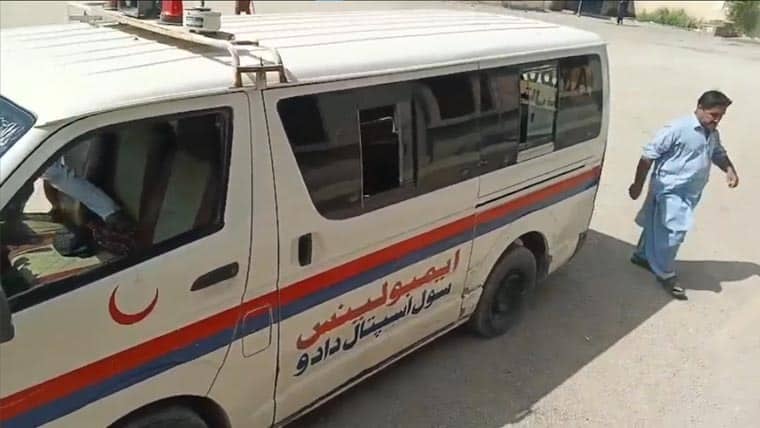

DADU: A deadly tribal clash erupted between two armed groups in the riverine (Kacha) area of Dadu district, Sindh, leaving eight people dead and three others severely injured.
According to local police, the violence broke out between two rival communities in Goth Dano Chandio following a heated escalation over a long-standing land dispute and rights-of-way.
Members from both sides engaged in an intense exchange of gunfire during the deadly tribal clash, resulting in immediate casualties on both ends.
Police and emergency services responded to the scene, transferring the deceased and injured to nearby hospitals for medical treatment.
Meanwhile, Sindh Chief Minister Murad Ali Shah took notice of the tragic event, expressing deep grief over the loss of precious lives and extending heartfelt condolences to the bereaved families.
Reaffirming that no one would be permitted to take the law into their own hands, the Chief Minister directed the Inspector General of Police to submit a detailed report and immediately apprehend all suspects involved in the deadly tribal clash.
Tribal Rivalries Across Pakistan
Tribal rivalries and clan feuds represent a deeply entrenched socio-cultural issue in several parts of Pakistan, particularly across the riverine belts of Sindh, the tribal terrain of Khyber Pakhtunkhwa, and rural Balochistan.
Historically rooted in disputes over land ownership, access to water resources, family honor, and long-standing ancestral vendettas, these conflicts frequently escalate into violent armed clashes.
In remote and under-policed regions, traditional code systems often supersede formal law enforcement, leading communities to resolve grievances through retaliatory actions rather than statutory legal channels.
The persistence of such rivalries is exacerbated by widespread weaponization, rural poverty, weak local judicial administration, and the influential role of traditional feudal structures.
Multi-generational feuds not only result in heavy casualties among community members but also cripple local economic activity, displace families, and foster systemic instability.
Despite government efforts to promote formal legal access, enforce arms control, and integrate rural areas into mainstream judicial systems, state intervention often struggles against entrenched tribal dynamics.
ALSO READ: Tribal rivalry claims two lives in Usta Muhammad
Mitigating tribal conflicts across Pakistan requires comprehensive rural police presence, expedited legal dispute resolution mechanisms, strict regulation of illegal weaponry, and targeted socioeconomic development to break the cycle of inter-generational violence.
Tags: , ,,,