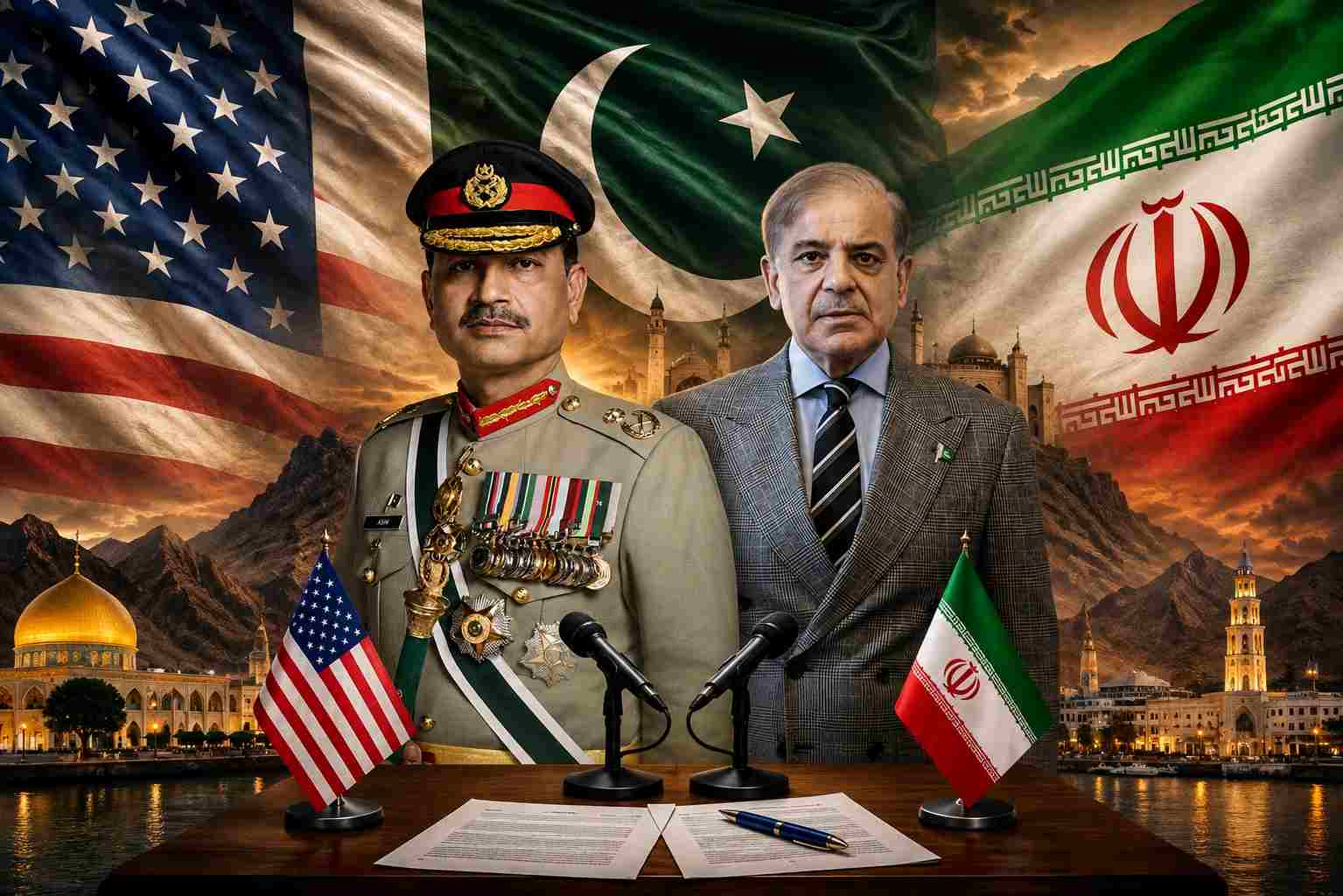
ISLAMABAD: Iran on Monday reaffirmed that Pakistan remains the principal intermediary in its indirect contacts with the United States, rejecting reports that China has assumed a formal mediation role as diplomatic efforts continue to prevent a broader regional conflict.
Iranian Foreign Ministry spokesperson Esmail Baqaei made the remarks amid intensified regional diplomacy following U.S. President Donald Trump’s decision to halt planned military strikes against Iran and pursue renewed negotiations over Tehran’s nuclear program and security in the Strait of Hormuz.
Pakistan has emerged as a key facilitator in those efforts, with senior Pakistani officials holding repeated contacts with Iranian and Gulf leaders in recent days.
Tehran has repeatedly acknowledged Pakistan’s role in conveying messages and proposals between Iran and the United States during months of indirect diplomacy. Qatar and Oman have also facilitated discussions, particularly on regional security and navigation through the Strait of Hormuz, a strategic waterway that carries about one-fifth of the world’s oil supplies.
“The mediator in the discussions related to Iran and the US is Pakistan, and Qatar also helps where necessary,” Baqaei said in response to reports claiming China had begun mediating between Tehran and Washington.
He said Iran enjoys “very friendly relations” with China and maintains close cooperation with Beijing in several areas. He added that China shares Iran’s concerns over growing regional instability.
“China is also helping, like a number of other countries, but to say that we have added a new mediator to the existing mediators is not, in the strict sense of the word, the case,” Baqaei said.
His remarks came a day after Iranian Foreign Minister Seyed Abbas Araghchi held a second round of telephone talks in less than 24 hours with Pakistan’s Chief of Defence Forces, Field Marshal Syed Asim Munir, and Saudi Foreign Minister Prince Faisal bin Farhan. According to Iran’s state news agency IRNA, the discussions focused on efforts to preserve regional peace and stability.
Pakistan has played an increasingly prominent role in facilitating dialogue between Washington and Tehran since hosting high-level US-Iran talks in Islamabad in April.
Those negotiations led to the Islamabad Memorandum of Understanding (MoU), signed in June, which established a framework for further negotiations on Iran’s nuclear program, regional security and freedom of navigation through the Strait of Hormuz.
Under the Islamabad MoU, US and Iranian officials met again in Bürgenstock, Switzerland, in June, with Pakistan and Qatar acting as mediators. The two sides agreed to establish a high-level committee, launch technical working groups, create a direct communication channel to help prevent incidents in the Strait of Hormuz and adopt a 60-day roadmap toward a broader agreement.
The diplomatic process came under renewed pressure after tensions between the United States and Iran escalated again last month, raising concerns over the future of the roadmap.
Trump said over the weekend that he had canceled planned strikes against Iran and that negotiations would resume on Monday. Tehran, however, disputed his characterization of recent events while reiterating its commitment to pursuing political solutions through regional mediation.
Also Read: Oil Prices Fall as Trump Suspends Strikes on Iran
“Iran is not currently holding talks with the United States and is now in discussions with Oman over a temporary safe route through the Strait of Hormuz,” Baqaei said during his televised press conference.