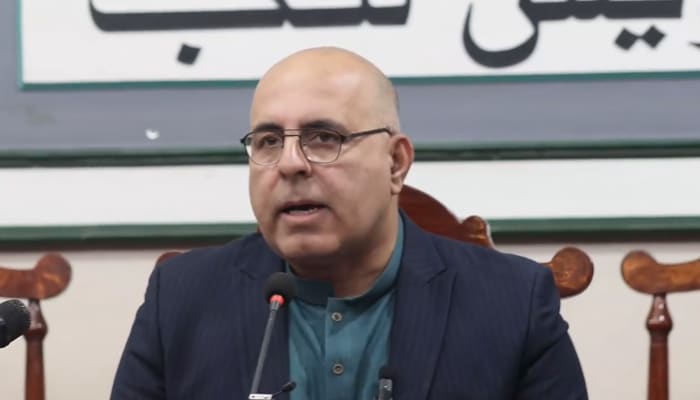
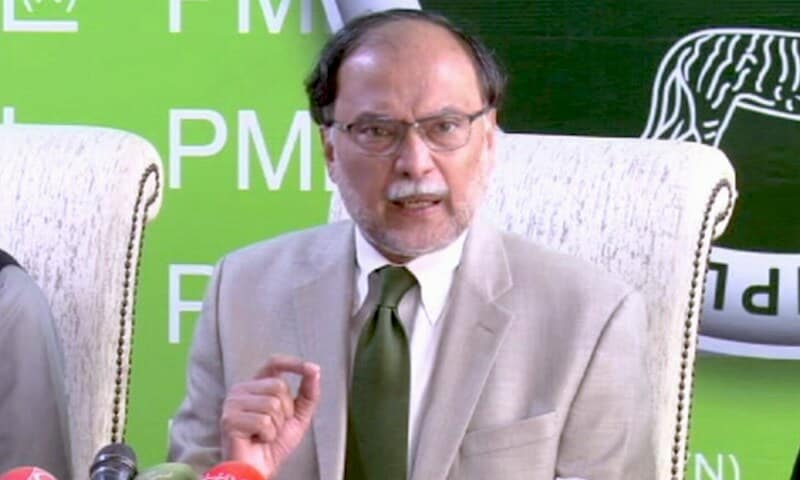
ISLAMABAD: The Federal Minister for Planning, Development and Special Initiatives Ahsan Iqbal has accused the Pakistan Tehreek-e-Insaf (PTI) government of pushing the country toward bankruptcy through what he described as unsustainable economic decisions, while emphasizing that Pakistan’s long-term economic future depends on exports, tax reforms, and the rapid adoption of electric vehicles (EVs).
In this regard, Ahsan Iqbal said the global transportation sector is rapidly shifting away from fossil fuels, with the electric vehicle revolution already transforming international markets.
He noted that nearly 80 percent of Pakistan’s fuel consumption is linked to the transport sector, making the transition to electric mobility an economic necessity.
The planning minister said the recent conflict between the United States and Iran exposed Pakistan’s vulnerability due to its dependence on imported oil.
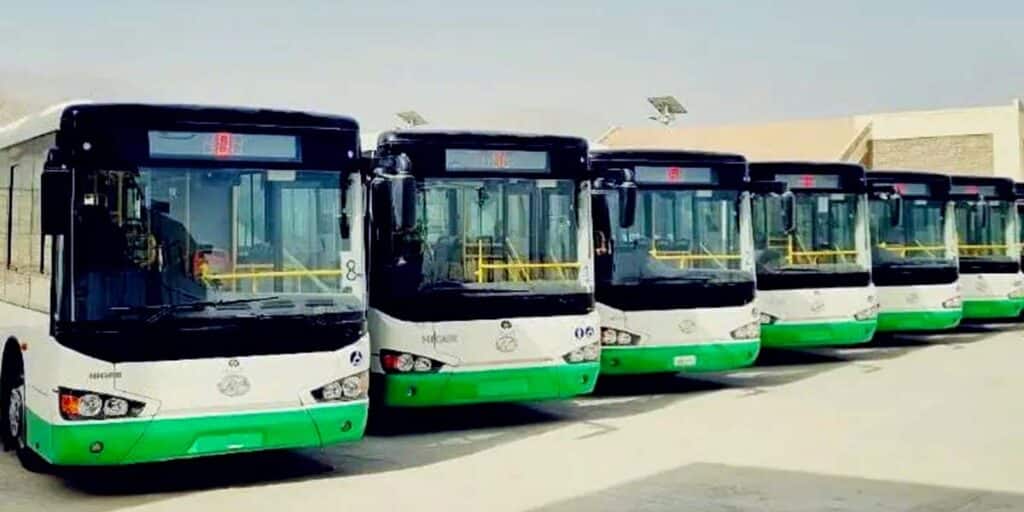
He stated that the government is accelerating efforts to promote electric vehicles and is providing incentives of Rs80,000 for EV conversion.
Pakistan must move its transport sector toward electricity generated domestically to reduce dependence on imported fuel. In this sense, Ahsan Iqbal said Pakistan’s future lies in strengthening exports rather than relying on external borrowing.
He observed that while around nine million overseas Pakistanis contribute approximately $40 billion annually through remittances, the country must transform itself into a dollar-earning economy by significantly expanding exports.
Otherwise, he warned, Pakistan would continue to face dependence on the International Monetary Fund (IMF).
He said Pakistan possesses significant potential to become a competitive player in the global electric vehicle industry and urged exporters to further expand their international reach. The minister also said the government has introduced reforms within the Federal Board of Revenue (FBR) to simplify tax collection and reduce unnecessary hardships for taxpayers.
Ahsan Iqbal said Pakistan remains among the countries with the lowest tax collection ratios in the world, while developed nations typically collect between 14 and 16 percent of GDP in taxes.
He stressed that continued tax evasion places an unfair burden on honest taxpayers and limits the government’s ability to provide essential public services.
The minister said Pakistan had regained international confidence after 12 years and credited Prime Minister Shehbaz Sharif’s government with preventing a sovereign default following the vote of no confidence against the PTI government.
He alleged that decisions taken during the PTI administration, including reducing domestic petroleum prices despite rising international oil prices, contributed significantly to the country’s financial crisis.
Ahsan Iqbal said Pakistan has no option but to adjust domestic fuel prices in line with international trends. He added that inflationary pressures caused by the Iran-US conflict have affected economies around the world, including the United States.
He expressed hope that once international oil prices decline, relief would also be passed on to Pakistani consumers.
The planning minister further expressed optimism that diplomatic efforts involving Pakistan and friendly countries would contribute to regional stability, adding that he hopes the leadership of both the United States and Iran will return to dialogue and reach an agreement that promotes peace and economic stability.