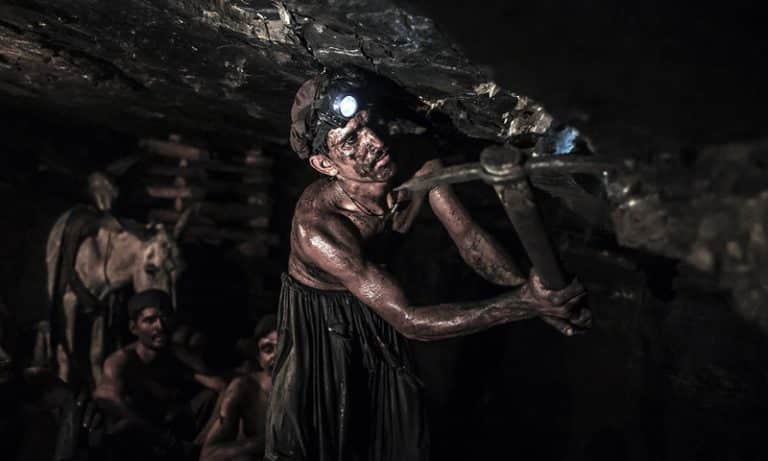
Harnai: Two laborers lost their lives due to suffocation after toxic gas accumulated inside a coal mine in Harnai, Balochistan.
Several other miners are reported to be in critical condition.
According to sources, fellow miners launched a self-help rescue operation to retrieve the bodies and extract the affected workers from the mine, shifting them immediately to a nearby hospital.
Tragic incidents of this nature are unfortunately common in the region, where dangerous gas build-ups in mines and deep wells frequently lead to worker fatalities.
The Silent Killer: Methane Gas Fatalities in Balochistan’s Coal Mines
Coal mining in Balochistan remains one of the most hazardous occupations in the region, plagued by a devastating frequency of fatal accidents. Among the various operational risks, toxic gas leakage—specifically the accumulation of highly flammable and poisonous methane gas—is the leading cause of death for hundreds of vulnerable laborers.
Towns such as Duki, Mach, Sanjdi, and Harnai are hotbeds for these recurring tragedies, where miners routinely descend thousands of feet underground into poorly ventilated shafts.
The mechanics of these disasters follow a grimly predictable pattern. As miners dig deeper, pockets of trapped methane gas are breached.
Without proper gas detectors, ventilation systems, or automated alarms, the gas quickly displaces oxygen, leading to immediate suffocation.
In many instances, a single spark from primitive tools triggers a violent explosion, causing the entire mine structure to cave in and trapping workers deep beneath the earth.
Data from the Pakistan Central Mines Labour Federation indicates that dozens of miners lose their lives annually—with 89 documented fatalities in 2025 alone—underscoring the critical safety vacuum.
The high mortality rate is exacerbated by a severe lack of immediate medical infrastructure, lack of personal protective gear, and slow rescue operations that often rely on fellow miners using basic tools.
Despite repeated calls from labor unions demanding the implementation of standard safety protocols and the ratification of international mine safety conventions (such as ILO C-176), enforcement by regulatory bodies remains weak.
For the impoverished families of these miners, the lack of corporate accountability turns the pursuit of a livelihood into a fatal gamble.