ISLAMABAD: The Ministry of Religious Affairs has issued a critical advisory for Pakistani pilgrims traveling to Iraq, warning of stringent legal measures by the Iraqi government to curb illegal stays and visa misuse.
Violating any visa conditions may result in entry denial and the immediate forfeiture of visa fees.
According to the official notification, all individuals traveling on a family group visa must travel and cross borders together, while men under the age of 50 are strictly prohibited from entering Iraq alone.
The pilgrimage visa remains valid for 30 days only, and a single visa cannot be used for both Ashura and Arbaeen, requiring pilgrims to secure separate visas for each occasion.
Staying beyond the permitted duration, specifically exceeding 60 days, will attract a heavy fine of 500,000 Iraqi Dinars alongside potential detention, deportation, and a permanent entry ban.
Furthermore, any future visa applications from violators will face lifetime rejection.
To ensure compliance, passports must have a minimum validity of 6 months at the time of travel, and separate individual passports are now mandatory for every family member, including children, as joint names on a single passport will no longer be accepted.
The pilgrimage to sacred sites in Iran and Iraq, traditionally known as Ziyarat, holds immense spiritual, cultural, and historical significance for millions of Pakistanis, particularly within the Shia Muslim community.
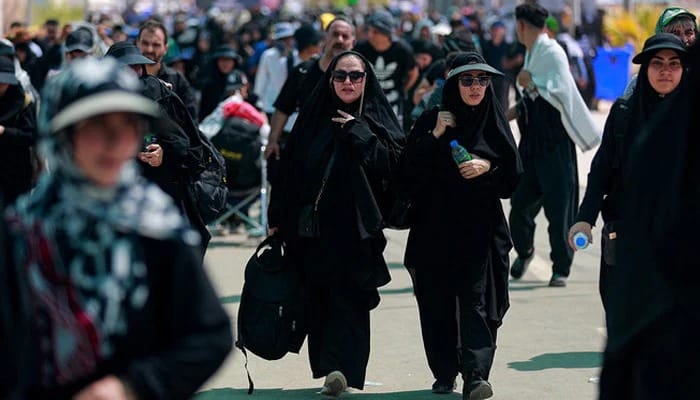
Every year, massive waves of Pakistani Zaireen (pilgrims) travel to the holy cities of Najaf and Karbala in Iraq, as well as Mashhad and Qom in Iran, to visit the shrines of the Ahl al-Bayt (the family of Prophet Muhammad ﷺ).
This religious migration reaches its peak during the Islamic months of Muharram and Safar, specifically for the global commemorations of Ashura and Arbaeen, the latter being one of the largest annual peaceful gatherings in the world.
Historically, this massive movement of people has relied on two primary routes.
The overland route involves long, arduous bus journeys through Balochistan to the Taftan border crossing into Iran, and then onward to Iraqi border terminals like Mehran or Shalamcheh.
While affordable for the working class, this route has historically faced severe security vulnerabilities, harsh terrain, and extreme bureaucratic delays.
Alternatively, affluent pilgrims utilize direct air travel from major hubs like Karachi, Lahore, and Islamabad to Najaf, Baghdad, or Tehran.
In recent years, the sheer volume of pilgrims has created significant administrative, diplomatic, and security challenges for Pakistan, Iran, and Iraq.
Issues such as inadequate tracking, unregulated travel agents, and a growing trend of individuals overstaying their visas to seek illegal employment have strained resources and security frameworks.
In response, the governments have drastically overhauled the pilgrimage infrastructure.
The Pakistani government replaced informal group leaders with a strictly regulated system of approved tour operators who are legally and financially accountable for the timely return of their groups.
The latest stringent measures introduced by Iraq regarding individual entry bans for younger men, hefty overstay fines, and mandatory separate passports reflect a highly coordinated trilateral effort to formalize the pilgrimage, eliminate human trafficking, and ensure the safety and dignity of legitimate spiritual travelers.