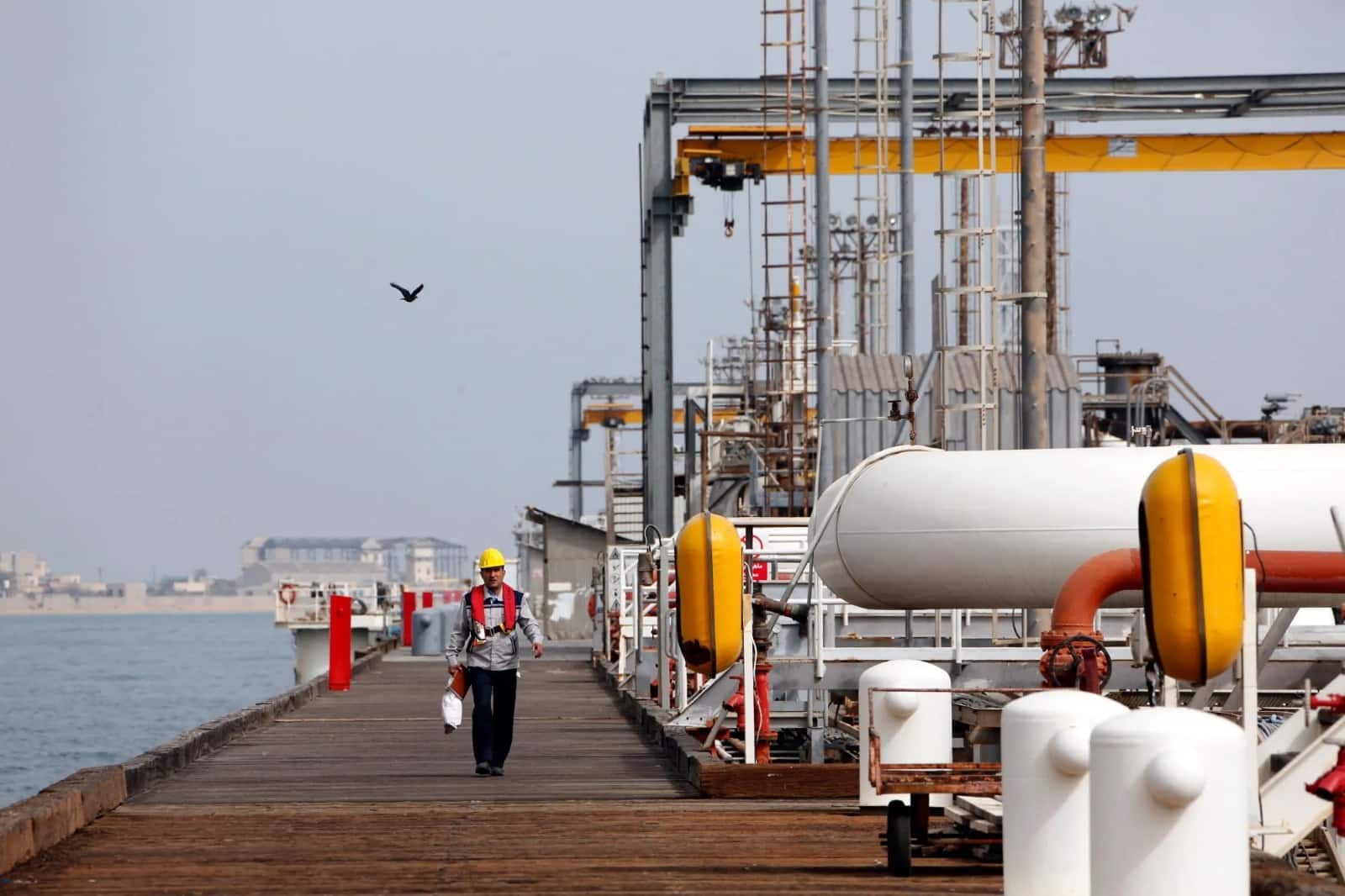
Washington: The United States has decided to temporarily lift sanctions on Iranian oil and petrochemicals.
According to sources, the US Treasury Secretary announced that the sanctions on the sale of Iranian oil and petrochemical products are being removed for a period of 60 days.
The US Treasury Secretary stated that this decision was reached following successful negotiations in Switzerland.
Under this agreement, Iran will be permitted to produce and sell crude oil, and the US has already issued a 60-day general license to facilitate this.
In return, according to the Treasury Secretary, Iran has agreed to ensure the free movement of maritime vessels through the Strait of Hormuz.
Meanwhile, Iranian President Masoud Pezeshkian is scheduled to arrive in Pakistan tomorrow for a one-day official visit.
According to a spokesperson for the Foreign Office, a high-level official delegation will accompany the President.
The visit is expected to focus heavily on boosting economic ties and reviewing all aspects of bilateral relations.
Both nations will hold discussions to enhance cooperation across various sectors, including trade and energy.
Emerging Trade Opportunities Between Pakistan and Iran
The temporary easing of US sanctions on Iran, paired with President Masoud Pezeshkian’s visit to Islamabad, opens a strategic window of opportunity to revitalize bilateral trade between Pakistan and Iran.
Historically, economic cooperation between the two neighbors has been severely constrained by international banking restrictions and the looming threat of secondary US sanctions.
This has kept formal trade far below its true potential, often forcing economic activity into informal channels.
With a 60-day US general license in play, both nations have a critical legal and diplomatic cushion to advance stalled energy initiatives.
The most prominent among these is the long-delayed Iran-Pakistan (IP) gas pipeline.
Pakistan, currently grappling with severe energy shortages and high inflation, desperately needs access to affordable energy.
Resuming talks under this temporary relief allows Islamabad to negotiate energy imports without the immediate fear of retaliatory penalties.
Beyond energy, the visit provides a platform to formalize barter trade mechanisms, improve border markets, and streamline customs procedures.
Pakistan can significantly scale up its agricultural exports—particularly rice, fruits, and textiles—in exchange for Iranian petrochemicals, fertilizers, and electricity for its coastal regions.
By capitalizing on this diplomatic breakthrough, Pakistan and Iran can lay down the infrastructural and regulatory groundwork required to transform their shared border into a thriving economic corridor, shifting the narrative from border security to regional prosperity.