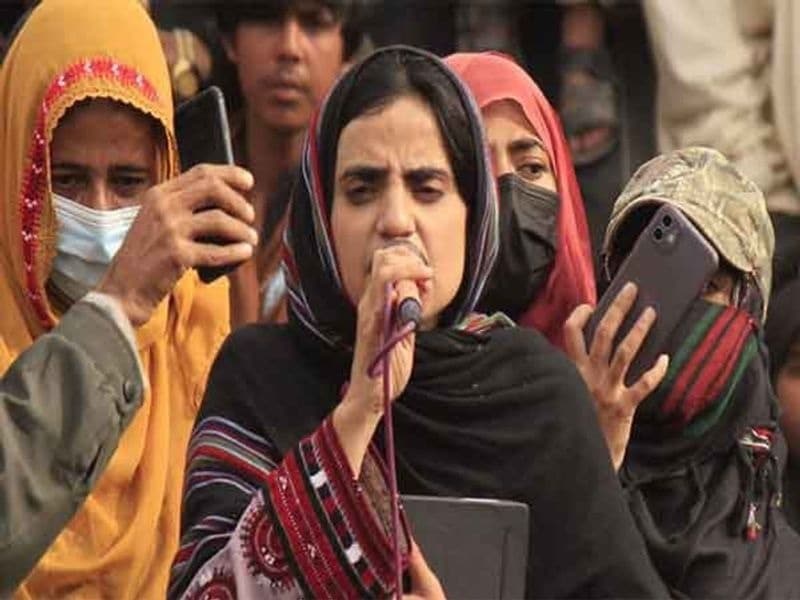
ISLAMABAD: An Anti-Terrorism Court in Quetta has sentenced Mahrang Lango, the central leader of the Baloch Yakjehti Committee (BYC), to life imprisonment for her involvement in the killing of a Frontier Corps (FC) soldier during violent protests in Gwadar.
This judicial verdict effectively dismantles the long-standing narrative built around human rights and political resistance in Balochistan, revealing a highly coordinated operation aimed at destabilizing state institutions.
The movement utilized a multi-dimensional strategy that blended public agitation, digital propaganda, and direct links to militant activities.
On the digital front, the BYC and its leadership manufactured an image of absolute victimization while portraying the state as an oppressive force.
This narrative was systematically amplified by thousands of social media accounts operating from foreign nations, including India, Afghanistan, the UK, Switzerland, the Netherlands, Ireland, and Gulf states, to project the BYC as the sole representative of the Baloch people.
Concurrently, the political narrative served as a cover for armed separatists. During BYC sit-ins, protesters frequently displayed photos of active militants, claiming them to be “enforced disappearances” by the state.
The nexus between the political front and armed terrorism became undeniably clear during the highjacking of the Jaffer Express train.
Following a security operation that eliminated over thirty terrorists involved in the incident, BYC operatives stormed hospitals to forcefully retrieve the bodies, burying them secretly to conceal their operational identities and connections.
This escalation culminated in direct physical violence against law enforcement personnel, including the brutal stoning of the FC soldier in Gwadar.
Supported heavily by foreign funding and international rallies demanding an independent Balochistan, the movement skillfully exploited a “soft image” led by female figures to carry out subversion, spread a toxic anti-state narrative, and gather international sympathy, ultimately causing the greatest harm to the common citizens of Balochistan.