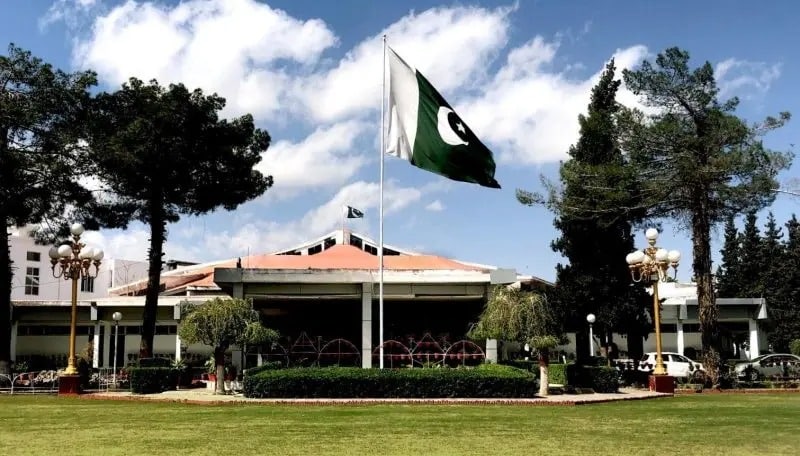
QUETTA: The Government of Balochistan has formally presented its annual budget of Rs. 1,089 billion in the provincial assembly, during a session chaired by Speaker Abdul Khaliq Achakzai.
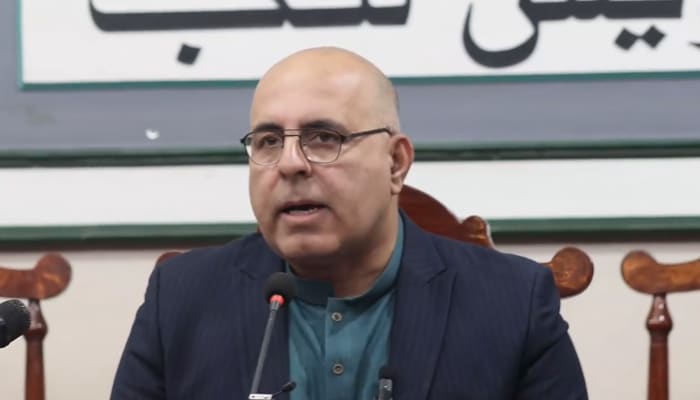
Provincial Finance Minister Mir Shoaib Nosherwani introduced the financial plan, revealing an estimated total revenue of Rs. 1,134 billion, which leaves the province with a net budget surplus of Rs. 45.56 billion.
Chief Minister Sarfraz Bugti highlighted that this marks the province’s first-ever automated budget, describing it as a blueprint for regional prosperity that shows the government is moving in the right direction.
The fiscal allocations heavily prioritize development, health, education, and employment despite an uncertain global economic climate.
The government has earmarked Rs. 206 billion for the Public Sector Development Programme (PSDP), split between Rs. 100 billion for ongoing schemes and Rs. 106 billion for brand-new development projects.
In comparison, non-development expenditures are set at Rs. 797 billion. Additional funding streams include Rs. 40 billion secured via Foreign Project Assistance and Rs. 45 billion released under the Federal Development Grant.
The Finance Minister also noted that the administration has successfully completed 6,000 schemes over the last two years and has now set an ambitious target to boost provincial own-source revenue to Rs. 170 billion.
Socioeconomic Challenges and Development Needs in Balochistan
Balochistan faces severe structural deficits across infrastructure, healthcare, and employment, driven by its vast, sparsely populated terrain and historical underinvestment.
The province’s infrastructure gap is a major barrier to economic integration, as many remote areas lack reliable road networks, digital connectivity, and clean drinking water.
Developing robust transport corridors is essential not only to connect local markets with national trade routes but also to fully leverage cross-border projects and local mineral wealth for the province’s economic survival.
The healthcare sector is under immense pressure, suffering from a critical shortage of functional hospitals, modern medical equipment, and qualified female doctors in rural districts.
Patients frequently travel long distances to Quetta or Karachi for basic treatments, highlighting the urgent need for upgraded district headquarters hospitals and rural health centers.
This lack of social infrastructure directly feeds into the province’s high unemployment rates. Because the local economy relies heavily on public sector hiring and traditional agriculture, creating sustainable jobs is a major challenge.
Transitioning the workforce toward technical education, specialized nursing, and digital skills is crucial to absorb the growing youth population into private enterprises and international job markets.