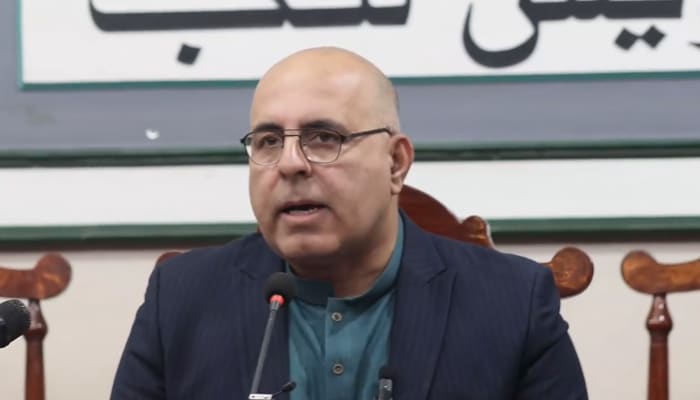
GILGIT: In a significant political development, four newly elected independent members of the Gilgit-Baltistan Legislative Assembly have officially joined the Istehkam-e-Pakistan Party (IPP) following a meeting with Party President Abdul Aleem Khan.
The incoming lawmakers expressed full confidence in his leadership.
The new members include Anwar Ali from GBA-23 Ghanche, Asad Shafiq from GBA-24 Ghanche, Muhammad Dilpazir from GBA-15 Diamer, and Aman Ali from GBA-21 Ghizer.
Welcoming the legislators, Abdul Aleem Khan urged them to work tirelessly for the development and prosperity of Gilgit-Baltistan.
The newly joined members noted that IPP’s debut representation in the Gilgit-Baltistan Assembly is a welcome milestone and pledged to contribute honestly to the region’s progress.
Highlighting his vision, Abdul Aleem Khan stated that Gilgit-Baltistan holds immense potential for tourism and infrastructure development, emphasizing that health, education, IT, and job creation will be their top priorities.
He added that after its presence in Punjab and at the federal level, the IPP is now poised to play a highly positive role in Gilgit-Baltistan.
Electoral Structure and Districts of Gilgit-Baltistan
The Gilgit-Baltistan Legislative Assembly (GBLA) operates under a unique political and administrative framework tailored to the region’s distinct status.
Administratively, Gilgit-Baltistan is divided into three primary divisions—Gilgit, Baltistan, and Diamer—which are further subdivided into 14 districts, including Ghanche, Ghizer, and Diamer.
The electoral system features a unicameral legislature consisting of a total of 33 seats.
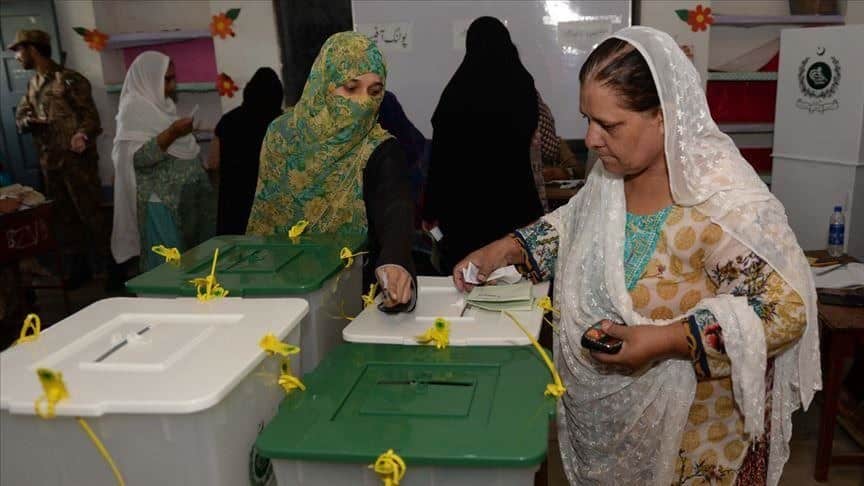
Out of these, 24 are general seats filled through a first-past-the-post, direct universal suffrage system across specifically demarcated constituencies, labeled from GBA-1 to GBA-24.
The remaining nine seats are reserved—six for women and three for technocrats and professionals—which are allocated to political parties proportionally based on the total number of general seats they secure during an election.
Because of the region’s vast and rugged mountainous terrain, constituencies like GBA-15 Diamer or GBA-23 Ghanche often encompass geographically isolated valleys where localized community alliances heavily influence voting patterns.
This frequently leads to a significant number of independent candidates winning general seats.
Consequently, these independent lawmakers become highly crucial political actors post-election.
As new political entities look to expand their national footprint, courting these independent assembly members allows mainstream parties to establish a foundational legislative presence and actively participate in the governance of this strategically vital northern territory.