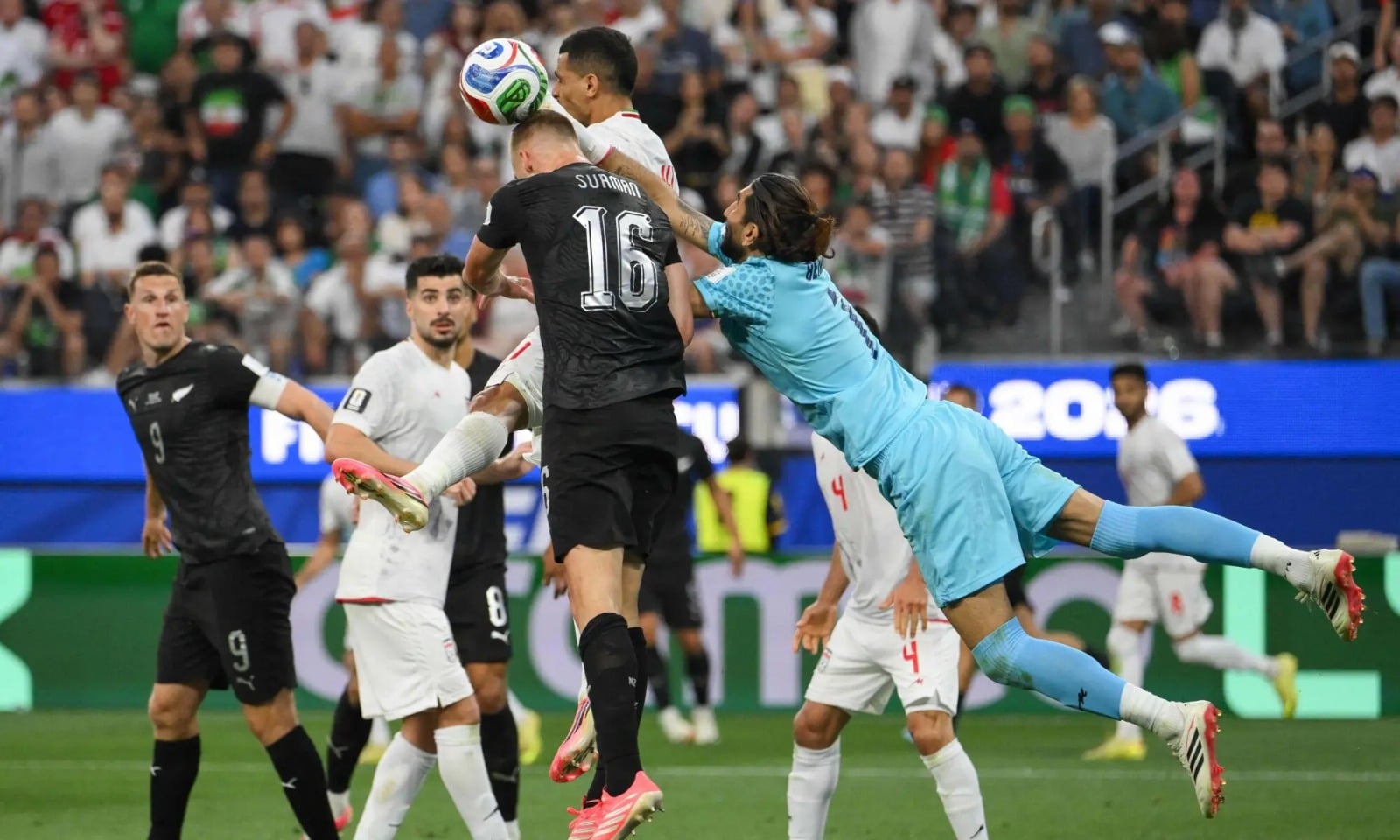
In a dramatic start to the FIFA World Cup 2026 group stage, several high-profile matches ended in draws, with underdogs and debutants shaking up expectations across Groups G and H.
In Group G, Iran and New Zealand played out an entertaining 2-2 draw in a match marked by early momentum shifts. New Zealand struck first in the 7th minute through Elijah Just, briefly silencing the Iranian favourites. Iran responded with Ramin Rezaeian’s equaliser, restoring parity before the break.
The second half saw New Zealand regain the lead once again, with Elijah Just scoring his second of the night. However, Iran refused to back down and levelled the contest for a second time through Mohammad Mohebbi, ensuring both sides shared the points after a tightly contested finish.
Elsewhere in the same group, Egypt and Belgium also settled for a 1-1 draw in another closely fought encounter. Egypt took the lead in the 19th minute through a well-taken strike by Imam Ashour and managed to hold their advantage deep into the match.
Belgium introduced Romelu Lukaku in the second half, shifting the momentum in their favour. While Lukaku did not score, sustained pressure from Belgium forced an own goal that brought the European side level, securing them a valuable point.
In another Group G fixture, Spain were held to a goalless draw by World Cup debutants Cape Verde. Despite dominating possession, the European champions failed to break down a disciplined defensive display, as Cape Verde earned a historic point in their first-ever World Cup appearance.
After the opening round of matches, Group G remains finely balanced, with Iran, New Zealand, Belgium, and Egypt all sitting on one point each.
In Group H, Saudi Arabia continued their resilient start by holding Uruguay to a 1-1 draw. The result further strengthens Saudi Arabia’s hopes of progressing, following another competitive showing against a higher-ranked opponent.
Also Read: Late Uruguay Goal Denies Saudi Arabia a Famous World Cup Win
The early stages of the tournament have already highlighted a recurring theme: traditionally stronger teams are being pushed to their limits, as so-called underdogs continue to challenge established football powers on the world stage.