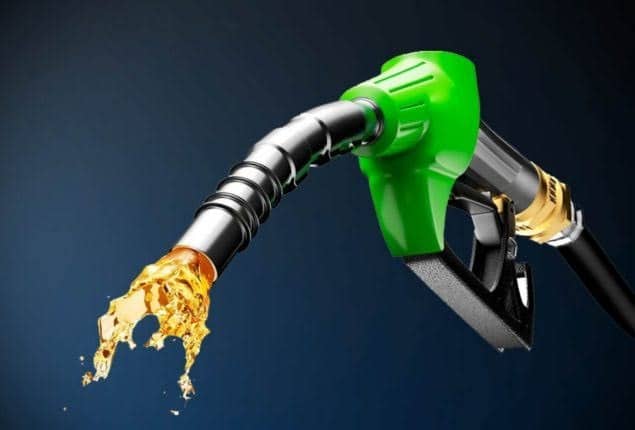
Islamabad: The federal government has announced a reduction in petrol and diesel prices. According to the Petroleum Division, the price of petrol has been reduced by Rs. 4 per litre, while diesel has been lowered by Rs. 2 per litre.
Following the decrease, the new price of petrol stands at Rs. 373.78 per litre, whereas diesel is now priced at Rs. 378.78 per litre.
The Petroleum Division has officially issued a notification regarding the revised fuel prices.
It is worth noting that the government had also reduced petrol prices by Rs. 4 last week.
The ongoing Middle East conflict—primarily driven by direct geopolitical tensions between the US-Israel coalition and Iran—has triggered a massive ripple effect across the global economy. Historically, the Middle East is the heart of global energy transit, and the current instability has exposed vulnerabilities in both fuel supply chains and global financial systems.
Below is an analytical note on the dual impact of this conflict on the global economy and specifically on import-dependent nations like Pakistan.
1. The Global Economy and the Fuel Price Shock
The conflict has caused the largest energy market disruption in recent history, echoing the severe stagflation crises of the 1970s.
-
The Strait of Hormuz Chokepoint: The restriction of maritime traffic through the Strait of Hormuz—which handles roughly 20% to 35% of the world’s seaborne crude oil and immense volumes of Liquified Natural Gas (LNG)—effectively stranded global energy exports.
-
This drove Brent crude prices well past $100 to $120 per barrel.
-
The LNG and Fertilizer Crisis: Beyond crude oil, major regional energy producers like Qatar were forced to declare Force Majeure on gas contracts following infrastructure shutdowns and regional strikes. Consequently, spot LNG prices in Asia surged by over 140%. Because the Middle East is central to the global fertilizer trade, urea and fertilizer prices jumped significantly, threatening global crop yields and driving food inflation worldwide.
-
Macroeconomic Slowdown: The World Bank notes that these compounding waves—from energy to food inflation—have forced central banks globally to delay interest rate cuts or actively increase borrowing costs. This has triggered a slowdown in global GDP growth, hurting major manufacturing and export hubs like China due to weakening global demand.
2. The Micro-Impact: The Case of Pakistan
While advanced economies with domestic energy buffers are partially insulated, developing, import-dependent nations like Pakistan bear the most brutal brunt of global oil shocks.
A. Skyrocketing Domestic Fuel Prices
Because Pakistan imports the vast majority of its crude oil and petroleum products, international price hikes translate instantly into domestic inflation.
Driven by the global oil shock, petrol and diesel prices in Pakistan experienced a steep 55% jump, climbing by over Rs. 55 per liter in abrupt successive revisions.
B. Severe Energy Shortages & Industrial Slowdown
The Qatari LNG force majeure severely disrupted Pakistan’s industrial gas supply. To curb soaring fuel consumption and protect dwindling foreign exchange reserves, the government was forced to introduce strict emergency austerity measures, including closing schools, shortening public service hours, forcing commercial markets to close early, and ordering government offices to work from home.
This has resulted in productivity losses and slowed industrial growth.
C. The Inflation Trickle-Down
In Pakistan, a hike in fuel prices triggers an immediate domino effect. Inland freight and transportation costs skyrocketed, directly inflating the prices of essential commodities and food items.
Consumer price inflation spiked heavily, placing an immense financial burden on the middle class and daily wage earners whose incomes have stalled against rising living expenses.
D. Fiscal Strain and the IMF Framework
The oil shock caught Pakistan at a sensitive macroeconomic juncture.
The expanding import bill worsened the country’s trade deficit. Under the constraints of its active IMF program, the government had no fiscal space to subsidize fuel; instead, it had to fully pass on the international price pressure to consumers while increasing the Petroleum Development Levy (PDL) to maintain fiscal discipline.
Summary
The Middle East war factor highlights Pakistan’s strategic vulnerability to external energy shocks.
Economists and policymakers agree that while short-term diplomacy—such as the emerging Islamabad Agreement—brings temporary market relief, Pakistan’s long-term stability depends entirely on structural reforms: increasing domestic oil refining capacity, upgrading public mass transit to lower fuel demand, and aggressively transitioning toward local renewable energy sources.