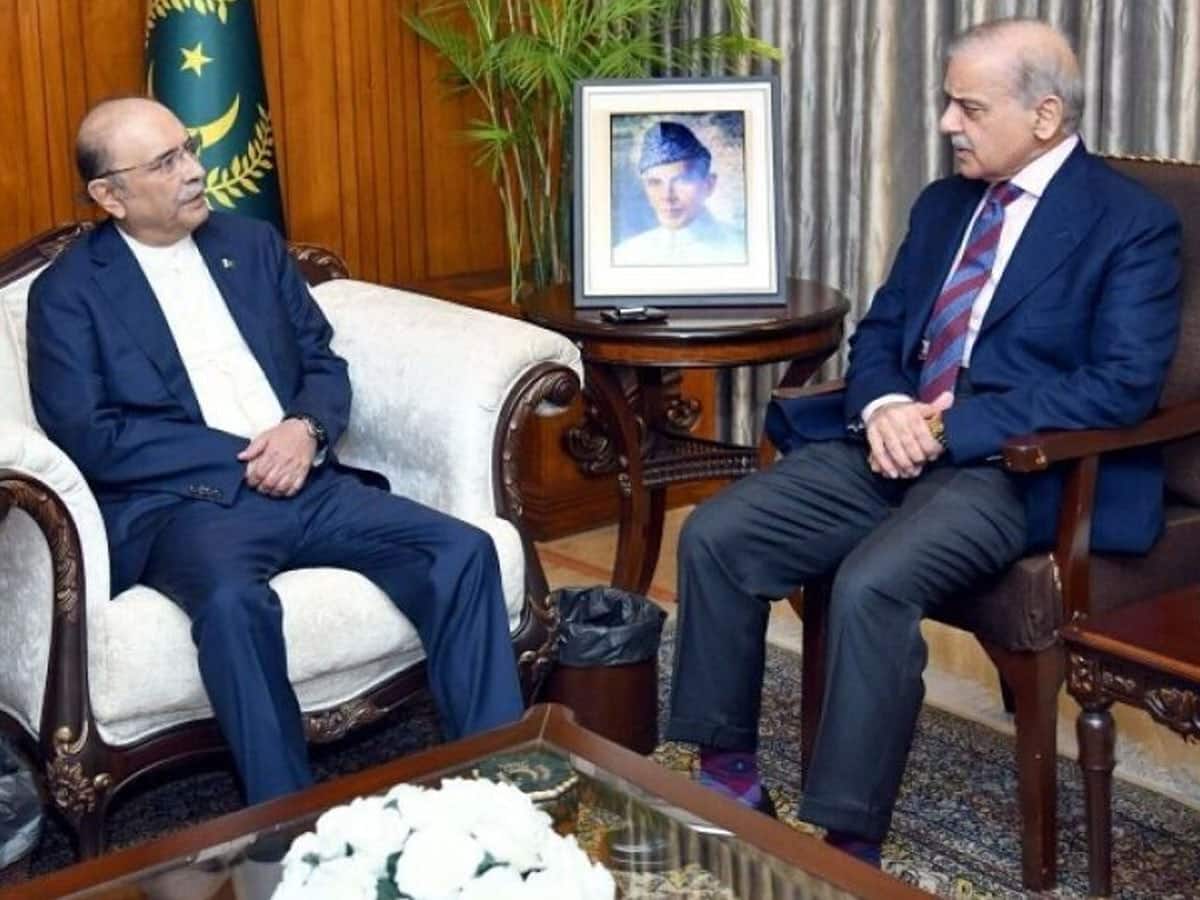
ISLAMABAD: Pakistan Muslim League-Nawaz (PML-N) and Pakistan Peoples Party (PPP) have reached a consensus on a number of budget proposals following a high-level meeting held at the Aiwan-e-Sadr in Islamabad.
In this regard, Prime Minister Shehbaz Sharif approved several budget recommendations put forward by the PPP, while both sides also agreed on the importance of dialogue to address issues related to Azad Jammu and Kashmir (AJK).
Prime Minister Shehbaz Sharif, accompanied by federal ministers, visited the Presidency where he was received by President Asif Ali Zardari. A significant meeting between the leadership of the two coalition partners was held under the chairmanship of President Zardari.
The meeting was attended by senior leaders from both parties, including Deputy Prime Minister Ishaq Dar, Federal Ministers Mohsin Naqvi, Muhammad Aurangzeb and Azam Nazeer Tarar, Special Assistant to the Prime Minister Rana Sanaullah, PPP Chairman Bilawal Bhutto Zardari and members of the party’s budget committee.
Prime Minister of Azad Kashmir Chaudhry Anwar-ul-Haq’s representative Faisal Rathore and other officials were also present.
During the meeting, participants discussed matters related to the upcoming federal budget as well as the prevailing situation in Azad Kashmir.
President Zardari and Bilawal Bhutto Zardari reasserted their proposal that negotiations should be initiated to address concerns in Azad Kashmir and that political issues should be resolved through dialogue rather than confrontation.
The meeting also focused extensively on budget preparations. According to sources, the PPP had submitted a set of recommendations to the government several days earlier and had requested their inclusion in the federal budget.
However, concerns were raised by Bilawal Bhutto Zardari regarding delays in implementing those proposals.
The developments are being viewed as a positive step toward strengthening coordination within the ruling coalition and ensuring consensus on key economic and political matters.