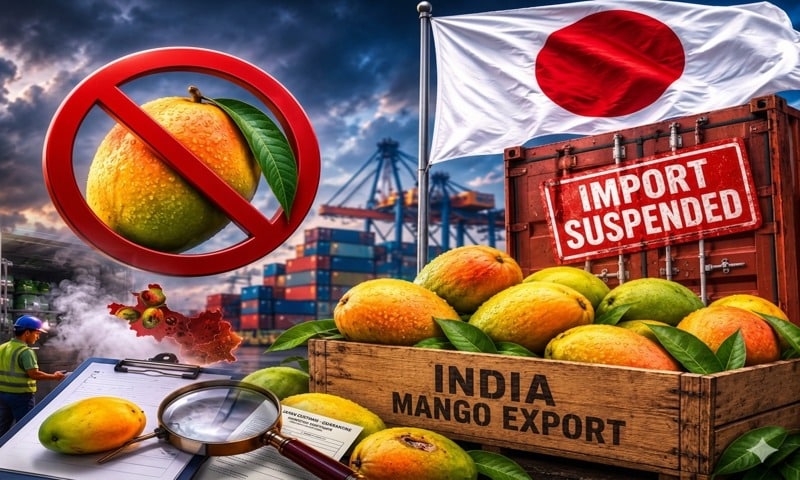
TOKYO/NEW DELHI: Japan has suspended imports of Indian mangoes for the first time in nearly two decades after inspectors identified technical and sanitary deficiencies at a certified treatment facility used for exports.
The move affects several of India’s best-known mango varieties, including Alphonso, Kesar, Langra, Banganapalli, Chaunsa and Mallika, which are typically exported to Japan during the April–June season.
According to reports, Japanese quarantine officials inspected a Vapour Heat Treatment (VHT) facility in Rahman Khera, Uttar Pradesh, in March and found shortcomings in fumigation and disinfection procedures. Under the bilateral export protocol, all mangoes destined for Japan must undergo VHT treatment to ensure they are free of fruit flies and other pests.
Following the inspection, the Yokohama Plant Protection Station announced that it would not accept shipments accompanied by phytosanitary certificates issued after March 25, 2026. The suspension will remain in place until Japanese authorities are satisfied that the facility meets the required operational and plant health standards.
The decision poses a fresh challenge for Indian mango exporters already grappling with a difficult season. Industry experts say an intense heatwave in Maharashtra’s Konkan region has affected both the yield and quality of Alphonso mangoes this year. Exporters are also facing higher shipping costs, delivery delays and container shortages linked to tensions in the Middle East.
India exported nearly 30,000 tonnes of mangoes worldwide during the 2024–25 fiscal year, generating about $56.5 million in revenue. Exports of fresh and processed mangoes to Japan were valued at approximately $1.54 million, with Gujarat’s Kesar variety accounting for the largest share.
Although Japan is not among India’s largest mango markets by volume, it is regarded as one of the most lucrative destinations due to its strict food safety standards and consumers’ willingness to pay premium prices for high-quality fruit.
Japan previously banned Indian mango imports in 1986 over concerns about fruit fly infestations. After years of scientific assessments, monitoring systems and improvements to VHT facilities, Indian mangoes regained access to the Japanese market in 2006.
Under current export arrangements, India is authorized to ship six mango varieties to Japan — Alphonso, Kesar, Banganapalli, Langra, Chaunsa and Mallika — through approved facilities located in Andhra Pradesh, Maharashtra, Gujarat, Uttar Pradesh and West Bengal.