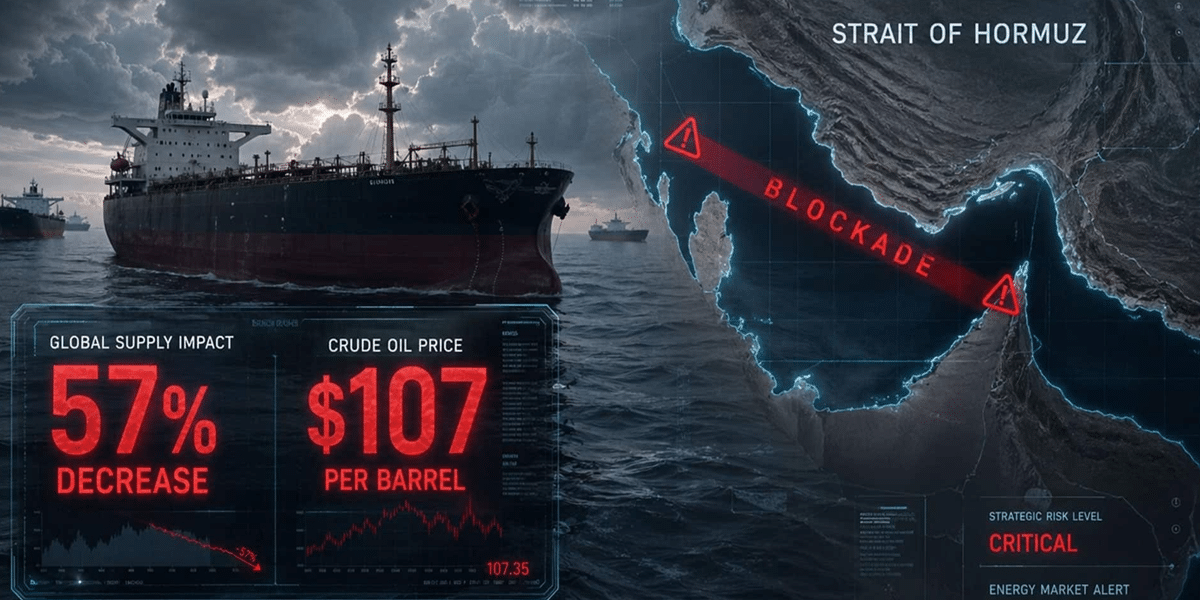
LONDON: A sharp decline of 57% in oil production by Gulf countries has been reported by Bloomberg, as tensions escalate in the Middle East and partial disruption occurs in the Strait of Hormuz.
Global energy flows have been severely affected by rising military tensions between the United States and Iran. Incidents involving the seizure of commercial vessels have also been reported, further disrupting supply routes.
The situation has been worsened by the suspension of maritime traffic through the key trade corridor. The Strait of Hormuz, a critical artery for global oil shipments, has been partially closed, according to international reports.
Oil prices have surged in response. Crude has been recorded at $97 per barrel after a 1.7% increase. Brent crude oil has risen by 2% to reach $107 per barrel.
Warnings have been issued by global economic experts. It has been stated that prolonged disruption could severely damage global supply chains. A large share of the world’s energy demand is dependent on this route.
A major fuel shortage and a fresh wave of inflation have been projected as possible outcomes. The sharp production cut by Gulf producers has been described as a trigger for wider economic instability.
The Strait of Hormuz has been described as the lifeline of global oil trade. Escalation between Washington and Tehran, which began in February 2026, has intensified after both sides moved to detain each other’s oil tankers over alleged violations.
As of April 25, 2026, partial closure of the strait by Tehran and deployment of naval forces by Washington have forced several oil producers to halt operations.
Also Read: How Is the Strait of Hormuz Closure Impacting the US Dollar?
The reported 57% drop has been described as the largest since the energy crisis of the 1970s. Severe consequences for global GDP have been projected if the crisis is not resolved. Developing economies are expected to face extreme pressure in meeting energy costs.