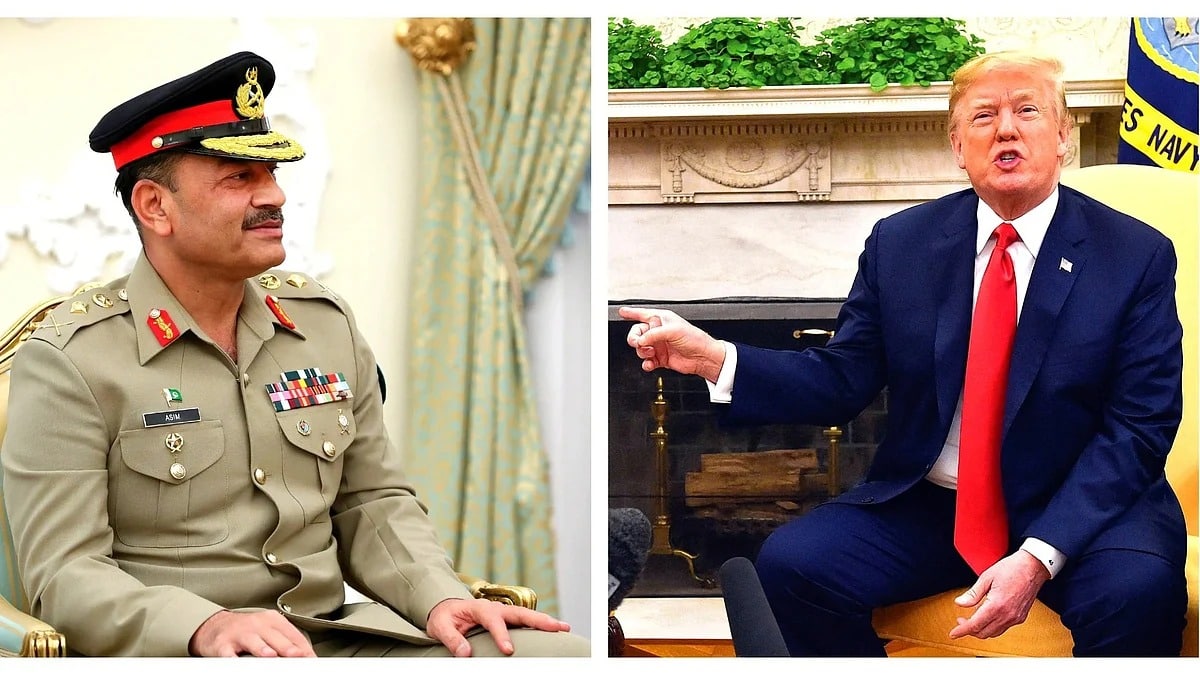
WASHINGTON: US President Donald Trump voiced strong optimism about a potential peace agreement with Iran, saying Tehran has “agreed to almost everything” and indicating he could visit Islamabad if the deal is finalised there.
Speaking to reporters at the White House before departing for Nevada and Arizona, Trump struck a confident tone on ongoing diplomacy. “I would go to Pakistan. Pakistan has been great… if the deal is signed in Islamabad, I might go,” he said, highlighting Islamabad’s growing role in high-stakes negotiations.
Trump said Washington and Tehran are “very close” to an agreement aimed at ending the conflict, adding that talks could resume as early as the weekend. Pakistan has emerged as a key intermediary, with both civilian and military leadership intensifying diplomatic efforts to bring the two sides back to the table.
The recent Islamabad talks did not produce a final deal but helped sustain engagement. A Pakistan-brokered two-week ceasefire between the United States and Iran remains in place, temporarily halting hostilities that followed US-Israeli strikes on February 28. Diplomatic sources say efforts are ongoing to extend the truce or convert it into a broader agreement.
Trump also praised Pakistan’s leadership, naming Army Chief Asim Munir and Prime Minister Shehbaz Sharif for their role in easing tensions and facilitating dialogue. He noted that Munir, currently engaged in regional diplomacy, has played a constructive part in mediation efforts.
Pakistan has simultaneously stepped up engagement with global stakeholders to build support for peace. However, Trump warned that failure to reach a deal could lead to renewed fighting. “If there’s no deal, fighting resumes,” he said.
He added that Iran has agreed to give up enriched uranium stockpiles—described by him as “nuclear dust”—as part of the proposed framework. Washington has long insisted that any agreement must prevent Iran from acquiring nuclear weapons. “We had to make sure Iran never gets a nuclear weapon… They’ve agreed to almost everything,” Trump said, adding that ties with Iran’s current leadership are “very good” compared to the past.
The current ceasefire, due to expire next week, could be extended if needed, though Trump suggested a final agreement may render that unnecessary.
Meanwhile, Pakistan’s diplomatic push continues on multiple fronts. Prime Minister Shehbaz Sharif is on a regional tour of Riyadh, Doha, and Istanbul, while General Asim Munir is leading a delegation in Tehran as part of mediation efforts.
Sources say Islamabad has also facilitated message exchanges between Washington and Tehran, helping narrow differences on key issues. Deputy Prime Minister and Foreign Minister Ishaq Dar has engaged counterparts in the United Kingdom, China, Turkiye, Saudi Arabia, and Egypt to build broader consensus.
The coordinated effort aims to sustain the ceasefire, strengthen diplomatic momentum, and pave the way for a second round of formal negotiations—potentially again in Islamabad.
Regional developments, including a ceasefire in Lebanon, are also shaping the diplomatic landscape, with Tehran closely assessing evolving conditions before finalising its position.
As diplomacy intensifies, Islamabad is increasingly seen as a key venue for conflict resolution, with global attention focused on whether a historic US-Iran agreement can ultimately be sealed in Pakistan’s capital.