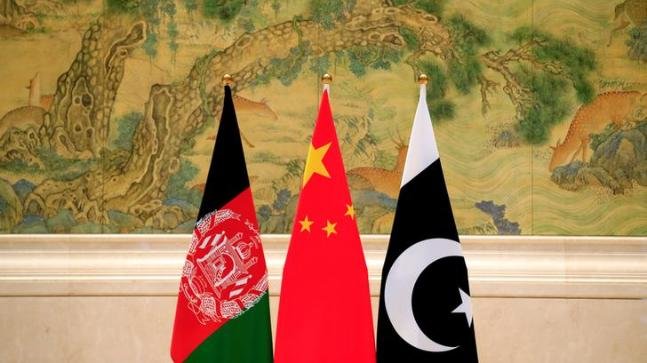
Islamabad: Pakistan has informed China that it will maintain its current policy of non-engagement with Taliban government in Kabul.
This stance is due to the Afghan administration’s failure to change its position regarding the presence of the banned Tehreek-e-Taliban Pakistan (TTP) and other terrorist groups operating from Afghan soil.
This indicates that Pakistan has turned down Beijing’s recent diplomatic efforts to reduce tensions with Afghanistan, despite China being a close ally.
China has recently intensified its diplomatic initiatives by sending its special envoy for Afghanistan to both Kabul and Islamabad in an attempt to mediate and ease the growing friction between the two neighboring countries.
The special envoy is currently engaged in efforts to facilitate talks between Afghanistan and Pakistan. According to a statement from China’s Ministry of Foreign Affairs, Foreign Minister Wang Yi held a telephone conversation with Afghanistan’s acting Foreign Minister Mawlawi Amir Khan Muttaqi to discuss the situation.
China expressed hope that both sides would exercise patience and restraint, hold direct meetings as soon as possible, agree to a ceasefire, and resolve disputes and differences through dialogue.
Beijing also reiterated its commitment to continue active efforts to promote reconciliation and reduce tensions between Pakistan and Afghanistan.
Informed sources told The Express Tribune that Pakistan acknowledged China’s sincere efforts to de-escalate the crisis but made it clear that resuming normal diplomatic engagement with Kabul is not possible without concrete changes on the ground.
According to the sources, Pakistani officials informed China that Islamabad had already exhausted all diplomatic avenues before adopting its current policy toward the Taliban government.
Pakistan has raised concerns—through bilateral channels as well as friendly countries—about the Taliban regime providing shelter to the TTP and other militant groups.
However, the sources indicated that after meetings between the Chinese envoy and Pakistani officials, Islamabad concluded that the Taliban leadership had not altered its position.
The sources added that Taliban officials reiterated their long-standing stance to the Chinese envoy: that the TTP issue is an internal matter for Pakistan, and Afghan territory is not being used against neighboring countries.
Pakistani officials rejected this claim by the Taliban government, citing reports from the United Nations Security Council as evidence.
Pakistani authorities stated that these reports confirm Islamabad’s position regarding the presence and activities of TTP terrorists in Afghanistan.
In these circumstances, Pakistan informed China that as long as Kabul does not take tangible steps to address Islamabad’s concerns, there is very little room for meaningful diplomatic efforts.
In the weekly press briefing, Foreign Office spokesperson Tahir Andrabi confirmed that despite demands from some friendly countries to engage with the Taliban authorities, Pakistan will continue its existing policy toward Afghanistan.
He stated that the situation regarding Afghanistan remains unchanged. When asked about mediation efforts, he replied that Pakistan has emphasized to Afghanistan and its negotiators the need for verifiable assurances that Afghan territory will not be used for terrorism against Pakistan. Since such assurances have not been provided, the current policy toward Afghanistan will remain in place.
There is a possibility that, while Pakistan stands firm on its position, a temporary pause in hostilities could occur during Eid.
Meanwhile, spokesperson Tahir Andrabi described India’s stance on Pakistan’s legitimate actions against terrorist hideouts and support centers in Afghanistan as ridiculous.
He stated that targets inside Afghanistan against terrorist hideouts are legitimate, as elements of Fitna al-Khawarij and Fitna al-Hindustan are carrying out terrorist activities in Pakistan from Afghan soil. India is playing a destructive role in the region, including in Afghanistan.
India should stop supporting terrorism against Pakistan. Under the influence of Hindutva extremist ideology, India is systematically depriving minorities in its country of their rights and promoting Islamophobia.
India is illegally occupying occupied Jammu and Kashmir in violation of the United Nations Charter and relevant Security Council resolutions, and is committing state terrorism in that region.