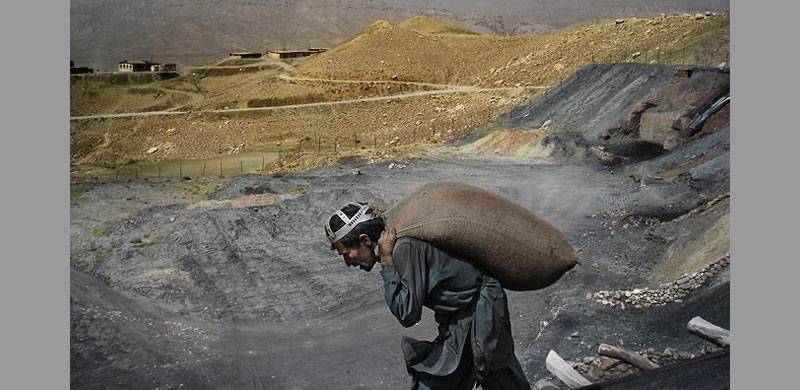
QUETTA: The public frustration in Balochistan is rising amid increasing accusations that armed separatist groups have intensified attacks on local labourers, contractors, and development projects across the province.
The Balochistan Liberation Army (BLA) and Balochistan Liberation Front (BLF) have allegedly escalated assaults on infrastructure linked to local construction firms.
These firms are engaged in various public-sector development projects. The investigations claim that extortion demands are routinely made from companies operating in remote districts, and refusal to comply reportedly results in arson attacks on machinery, abductions of workers, and forced suspension of construction activities.
In this regard, a group of labourers from the local Baloch community was assaulted, and both workers and construction machinery were set on fire during an attack.
So far, footage circulated on social media shows a young boy caught in the blaze, a scene that has intensified public condemnation and calls for accountability.
In this sense, the residents who spoke with the publication said that such incidents have shifted public perceptions of armed groups in the province. Many argue that violent tactics, previously framed by these groups as part of a political or ideological struggle, now appear to be directly harming local communities.
Some citizens contend that targeting workers and development sites amounts to an attack on the region’s economic stability and the future of its youth. Meanwhile, civil society activists and local political representatives have urged authorities to improve security for development workers and expand dialogue to reduce violence.
On the other hand, Baloch citizens are seeking help to free abducted labourers from the prescribed organizations
They focus on the sustainable progress in Balochistan, which depends on protecting the livelihoods and safety of local people, who often bear the heaviest consequences of the ongoing conflict.