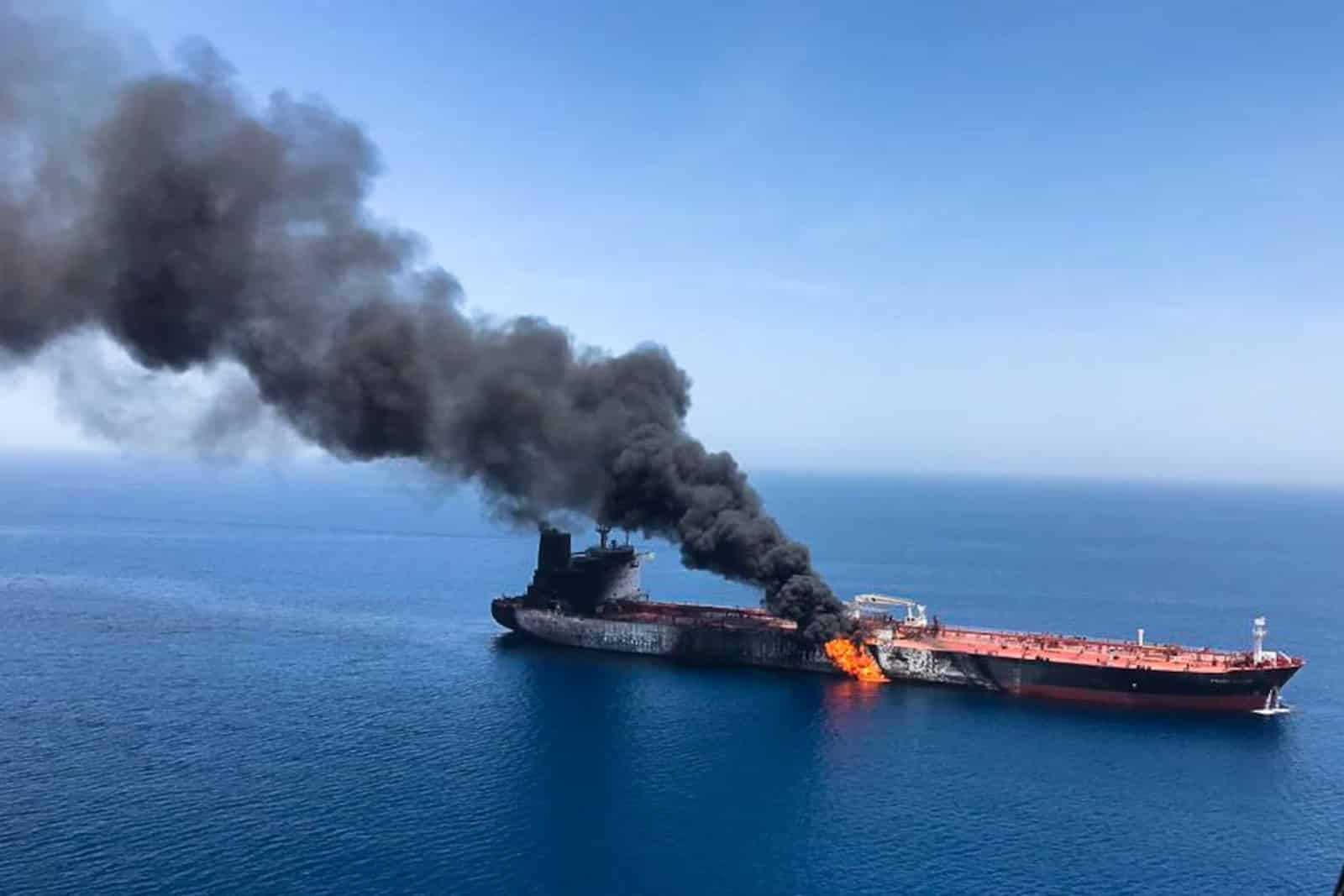
WASHINGTON: US Central Command (CENTCOM) announced that American warships targeted a chemical cargo vessel in the Gulf of Oman.
According to CENTCOM, the vessel hit by the missile strike was an Indian chemical tanker. Following the attack, 21 crew members aboard the tanker were successfully rescued, while three individuals remain missing.
CENTCOM stated that the chemical tanker was targeted for violating the blockade of the Strait of Hormuz.
The missile was fired directly at the vessel’s engine room. CENTCOM further added that, to date, eight maritime vessels violating the blockade have been targeted.
The escalation of the 2026 Iran war has transformed the Strait of Hormuz—the world’s most critical maritime energy chokepoint—into an active conflict zone defined by a severe “dual blockade”.
Following surprise U.S. and Israeli airstrikes on Iran on February 28, 2026, the Islamic Revolutionary Guard Corps (IRGC) immediately disrupted the transit of global energy.
Implementing drone strikes, sea mines, and missile attacks, Iran targeted commercial vessels, driving international shipping companies out of the corridor and causing a dramatic plunge in daily transits.
In response to the halted flow of global oil, and following the failure of diplomatic talks in Islamabad, U.S. President Donald Trump ordered a strict naval blockade beginning April 13, 2026.
Executed by U.S. Central Command (CENTCOM), this military campaign enforces total restriction on all inbound and outbound maritime traffic connected to Iranian ports.
Backed by over a dozen warships and thousands of personnel, U.S. forces have actively intercepted, diverted, and captured scores of ships violating the exclusion zone.
To deter unauthorized vessels, the U.S. military has executed targeted strikes, including firing directly into the engine rooms of non-compliant cargo ships and tankers attempting to breach the perimeter.
While a temporary ceasefire has curbed full-scale aerial campaigns, the high-stakes naval gridlock persists as both nations enforce competing restrictions, stranding global energy resources and threatening total disruption to the international economy.