ISLAMABAD: Pakistan on Thursday expressed concern over a fresh escalation in tensions between the United States and Iran, urging both sides to exercise restraint and resume dialogue as renewed military exchanges risk undermining fragile diplomatic efforts in the region.
The statement came hours after the United States launched a second wave of airstrikes on Iran, following President Donald Trump’s warning that Tehran would “pay the price” for stalled negotiations. Iran, in response, carried out strikes targeting Bahrain, Kuwait, and Jordan.
The latest escalation comes at a time when diplomatic efforts to end the conflict appear to have stalled. Iran has reiterated its stance on maintaining control over the Strait of Hormuz, a vital shipping route, which has already disrupted global energy supplies and contributed to rising oil prices.
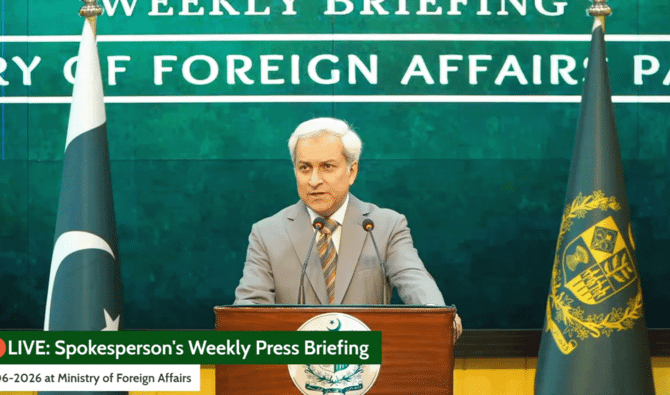
Foreign Office spokesperson Tahir Andrabi, during a weekly press briefing in Islamabad, said Pakistan was “deeply concerned” over the deteriorating situation and called on all parties to halt hostilities in order to expand space for diplomacy.
“Pakistan reaffirms its support for the peaceful resolution of all outstanding issues,” he said. “We believe diplomacy and dialogue must remain the guiding principles for resolving all contentious matters through negotiated settlement.”
Earlier, the US Central Command said it had completed another round of airstrikes in response to what it described as Iran’s “unwarranted and continued aggression,” targeting Iranian military surveillance systems, communications infrastructure, and air defence sites. It did not provide details on the extent of the damage.
In retaliation, Iran launched strikes on Bahrain, Kuwait, and Jordan, prompting Kuwait to temporarily close its airspace as its air defence systems engaged incoming threats. The country’s Directorate General of Civil Aviation said flights were being diverted, without giving further details. Reports indicated Kuwait International Airport had recently been hit in an earlier strike, resulting in casualties and injuries.
This marks the third exchange of strikes within a week, further straining an already fragile ceasefire. Since the United States and Israel initiated military action against Iran on February 28, the conflict has disrupted global markets, pushed up energy prices, and increased the cost of essential goods worldwide.
Speaking at the White House, President Trump said he had temporarily eased pressure on Iran at the request of Pakistan, specifically referring to Chief of Defence Forces Field Marshal Asim Munir and Prime Minister Shehbaz Sharif, whom he described as “great.”
“They became friendly to me, very friendly, and they’re close to Iran,” Trump said. “They are working, and they are still trying to persuade Iran to do what’s right. But we want a deal that is meaningful and sustainable.”
Also Read: Iran targets US base in Iraq in fresh strikes
Trump has repeatedly urged Iran to sign a peace deal to end the conflict, suggesting earlier this week that an agreement could be reached within days.
Meanwhile, Iran’s UN envoy urged the United States to avoid threats of force if it seeks a negotiated settlement. “Iran has never negotiated under threats and pressure and will never submit to coercion,” Ambassador Amir Saeid Iravani told the UN Security Council.