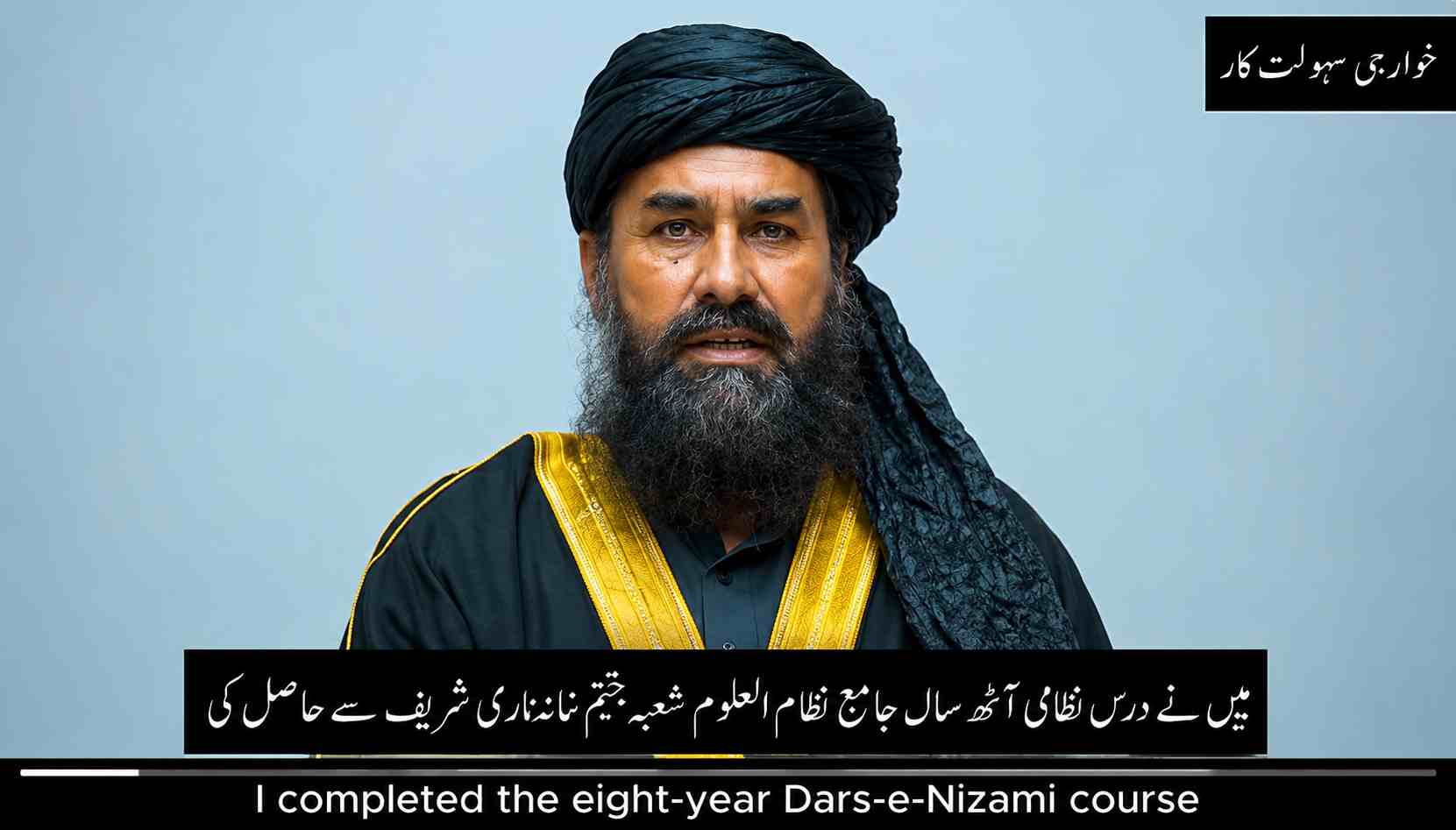
PESHAWAR: The arrest of a self-styled cleric facilitating Fitna al-Khawarij has intensified scrutiny of unregistered religious seminaries in Pakistan, after the facilitator revealed that militant commanders relied on fabricated religious rulings and exploited religious institutions to justify acts of terrorism.
The arrested facilitator, Mufti Zafaryab, confessed that he worked with militant figures after completing his religious education and issued religious decrees that were used to justify extortion, intimidation and other criminal activities under the guise of jihad.
His confessional claims have renewed concerns that militant networks exploit unregistered seminaries, self-styled clerics and religious narratives to recruit supporters and advance extremist agendas.
The case has also revived debate over Pakistan’s efforts to regulate religious seminaries under the National Action Plan (NAP), a counterterrorism framework launched after the 2014 Peshawar school attack.
Under an agreement reached in 2019 between the federal government, the Ittehad Tanzeemat-e-Madaris Pakistan and Wafaq-ul-Madaris Al-Arabia, all seminaries were required to register with the Ministry of Federal Education and Professional Training.
The agreement also introduced measures to improve financial transparency, standardize curricula, establish official bank accounts, maintain records of foreign students and bring seminaries under greater state oversight.
Authorities say consultations with religious education boards have continued between 2024 and 2026 to implement the agreement, although the registration process remains incomplete.
Officials argue that seminaries operating outside the regulatory framework raise concerns about their sources of funding, student records, curriculum and overall activities.
According to the Directorate General of Religious Education (DGRE), 20,052 seminaries had been registered nationwide as of May 2026. These include 11,574 in Punjab, 4,532 in Khyber Pakhtunkhwa, 2,501 in Sindh, 619 in Balochistan, 513 in Azad Jammu and Kashmir, 217 in Islamabad and 96 in Gilgit-Baltistan.
Security officials say effective registration and oversight are essential to ensure religious institutions operate transparently and in accordance with the law, while preventing extremist groups from exploiting seminaries for recruitment, radicalization and logistical support.
The latest disclosures by the arrested cleric have reinforced calls for the full implementation of seminary reforms, stricter monitoring of unregistered institutions and stronger enforcement of Pakistan’s counterterrorism framework to curb the misuse of religion by militant groups.