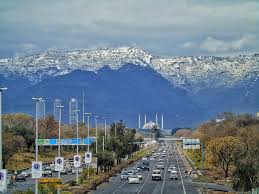
ISLAMABAD: Discussions have officially commenced to grant the federal capital a distinct administrative status, with active deliberations on plans to make Islamabad a new province.
According to media reports detailing initial legislative frameworks, proposals to make Islamabad a new province involve a constitutional amendment under Article 239(4), featuring a proposed 27-member capital territory assembly.
Federal Minister for Planning Ahsan Iqbal has presented a preliminary draft, while Minister of State for Interior Tariq Fazal Chaudhry noted that Prime Minister Shehbaz Sharif put forward the governance model to align the capital with international standards seen in cities like London, Washington, and Delhi.
Under the finalized recommendations, the assembly would include five reserved seats for women and one for minorities, operate under provincial-style financial autonomy, and hold elections administered by the Election Commission of Pakistan.
Furthermore, administrative restructuring plans propose appointing a chief secretary and four secretaries while reorganizing entities like the Capital Development Authority (CDA).
The high-level committee working on this framework also includes Rana Sanaullah and Talal Chaudhry, marking a significant step toward efforts to make Islamabad a new province.
Restructuring administrative frameworks to make Islamabad a new province carries profound implications for governance, local development, and public empowerment.
By establishing a dedicated 27-member assembly and devolving fiscal and administrative powers, the initiative aims to bridge the long-standing governance gap between federal oversight and municipal service delivery.
Proponents argue that decentralization will streamline resource distribution among federal, provincial, and local tiers, enabling more targeted development spending on infrastructure, healthcare, and education within the capital territory.
Furthermore, creating a localized legislative body enhances public empowerment by giving residents direct representation through elected representatives rather than relying on federal bureaucrats or municipal directorates.
Empowering local leadership to oversee institutions like the Capital Development Authority (CDA) ensures greater accountability, transparency, and responsiveness to community needs.
ALSO READ: Journalist Malik Claims 15-18 New Provinces to Be Formed
However, successful implementation will depend on carefully delineating federal jurisdictions from provincial competencies to avoid administrative overlap and ensure sustainable financial self-sufficiency for the newly proposed regional entity.