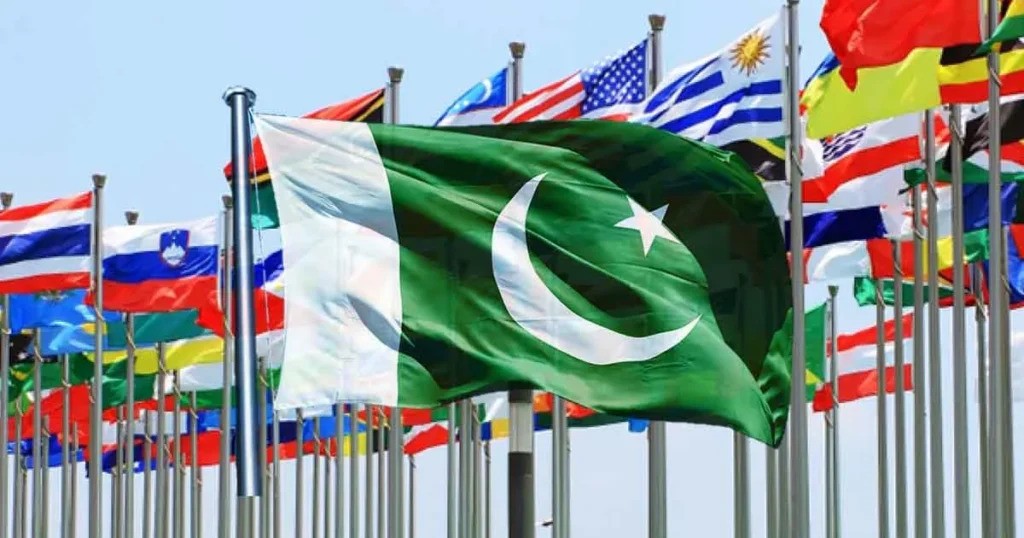
ISLAMABAD: Pakistan has restored its strategic importance on the global stage by effectively leveraging its geographic location, defense capabilities, and diplomatic engagement.
In this regard, the journal noted that in 2025 Pakistan regained a prominent position in global politics, particularly following heightened tensions with India in May. During this period, Pakistan’s defense preparedness and international credibility were reinforced.
The report mentioned that Islamabad’s measured and effective diplomacy during the crisis helped rebuild Washington’s confidence and placed bilateral relations on a new and constructive path.
Furthermore, the United States has recognized Pakistan as a key bridge connecting South Asia, the Gulf region, and Central Asia, underlining the country’s central geographic importance.
Pakistan’s unique position at the intersection of South Asia, Central Asia, West Asia, and the Middle East has once again drawn international attention, particularly in strategic and economic planning circles.
In this regard, the journal also emphasized the growing strategic value of Pakistan’s ports, especially Gwadar in Balochistan. The increasing importance of the coastal belt has opened new opportunities for port development and mineral cooperation.
Pakistan’s approach of maintaining a balanced, multi-directional economic strategy alongside the China-Pakistan Economic Corridor (CPEC) has helped safeguard national interests while opening new economic avenues.
Meanwhile, the Trump administration released its National Security Strategy outlining U.S. global priorities.
In addition, Pakistan has been identified as a key partner in advancing these interests. The recent shift in US-Pakistan relations under the Trump administration has attracted widespread global media attention.
Moreover, the journal noted that the United States was compelled to take an active role in de-escalation. President Trump’s statement indicating space for dialogue on Kashmir was described as support for Pakistan’s diplomatic positioning and long-standing stance on the issue.
The journal reported that Pakistan and the United States signed several agreements under a $500 million framework focused on rare earth minerals, refining, and processing.
This cooperation has emerged as a practical foundation for future bilateral engagement. Additionally, the U.S. Export-Import Bank approved $1.25 billion in financing for mining and critical minerals at Reko Diq in Balochistan, signaling strong investor confidence and significant employment potential.