ISLAMABAD: Pakistan is preparing for the return of a major Basant celebration in Lahore, with authorities planning a three-day festival from March 12 to 14, 2027, and introducing tighter controls on kite production and flying materials.
Preparations for the event have already begun, with the Lahore district administration opening registration for kite manufacturers and producers of kite-flying materials on Saturday, September 5.
Manufacturers have been instructed to register through the official Basant 2027 portal and secure a No-Objection Certificate (NOC) before beginning production.
🇵🇰 BIG ANNOUNCEMENT FOR PAKISTAN & THE WORLD! 🇵🇰
After successful Basant 2026, I am proud and happy to announce Basant Lahore 2027! 🪁❤️
📅 12, 13 & 14 March 2027
Lahore will once again come alive with color, culture, festivity, music, energy and legendary hospitality. 🎉🪁… pic.twitter.com/Tx7WGGeEKs
— Maryam Nawaz Sharif (@MaryamNSharif) August 18, 2026
According to officials, registered manufacturing facilities will be inspected by teams from the district administration. The inspections are intended to prevent the production and distribution of prohibited kite-flying materials and allow authorities to monitor the supply chain well before the festival begins.
Under the vision of CM Maryam Nawaz Sharif, Punjab is leading a historic revival of our culture, tourism, and heritage!
Following the massive success of Basant 2026, we are thrilled to announce Basant Lahore 2027!12, 13 & 14 March 2027. Get ready to experience Lahore at its… pic.twitter.com/rMnO8WmXfF
— Marriyum Aurangzeb (@Marriyum_A) August 18, 2026
The first stage of registration is currently restricted to manufacturers. Registration for kite sellers, traders and relevant associations is expected to begin in January or February 2027, although the administration has yet to announce the final schedule.
Authorities Tighten Safety Standards
Lahore Deputy Commissioner retired Capt Muhammad Ali Ijaz said the government would permit only kites that meet approved size requirements and cotton-based string during the festival.
Officials have adopted a strict approach towards chemical-coated thread and metallic wire, both of which have previously been linked to fatal and serious accidents.
Permitted cotton thread, locally referred to as pinna, will have to meet government specifications. Authorities are also expected to maintain inspections of manufacturing facilities throughout the months leading up to Basant.
The measures are designed to ensure that unsafe materials do not enter the market and that manufacturers comply with the rules before the festival attracts large crowds.
The Punjab government has presented Basant 2027 as a major cultural event and intends to promote Lahore’s traditional spring festivities to visitors from Pakistan and abroad.
Basant and Lahore’s Cultural Heritage
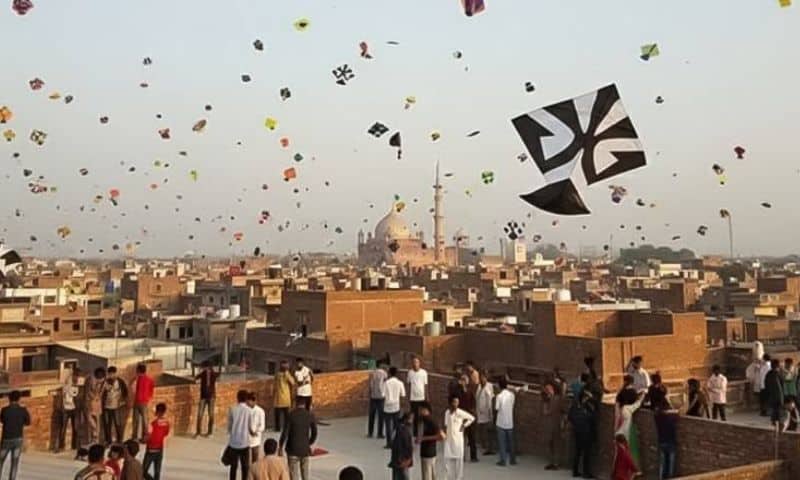
Basant is a traditional Punjabi celebration marking the arrival of spring. The festival is associated with kite flying, colourful decorations, traditional foods, music and the wearing of yellow clothing.
The word Basant comes from Vasant, a term associated with spring. Yellow has long been connected with the festival, partly reflecting the colour of mustard fields during the spring season.
Kite flying became a particularly prominent feature of Basant celebrations in Punjab during the 19th century. Maharaja Ranjit Singh is credited with supporting Basant fairs and helping establish kite flying as an important part of the festivities.
Lahore eventually became one of the best-known centres of Basant celebrations. For generations, the festival transformed rooftops across the city as families gathered to fly kites and participate in traditional festivities.
Safety Concerns Led to Long Ban
The popularity of kite flying was eventually accompanied by growing concerns over dangerous strings. Glass-coated and other sharp kite strings were blamed for severe injuries and deaths, particularly involving motorcyclists and pedestrians.
In response to the safety concerns, authorities imposed increasingly stringent restrictions before the festival was eventually banned across Punjab in 2007.
The prohibition kept one of Lahore’s most distinctive cultural traditions largely out of the city’s public life for many years.
Basant Returned to Lahore in 2026
The plans for next year’s larger celebration follow the official revival of Basant in Lahore in February 2026.
The Punjab government permitted a three-day celebration from February 6 to 8, 2026, marking the festival’s first official return to Lahore after an 18-year absence.
The revival followed legislation passed in December 2025 that established a regulatory framework for kite flying in Punjab.
Also Read: Basant Returns to Lahore After Two Decades, Accidents Reported
Authorities treated the 2026 event as a carefully controlled reopening, placing particular emphasis on public safety. Lahore was divided into designated risk zones, while police and district administration officials were deployed throughout the city.
Security and monitoring measures included rooftop checks, surveillance through Safe City cameras and drone operations. Rescue 1122 and the electricity utility were also involved in preparations to respond to potential emergencies.
The government also introduced controls covering kite flying, the sale of kites and string, while manufacturers, traders and sellers were required to undergo registration.
Early Preparations Underway for 2027
The authorities’ decision to begin registering manufacturers months before Basant 2027 is intended to give officials enough time to inspect production facilities, identify violations and prevent prohibited materials from reaching consumers.
With the festival scheduled to take place over three days in March, officials are expected to continue monitoring manufacturers and expand the registration process to other participants ahead of the celebrations.
If the preparations proceed as planned, Lahore will once again see its rooftops and skies filled with colourful kites as Basant returns on a larger scale in 2027.