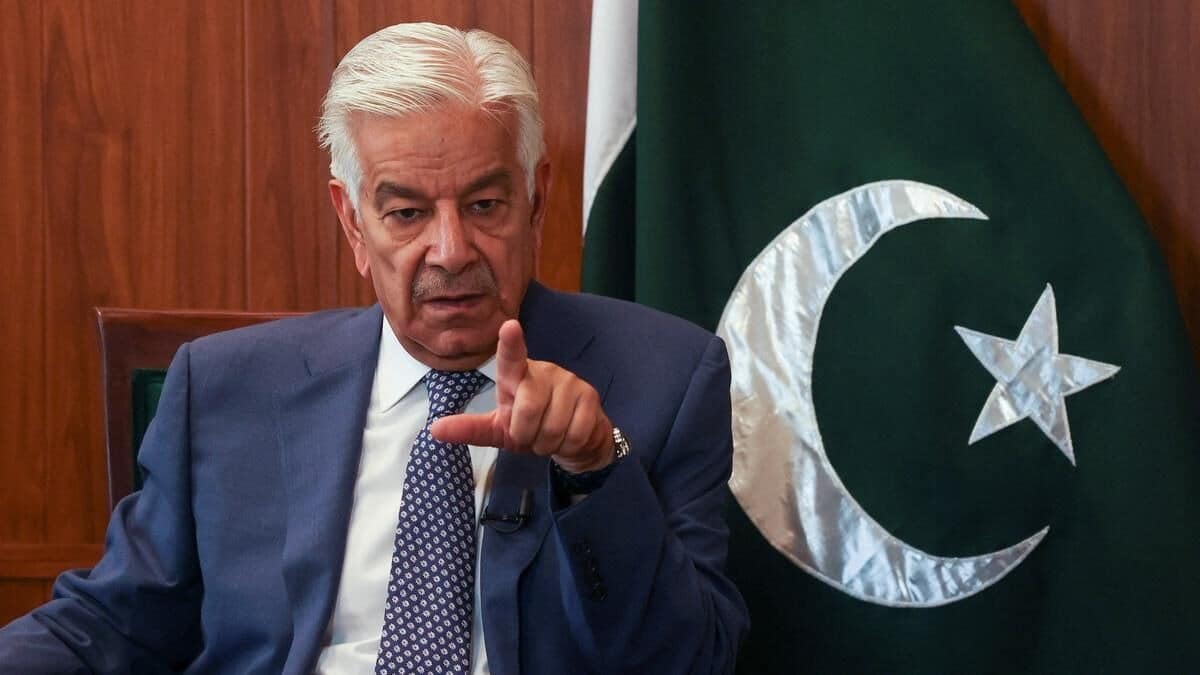
ISLAMABAD: Defense Minister Khawaja Asif has warned that unresolved water disputes are steering Pak-India relations toward a potential military conflict.
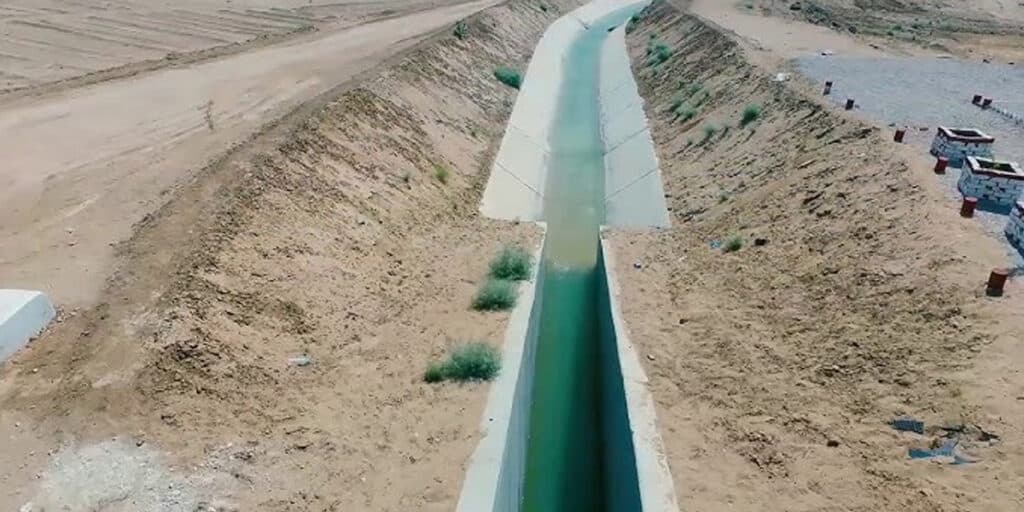
Speaking on a private TV channel’s talk show, the minister stated that while India might attempt to block Pakistan’s water supply, it will ultimately fail to do so, questioning where India would divert such massive volumes of water without flooding its own terrain.
Reflecting on past transboundary water surges, Asif noted that last year’s floods from India washed down houses, infrastructure, and wildlife into Pakistan.
He assured that the government is rigorously monitoring the situation to identify exactly where water treaties and allocations are being violated.
He emphasized that if India takes any aggressive unilateral steps regarding water, a military response will be inevitable, though Pakistan has no intention of initiating a war.
Turning to regional politics and governance, the Defense Minister expressed alignment with Pakistan Peoples Party (PPP) Chairman Bilawal Bhutto Zardari’s stance that the outdated administrative systems in Kashmir and Gilgit-Baltistan can no longer continue, calling for structural reforms to improve their overall status.
Commenting on the 12 refugee seats in the Azad Jammu and Kashmir (AJK) Assembly, Asif described it as a highly emotional and sensitive issue.
He maintained that the voting rights of refugees from Indian-occupied Kashmir must never be revoked, though he observed that assembly members elected through indirect systems generally lack the traditional political weight of directly elected representatives.
He expressed concern that special seat allocations might inadvertently compromise the sanctity of the vote, while adding a caveat that he did not want his remarks to be taken out of context.
On the geopolitical and economic front, Asif highlighted that the international community has fully recognized the strategic weight of Prime Minister Shehbaz Sharif and Chief of Army Staff Field Marshal Syed Asim Munir. He recalled that India suffered a humiliating strategic setback during last year’s Ma’raka-e-Haq (Battle of Truth).
Concluding on Pakistan’s fiscal challenges, the minister pointed out that if the country had successfully minimized its state-owned enterprise (SOE) losses, substantial capital would have been available to invest in critical water projects.
He blamed protracted delays in the privatization sector for severe financial drains, noting that privatizing Pakistan Steel Mills back in 1991 could have saved trillions of rupees.
Similarly, the privatization of Pakistan International Airlines (PIA) has faced costly delays since 2016.
He concluded by reminding the audience that all major, successful privatization initiatives in Pakistan’s history were executed during the respective tenures of Nawaz Sharif and Benazir Bhutto.