TEHRAN: Iran reopened its airspace after a near five-hour suspension that disrupted regional air travel and heightened concerns among airlines already navigating growing geopolitical risks in the Middle East.
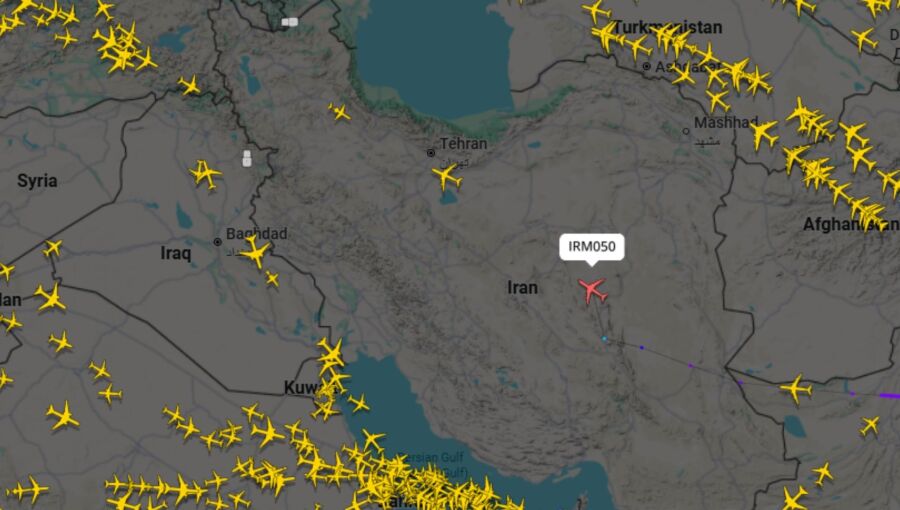
In this regard, Iran had closed its airspace at 2215 GMT on Wednesday. The closure applied to all flights except international services entering or departing Iran with official authorization. The restriction was lifted shortly before 0300 GMT, aviation tracking service Flightradar24 reported.
Flight data showed that aircraft operated by Iranian carriers, including Mahan Air, Yazd Airways and AVA Airlines, were among the first to resume operations over Iranian territory.
Flightradar24 noted that the skies over Iran were unusually quiet during the closure period. At a similar time last week, dozens of commercial aircraft had been flying across the country.
Furthermore, the temporary shutdown came amid increased tensions between Iran and the United States, raising fears of potential military escalation. One of the US officials confirmed on Wednesday that Washington was withdrawing some personnel from its bases in the Middle East as a precautionary measure. This followed comments by a senior Iranian official who said Tehran had warned neighboring countries that American bases could be targeted if the United States launched strikes against Iran.
In such a case, airlines operating in the region were forced to cancel, reroute, or delay several flights during the closure, underscoring the vulnerability of global aviation to sudden political and security developments.
So far, the industry experts have repeatedly warned that missile and drone activity in multiple conflict zones poses a significant risk to commercial aviation. In recent years, airlines have increasingly adjusted flight paths to avoid areas considered high-risk, often at the cost of longer travel times and higher fuel expenses.
The reopening of Iran’s airspace provides short-term relief for carriers and passengers, but analysts say uncertainty remains high. As diplomatic tensions persist and military warnings continue, airlines are expected to closely monitor developments and remain prepared for further disruptions.
For now, flights have resumed, but the episode highlights how quickly regional instability can impact international air travel, with little warning and wide-reaching consequences.