WASHINGTON: Iran Conflict to End After US Midterm Elections is the prediction made by US President Donald Trump as fighting between Washington and Tehran continues to put pressure on global energy markets. Trump said the conflict could end “immediately” after the US midterm elections in November, while renewed tensions have pushed oil prices above $100 a barrel and raised concerns about possible disruptions to international energy supplies.
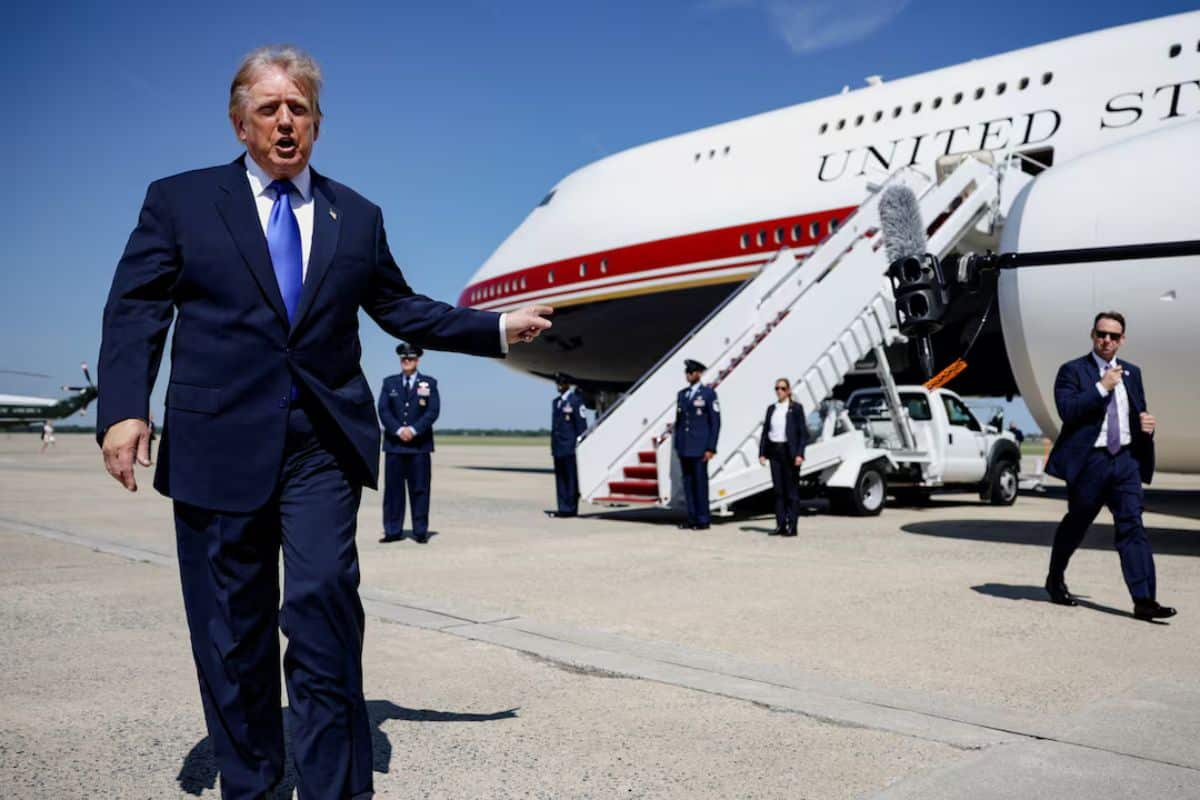
Trump made the remarks on Wednesday while speaking to reporters before travelling to Dallas for a Republican Party midterm convention. He claimed that Iran was struggling to continue the conflict and suggested that Tehran was seeking to influence the outcome of the US elections.
“I think the war’s going to end immediately after the election because they can’t hold out any longer,” Trump said.
The president did not provide specific details to support his prediction or explain why the election would mark a turning point in the conflict. Fighting between the United States and Iran has continued for months, with military exchanges increasing fears of a wider regional confrontation.
Diplomatic efforts to secure a lasting settlement have so far failed to produce a permanent agreement. Trump nevertheless indicated that he expected the situation to change following the November vote.
Iran Conflict to End After US Midterm Elections, Trump Links War to Energy Prices
Trump also connected the conflict with rising energy costs in the United States. He predicted that oil prices would fall significantly after the midterm elections and said cheaper crude would eventually bring down gasoline prices for American consumers.
“Right after the election, oil prices are going to be tumbling downward,” Trump said. He also suggested that gasoline prices could eventually fall below $2 per gallon.
The president defended his position on the conflict by arguing that preventing Iran from obtaining a nuclear weapon was more important than the economic consequences associated with higher energy prices.
When asked about the impact of expensive gasoline, Trump presented the issue as a choice between accepting higher energy costs and preventing Iran from acquiring a nuclear weapon.
Trump also claimed that Iran was suffering from severe economic problems and described the country as being in “shambles.” He repeated his assertion that the United States controls the Strait of Hormuz, a strategically important waterway through which a significant share of global oil and gas shipments normally passes.
Strait of Hormuz Disruption Sends Oil Prices Higher
The conflict has had a major impact on international energy markets, particularly because of concerns surrounding the Strait of Hormuz. Any prolonged disruption to shipping through the waterway could affect crude oil and natural gas supplies around the world.
Oil prices climbed sharply on Wednesday as military tensions intensified and concerns grew over attacks on oil tankers and the movement of commercial vessels.
Brent crude futures moved above $100 per barrel for the first time since July 24, reaching $101.58 before retreating. US West Texas Intermediate crude also gained ground, reaching its highest level since early June.
Shipping activity through the Strait of Hormuz has fallen significantly compared with pre-conflict levels. Preliminary data showed that only six commodity vessels travelled through the waterway on Tuesday, compared with a 10-day average of roughly 12 vessels.
The reduced traffic has increased concern among traders that further disruptions could place additional pressure on global energy supplies.
European Gas Prices Also Rise Amid Supply Concerns
The effects of the conflict have extended beyond the oil market. European natural gas prices also increased as traders assessed the possibility of prolonged disruption to energy transportation.
The Dutch TTF benchmark rose above €80 per megawatt-hour on Wednesday, reaching its highest level since early 2023. The increase reflected concerns that instability around key energy routes could persist if the conflict does not reach a diplomatic resolution.
The US Energy Information Administration has also raised its oil-price forecasts amid concerns about declining global inventories. Forecasts cited in the supplied report put the average price of Brent crude at around $91 per barrel in 2026, while US crude is expected to average approximately $84.65.
The forecasts were finalised on September 3, before the latest escalation, meaning future projections could change if supply disruptions continue.
Rystad Energy chief economist Claudio Galimberti estimated that between 8 million and 9 million barrels of oil per day had moved through the Strait of Hormuz during the week before fighting resumed on August 30. More recently, flows had fallen below 2 million barrels per day.
Energy analysts have warned that the market impact may not be limited to a temporary price increase. Jeffrey Currie, co-chairman at Abaxx Markets, described the rise in energy prices as a structural development rather than a short-lived shock.
US Midterm Elections Add Political Pressure
Trump’s comments have also brought the US midterm elections further into the discussion surrounding the conflict. He accused Iran of attempting to influence the November vote by seeking a weaker American government.
According to Trump, Tehran would prefer a US administration that would adopt a less confrontational approach and potentially allow Iran greater freedom to pursue its nuclear ambitions.
The conflict could therefore become an important political issue for American voters, particularly if elevated energy prices continue to affect household budgets. Rising gasoline costs have historically attracted significant political attention because of their direct impact on consumers.
Also Read: Trump Weighs Ground Troop Invasion of Iranian Islands Near Hormuz: Report
For Iran, continued military and economic pressure could further test its ability to sustain the conflict. For Washington, meanwhile, the combination of national security concerns and domestic energy prices presents a difficult political challenge.
Trump’s prediction that the conflict will end immediately after the US midterm elections remains his assessment rather than a confirmed outcome. With fighting continuing and diplomatic efforts yet to deliver a lasting settlement, the timing and conditions for any potential end to the conflict remain uncertain.
Meanwhile, energy markets will continue to closely monitor developments around the Strait of Hormuz. Any further reduction in oil shipments could keep prices elevated and increase concerns over global energy security.