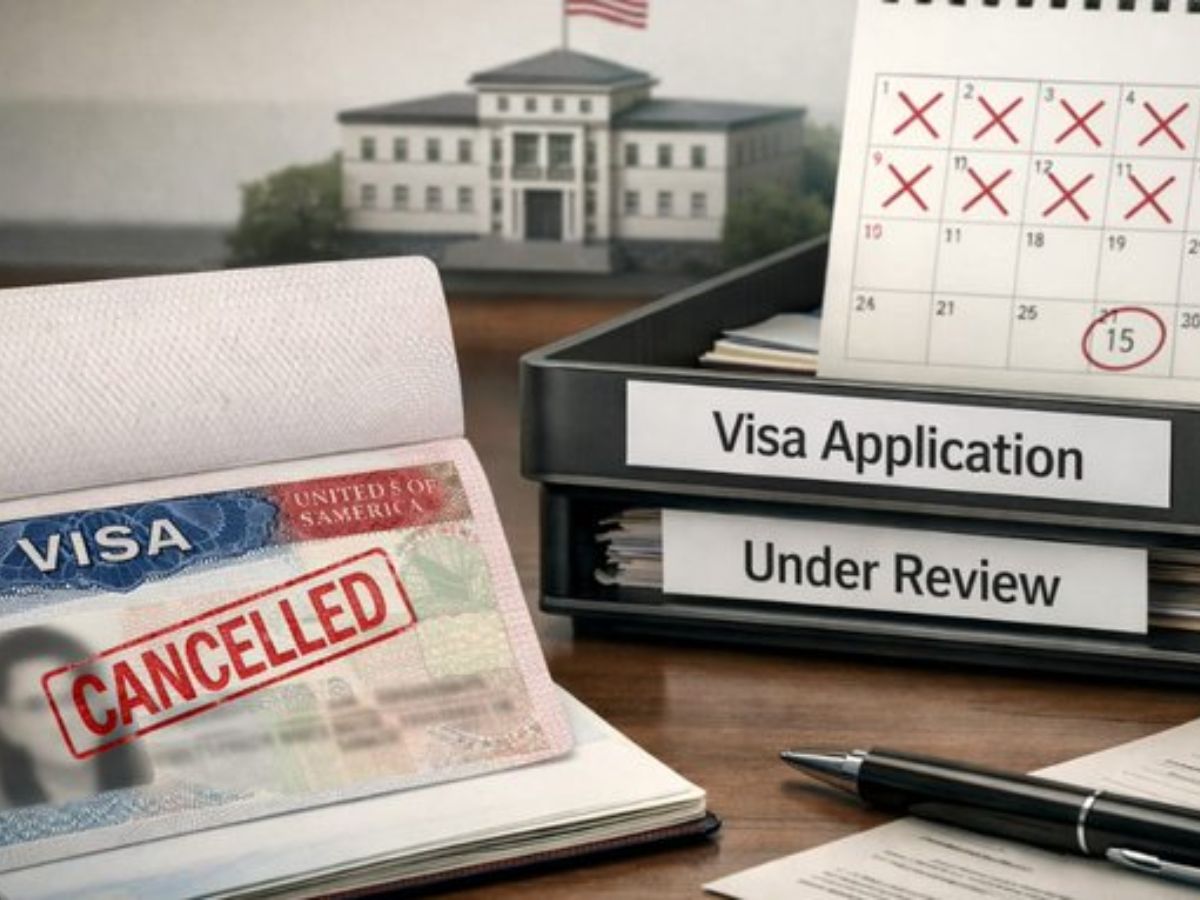
WASHINGTON: Indian citizens seeking H-1B work visas to the United States are facing significant difficulties due to unusually long delays in visa interviews and appointment availability.
The situation has left a large number of applicants stranded in India for extended periods, disrupting careers, family plans, and professional commitments.
Furthermore, India’s Ministry of External Affairs (MEA) has formally acknowledged the problem, confirming that many Indian nationals have been unable to travel back to the United States because of delays in the visa processing system.
These individuals include professionals who were previously employed in the US and are now waiting for visa renewals or reissuance. In this regard, the MEA spokesperson Randhir Jaiswal said the appointment crisis has created serious challenges for affected individuals and their families.
He noted that the issue has persisted for several months and that the government is closely monitoring developments.
In this sense, one of the main reasons behind the delays is the tightening of US visa screening procedures. Recent measures reportedly include stricter background checks, requirements for applicants to make their social media accounts public, higher visa fees, and the introduction of new eligibility and selection criteria.
These changes have made the H-1B visa process more complex and time-consuming for Indian applicants.
Moreover, the situation has become so widespread that Indian government officials and media outlets have begun referring to those affected as “H-1B visa holders stranded in India,” highlighting the scale and seriousness of the issue.
Many applicants have reported being unable to secure interview appointments for months, despite having valid employment offers or ongoing jobs in the United States. So far, the experts have also raised questions about whether Indian professionals still view their country as a secure and attractive option for their long-term future.
They argue that persistent migration pressures and dependence on foreign job markets signal the need for stronger domestic opportunities and policy reforms.