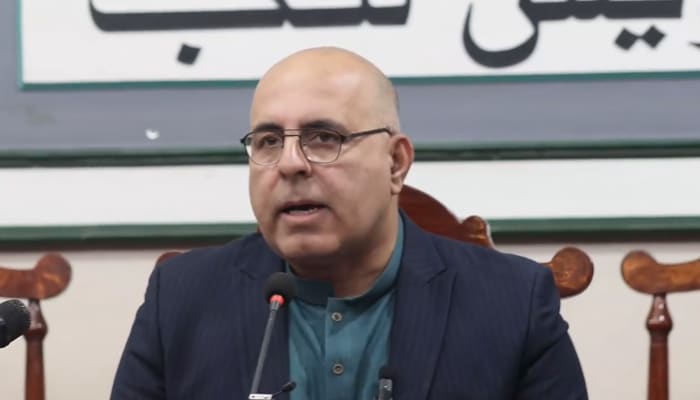
QUETTA: Nawab Sanaullah Khan Zehri, a senior Pakistan People’s Party (PPP) leader and former chief minister of Balochistan, has alleged that sustained “political engineering” by the military establishment orchestrated the downfall of his elected government in 2018, severely damaging democracy in the province.
Zehri’s allegations came in reaction to the recent court-martial and sentencing of retired General Faiz Hameed. He stated that the accountability measures have “revived long-suppressed truths” about institutional interference in Balochistan’s politics.
The former chief minister claimed that despite constitutional prohibitions, former army chief General Qamar Javed Bajwa and the then-DG ISI, General Faiz Hameed, repeatedly meddled in political affairs. He singled out his government’s removal via a no-confidence motion as a direct result of this interference.
“The no-confidence motion against my government was not political but was orchestrated by General Faiz Hameed,” Zehri alleged. He asserted that members of his own party were pressured to defect, despite holding a clear majority, and that an entire new political party was formed “overnight” as part of the same engineered process.
Zehri contrasted General Hameed’s 14-year sentence for political interference with what he called the “judicial murder” of former Prime Minister Zulfikar Ali Bhutto, questioning the apparent disparity in accountability.
While welcoming the recent court-martial, Zehri demanded that action under Article 6 of the Constitution—pertaining to high treason—be pursued against all individuals involved in undermining democratic governments. He expressed hope that this accountability would set a precedent to prevent future military interventions in politics and help safeguard Pakistan’s democratic norms.