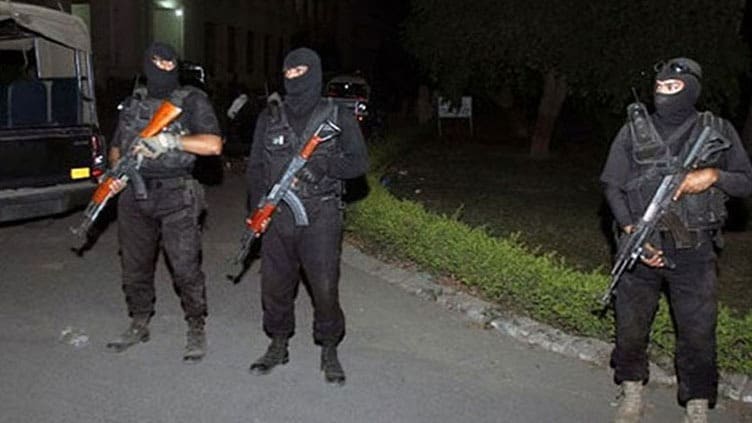
PESHAWAR: The Counter-Terrorism Department (CTD) successfully neutralized three high-profile terrorists belonging to Fitna-al-Khawarij during a targeted operation on the Kohat-Shakardara Road.
The militants were actively planning a large-scale insurgent attack when security forces intercepted and targeted them, effectively pre-empting the strike.
Following the intense shootout, law enforcement personnel recovered a substantial cache of weapons, explosive materials, and tactical maps from the possession of the deceased operatives.
The CTD has since initiated a comprehensive search and clearance operation in the surrounding area to ensure no remaining threats persist.
Context: The Ongoing Challenge of Militancy in Khyber Pakhtunkhwa
The successful operation near Kohat highlights the persistent and complex security challenge posed by militancy in Khyber Pakhtunkhwa (KP).
Over the past two decades, the province has remained at the frontline of Pakistan’s counter-terrorism efforts. Following major military offensives in the erstwhile Tribal Areas (FATA), many militant networks were dismantled, leading to a significant period of relative peace.
However, recent years have witnessed a concerning resurgence in asymmetric warfare, characterized by targeted attacks, improvised explosive devices (IEDs), and extortion attempts primarily aimed at law enforcement agencies and security personnel.
The current wave of militancy is driven by fractured yet resilient splinter groups, collectively categorized under terms like Fitna-al-Khawarij, which exploit the rugged, mountainous terrain along the Pak-Afghan border for operational movement and safe havens.
In response, Pakistan’s security apparatus has shifted its strategy from large-scale conventional military deployments to intelligence-led, surgical operations conducted by specialized wings like the CTD.
This approach focuses on disrupting militant sleeper cells, neutralizing high-value targets, and seizing logistics before plots can materialize in urban centers.
Despite facing continuous threats, the resilience of the local population and the proactive stance of law enforcement remain central to stabilizing the province and preventing a return to the widespread instability of the past decade.