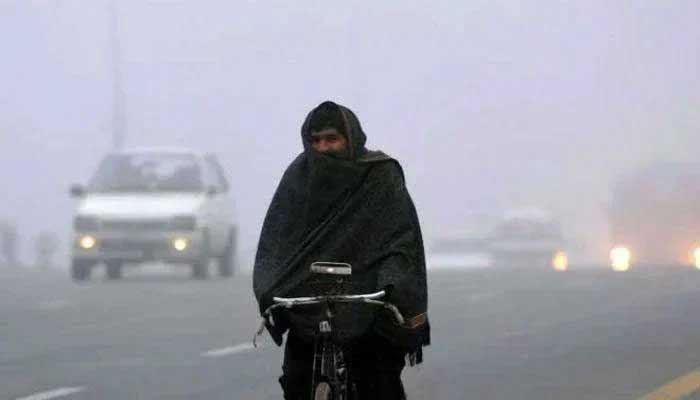
QUETTA: An extreme cold wave continues to grip various districts of Balochistan, including its coastal regions, severely impacting daily routines and normal activities.
According to the Meteorological Department, temperatures in the province’s upper and northern areas have hovered near or dropped below freezing point at several locations.
The department reported a minimum temperature of minus 3 degrees Celsius in Ziarat and 0 degrees Celsius in Zhob.
Similarly, the lowest temperatures stood at 7 degrees Celsius in Sibi and 11 degrees Celsius in Turbat.
Further recordings showed 3 degrees Celsius in Nok Kundi and 1 degree Celsius in Chaman, as per the Meteorological Department.
Cold conditions remain intense even in the coastal belt, with Gwadar registering a minimum of 9 degrees Celsius and Jiwani 11 degrees Celsius.
Balochistan, Pakistan’s largest province, experiences a highly varied winter climate due to its diverse topography, ranging from high plateaus and mountains in the north to arid plains and milder coastal areas in the south.
Winters in the northern and highland areas such as Quetta, Ziarat, Kalat, and Zhob are severe and prolonged, typically from December to February or longer in elevated regions, with temperatures frequently dropping below freezing and often reaching minus 3 to minus 10 degrees Celsius or lower, accompanied by heavy snowfall that disrupts daily life but creates breathtaking snowy landscapes in places like Ziarat’s juniper forests.
In contrast, the central plains like Sibi and Nok Kundi see cooler but less extreme conditions with temperatures generally between 5 and 15 degrees Celsius, rarely falling below zero.
The coastal regions, including Gwadar, Jiwani, and Turbat, enjoy the mildest winters influenced by the Arabian Sea, with minimum temperatures around 9 to 11 degrees Celsius and almost never freezing.
The winter of 2025–2026 has been particularly intense across the province, leading to extended school closures in many areas and significant impacts on routines, while highlighting the stark climatic contrasts that define Balochistan’s seasonal character.