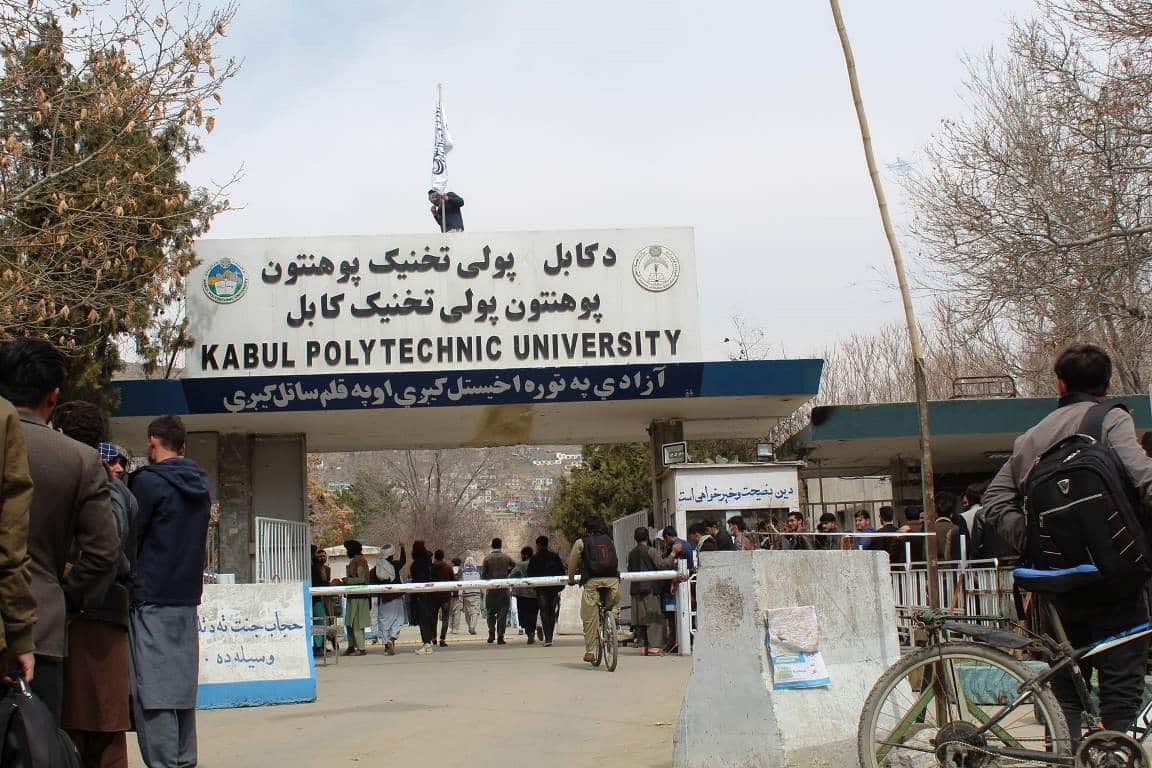
ISLAMABAD: Degrees obtained from educational institutions operating under Afghanistan’s Taliban administration will not be recognised for employment or qualification purposes in Pakistan, according to sources.
The decision means Pakistani citizens holding degrees from Afghan educational institutions will not be able to use them as academic qualifications in either government or private-sector organisations in Pakistan.
Such degrees will also not qualify holders for jobs in the country, the sources said.
The Higher Education Commission (HEC) will not verify or attest degrees issued by educational institutions operating under the Taliban administration, according to the information.
The development is expected to affect Pakistani students who have obtained or are pursuing higher education in Afghanistan.
Pakistan has traditionally required foreign academic qualifications to undergo recognition and verification before they can be used for employment or further education. The latest decision specifically concerns degrees issued by institutions operating under Afghanistan’s current Taliban administration.
The move comes amid continued tensions between Pakistan and Afghanistan and growing scrutiny of institutions and activities linked to the Taliban administration.
Background: Afghanistan’s education crisis under Taliban rule
Afghanistan’s education system has faced growing challenges since the Taliban returned to power in August 2021. The most significant change has been the exclusion of girls and women from secondary and higher education. In August 2026, UNESCO said about 2.4 million Afghan girls had been barred from secondary education, making Afghanistan the only country in the world where girls and women are formally excluded from both secondary and higher education.
The restrictions have also raised concerns about the quality and sustainability of education. A 2025 UNESCO education assessment found that 93% of Afghan children at the end of primary school were still unable to read and understand a simple age-appropriate text. The report attributed weak learning outcomes to shortages of trained teachers, inadequate teaching materials, poor infrastructure and weak assessment systems.
Infrastructure remains another major problem. UNESCO reported that nearly half of Afghanistan’s schools lack proper buildings, while 81% of public schools lacked electricity based on 2024 data. Many classrooms are overcrowded, and secondary schools face shortages of qualified subject-specialist teachers, laboratories, libraries and technology.
The restrictions on women have created an additional challenge. UNESCO has warned that Afghanistan could face a shortage of more than 11,000 qualified female teachers by 2030, as women are prevented from pursuing higher education and, in some cases, from continuing professional roles. The shortage could further affect the quality of education for both girls and boys.
Against this backdrop, any decision by Pakistan to refuse recognition or verification of degrees issued by Afghan institutions would come amid wider concerns about educational standards, institutional capacity, accreditation and the status of Afghanistan’s education system under the Taliban authorities. However, the decision should not automatically be interpreted as a finding that every individual Afghan degree is academically deficient; the precise Pakistani policy and its scope would need to be established from an official notification.
For your news story, this last distinction is important. It keeps the background authoritative and avoids making a blanket claim about the quality of every Afghan university or graduate.