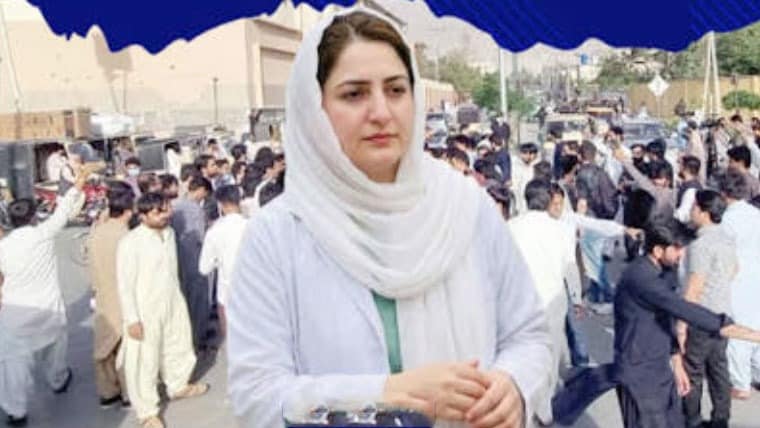
QUETTA: The strike by the Young Doctors Association (YDA) at Civil Hospital Quetta entered its 23rd consecutive day as medical professionals continue to protest a horrific acid attack on a female doctor.
The ongoing boycott of Outpatient Departments (OPDs) and general duties across public hospitals has left thousands of patients facing severe difficulties in accessing healthcare services.
Protesting doctors stated that the acid attack on Dr. Mahnoor Nasir is not merely an assault on an individual, but a direct strike on the entire healthcare system of Balochistan.
They expressed deep concern over the vulnerability of medical staff in government hospitals, accusing the Balochistan provincial government of misusing state resources to shield a controversial official implicated in the matter.
Furthermore, the YDA revealed that over 30 doctors have been suspended simply for demanding a transparent inquiry and legal accountability for the perpetrators.
In response to the government’s heavy-handed tactics, a Grand Doctors Conference is being convened, drawing medical representatives from across the province.
During this conference, the YDA plans to announce a long march from Quetta to Islamabad, preceded by a major protest rally starting tomorrow, June 30, from Civil Hospital Quetta.
The young doctors have put forward a list of immediate demands. They are calling for the immediate removal of both the Secretary of Health and the Medical Superintendent (MS) of Civil Hospital.
Additionally, they are demanding the formation of a high-level judicial commission to investigate the attack on Dr. Mahnoor Nasir, alongside the implementation of robust, permanent security measures for doctors and medical staff across all provincial healthcare facilities.
The Acid Attack Incident in Quetta
The brutal acid attack on Dr. Mahnoor Nasir at Civil Hospital Quetta highlights the escalating vulnerabilities faced by female healthcare professionals in Balochistan.
The incident occurred within the hospital premises—a space meant to be secure—where a corrosive substance was used against her, resulting in severe physical injuries and trauma.
Beyond the immediate physical damage, the assault triggered widespread outrage across the medical community, exposing systemic failures in institutional security and workplace safety for women in public sector healthcare.
The gravity of the situation intensified due to allegations of an official cover-up.
Protesting medical bodies allege that administrative figures, including senior health department officials, have attempted to minimize the incident to protect influential individuals.
This administrative resistance turned a localized criminal act into a full-blown provincial crisis, mobilizing organizations like the Young Doctors Association (YDA) to demand institutional accountability.
Acid violence in Pakistan historically stems from deeply rooted gender discrimination, personal vendettas, or structural power imbalances.
When targeted at a professional woman on duty, it serves as a chilling reminder of the severe security risks and institutional apathy that female doctors must navigate while serving the public.