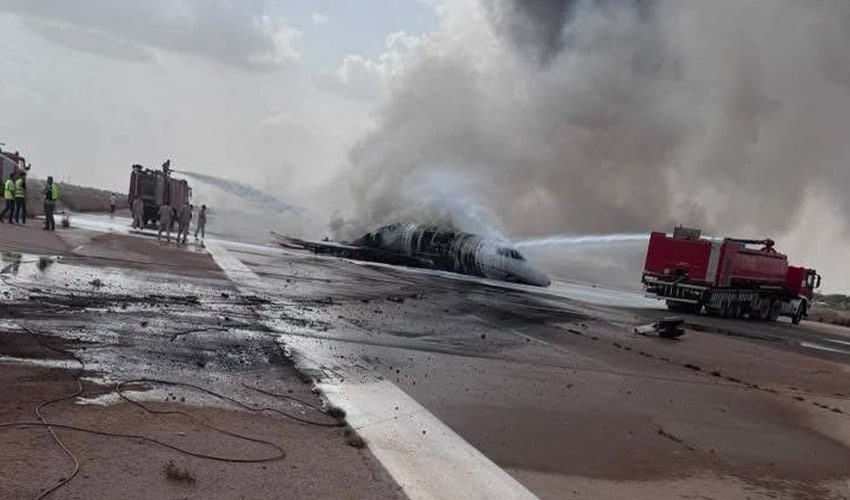
TRIPOLI: VIP plane crash incidents frequently trigger profound geopolitical tremors and nationwide security alerts, as illustrated by the recent emergency unfolding at Misrata International Airport after a Linya Plance Crash.
According to Arab media reports, a private aircraft carrying a prominent figure met with a disastrous accident upon landing, prompting Libyan civil aviation authorities to immediately suspend all flight operations and seal off national airspace.
While preliminary updates remain tight-lipped regarding the exact passenger manifest or the official condition of the high-ranking occupant, the immediate shutdown underscores how vulnerable state transit networks are during sudden crises.
Aviation safety experts point out that transporting high-profile leaders demands rigorous logistical protocols, yet unpredictable mechanical failures, weather anomalies, or runway overruns can turn executive transit into a catastrophic event within seconds.
This breaking development at Misrata serves as a stark reminder of the security vulnerabilities surrounding high-level state mobility, leaving regional observers anxious for official updates following the VIP plane crash.
The Historical Weight of Leadership Aviation Tragedies
Throughout modern history, the vulnerability of high-profile leaders in transit has repeatedly altered geopolitical landscapes.
Aviation disasters involving prominent heads of state, military commanders, and political icons often transcend mere tragic accidents, frequently shifting the balance of power and plunging nations into prolonged political uncertainty.
One of the most consequential historical precedents occurred in July 2016, when a charter flight crash claimed the life of key figures, mirroring how a sudden VIP plane crash can instantly paralyze institutional leadership.
Similarly, the 2010 Smolensk air disaster, which resulted in the death of Polish President Lech Kaczynski alongside numerous high-ranking government and military officials, sent profound shockwaves across Europe and strained international diplomatic relations.
Decades prior, the 1988 plane crash that killed Pakistani President Muhammad Zia-ul-Haq fundamentally reshaped South Asian geopolitics, demonstrating how critical leadership voids can emerge overnight due to sudden structural or operational failures in elite transport.
When examining these catastrophic events, aviation safety analysts emphasize that executive aircraft are typically equipped with state-of-the-art navigation and advanced safety mechanisms.
Yet, they remain susceptible to human error, severe meteorological phenomena, sabotage, or complex mechanical malfunctions.
Because state leaders often maintain aggressive travel schedules under high-pressure scenarios, commercial and private flight protocols are occasionally compromised for expediency.
The psychological impact on the public is equally devastating; citizens look to state figureheads for stability, and losing them without warning creates an immediate vacuum of authority.
ALSO READ: 13 Tourists and Crew Members Killed in Peru Plane Crash
Ultimately, whether investigating historical milestones or modern emergencies like the latest incident, every VIP plane crash highlights the urgent necessity for uncompromising safety standards and resilient security frameworks in elite governmental aviation.