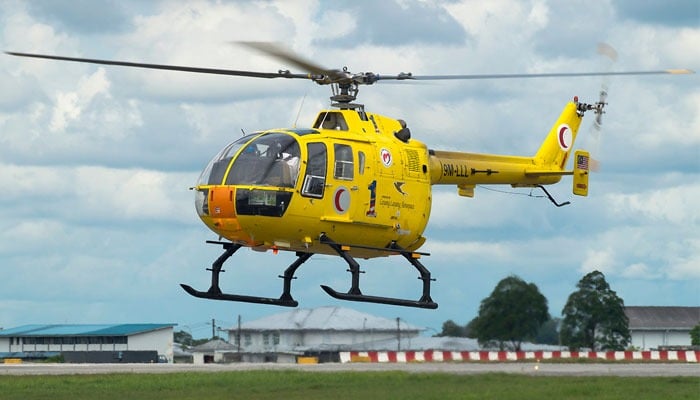
KAULAALMPUR: Malaysia helicopter crash incidents recently captured international concern after a medical transport aircraft met with a severe accident.
A Malaysia helicopter crash occurred near an airport airstrip in the Borneo island state of Sarawak, involving a specialized Flying Doctor Service vehicle carrying five people on board, including a pilot and four Ministry of Health personnel.
Malaysian Health Minister Datuk Seri Dr. Dzulkefly Ahmad noted that the flight was transporting essential medical officers, an assistant medical officer, and nurses to remote communities when tragedy struck.
Emergency response teams, including local fire departments and medical authorities, immediately mobilized search and rescue operations around the site.
While investigations by the Air Accident Investigation Bureau under the Transport Ministry continue to determine the exact technical or environmental causes behind this Malaysia helicopter crash, the event underscores the profound risks faced by frontline medical workers delivering healthcare to isolated regions.
Helicopter Crash Incidents
Aviation safety analysts have observed a troubling pattern of rotorcraft accidents across various global terrains, highlighting systemic vulnerabilities associated with challenging weather conditions, aging fleets, and remote-area navigation hazards.
Helicopters deployed for specialized missions—such as emergency medical services (EMS), disaster relief, search and rescue, and rural healthcare delivery like the Flying Doctor Service—frequently operate in high-risk environments characterized by unpredictable microclimates, dense forestry, and limited ground infrastructure.
Throughout the year, several notable rotary-wing mishaps have triggered renewed scrutiny over operational safety protocols, mandatory maintenance compliance, and the integration of advanced flight-tracking technologies.
Investigators frequently point to human factors, sudden visibility drops, and mechanical failures as primary catalysts for these tragedies.
In response to recurring accidents, international aviation authorities and national regulators have ramped up calls for stricter pre-flight risk assessments, mandatory deployment of flight data monitoring systems, and enhanced pilot training programs specifically tailored for low-level visual flight rules (VFR) in hazardous terrain.
ALSO READ: U.S. Army Black Hawk Helicopter Crashes in Colorado
Ensuring the safety of aerial medical crews remains an urgent priority as governments worldwide strive to balance the vital need for rapid remote healthcare access with uncompromising aviation safety standards.