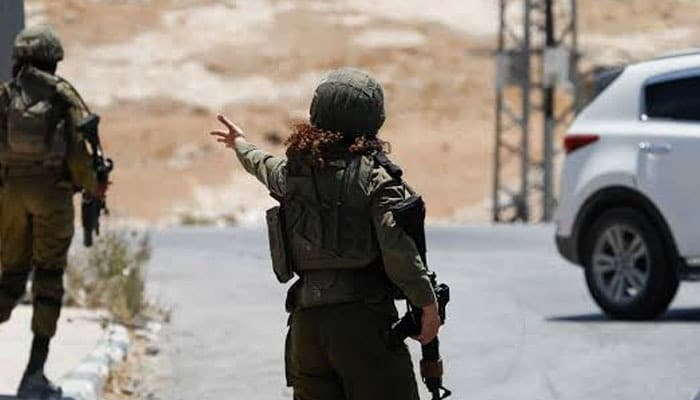
TEL AVIV: Israeli soldiers attacking Palestinians in Gaza are increasingly suffering from Post-Traumatic Stress Disorder (PTSD).
In an interview with Israeli media, a former female Israeli soldier revealed that artillery units in Gaza were told they were only targeting terrorists, but admitted that this was a lie.
She stated that Palestinian civilians want peace and life, and that after leaving the military and realizing how many children had been killed, she went into shock. She added that the haunting sights of dead children and the crying voices of mothers create a lingering sense of guilt that never fades.
Europe’s response to the war in Gaza has exposed profound political divisions, reflecting a complex mix of diplomatic caution, strategic alliances, and vocal human rights advocacy.
While formal consensus among all European Union member states remains elusive, a growing number of European governments and prominent officials have increasingly challenged Israel’s military conduct, expressing alarm over mass civilian casualties and severe humanitarian blockades.
Nations like Spain, Ireland, and Slovenia have led diplomatic resistance, strongly condemning the scale of devastation and taking steps such as formally recognizing Palestinian statehood. Several European states have also joined multilateral efforts or issued joint warnings denouncing man-made humanitarian crises and calling for immediate ceasefires.
However, the continent is far from unified. While some individual ministers and European politicians have explicitly used terms like “genocide” to describe the humanitarian toll in Gaza, central EU institutions and traditional allies of Israel—such as Germany—maintain a much more cautious legal approach.
Brussels maintains that formal determinations of genocide are strictly a matter for international courts. Despite these institutional divides, mounting public protests and intensifying diplomatic pressure continue to challenge Europe’s foreign policy consistency regarding the conflict.