ISLAMABAD: Pakistan has called on the United Nations Security Council (UNSC) to stop India from using the Indus Waters Treaty (IWT) as a tool of coercion, warning that any unilateral move to suspend or weaken the landmark water-sharing agreement could endanger regional peace and violate international law.
Signed in 1960 and brokered by the World Bank, the Indus Waters Treaty regulates the sharing of water from the Indus river system. Under the agreement, Pakistan has primary rights over the western rivers — the Indus, Jhelum, and Chenab — while India has unrestricted use of the eastern rivers — Ravi, Beas, and Sutlej.
India announced in April 2025 that it was placing the treaty “in abeyance” after a deadly militant attack in Indian-administered Kashmir, which New Delhi blamed on Pakistan. Islamabad rejected the accusation and insisted that the treaty cannot be suspended unilaterally under its provisions or international law.
Pakistan has also accused India of violating the treaty through reservoir expansion and river diversion projects on the western rivers.
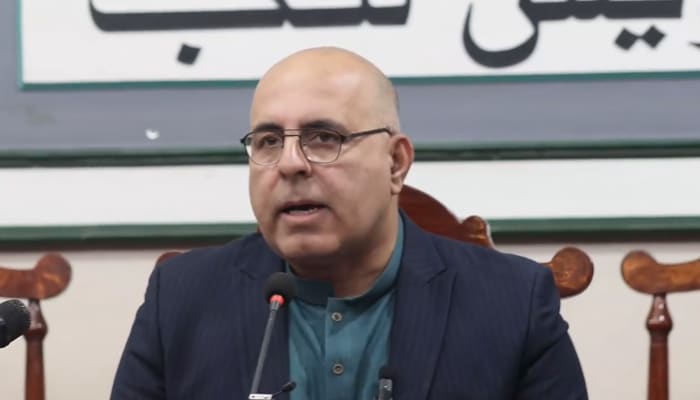
Addressing a UNSC debate on natural resource governance, Pakistan’s Permanent Representative to the United Nations, Ambassador Asim Iftikhar Ahmad, said the lawful and cooperative management of shared transboundary resources is essential for preventing conflicts, resolving disputes peacefully, and fostering good relations between neighboring countries.
He accused India of attempting to “weaponize water” by exploiting its position as the upper riparian state.
“Our eastern neighbor has sought to weaponize water against Pakistan by abusing its status as the upper riparian, unilaterally and illegally placing the Indus Waters Treaty in abeyance, a course of action for which neither the treaty nor the general principles of international law provide any basis whatsoever,” Ahmad told the Council.
The ambassador stressed that the treaty remains legally valid and binding, pointing to the August 2025 Court of Arbitration award that reaffirmed its continued force.
“No state should be permitted to abuse shared water resources as an instrument of coercion or political pressure, much less when it breaches solemn treaty obligations,” he said, urging the UNSC to use preventive diplomacy, peaceful dispute resolution, sanctions, and monitoring mechanisms to address such threats.
Pakistan and India have long disputed hydroelectric projects on the Indus river system, with Islamabad arguing that India’s planned run-of-river hydropower projects could reduce downstream water flows in violation of the treaty.
In August 2025, the Court of Arbitration issued an award clarifying key provisions of the treaty related to the design of India’s hydropower projects on the western rivers. Pakistan described the ruling as a validation of its legal position.
According to Pakistan’s Foreign Office, the court ruled that India must allow the waters of the western rivers to flow for Pakistan’s unrestricted use. It further held that any exceptions for hydroelectric generation must strictly comply with the treaty’s requirements rather than India’s preferred engineering standards or best practices.
Pakistani authorities have also reported unusual fluctuations in river flows in recent months. Islamabad has repeatedly warned that any attempt by India to block or divert Pakistan’s share of water would be viewed as an act of war.
Concluding his remarks, Ambassador Ahmad reiterated Pakistan’s rejection of India’s suspension of the treaty, saying the move threatens the livelihoods of more than 240 million Pakistanis.
Also Read: Pakistan’s Water Rights Protected Under Indus Treaty: Tariq Fazal Chaudhry
“Natural resource governance must remain firmly anchored in the UN Charter and international law,” he said. “International cooperation must strengthen national capacities while respecting national ownership, priorities, and policy space.”