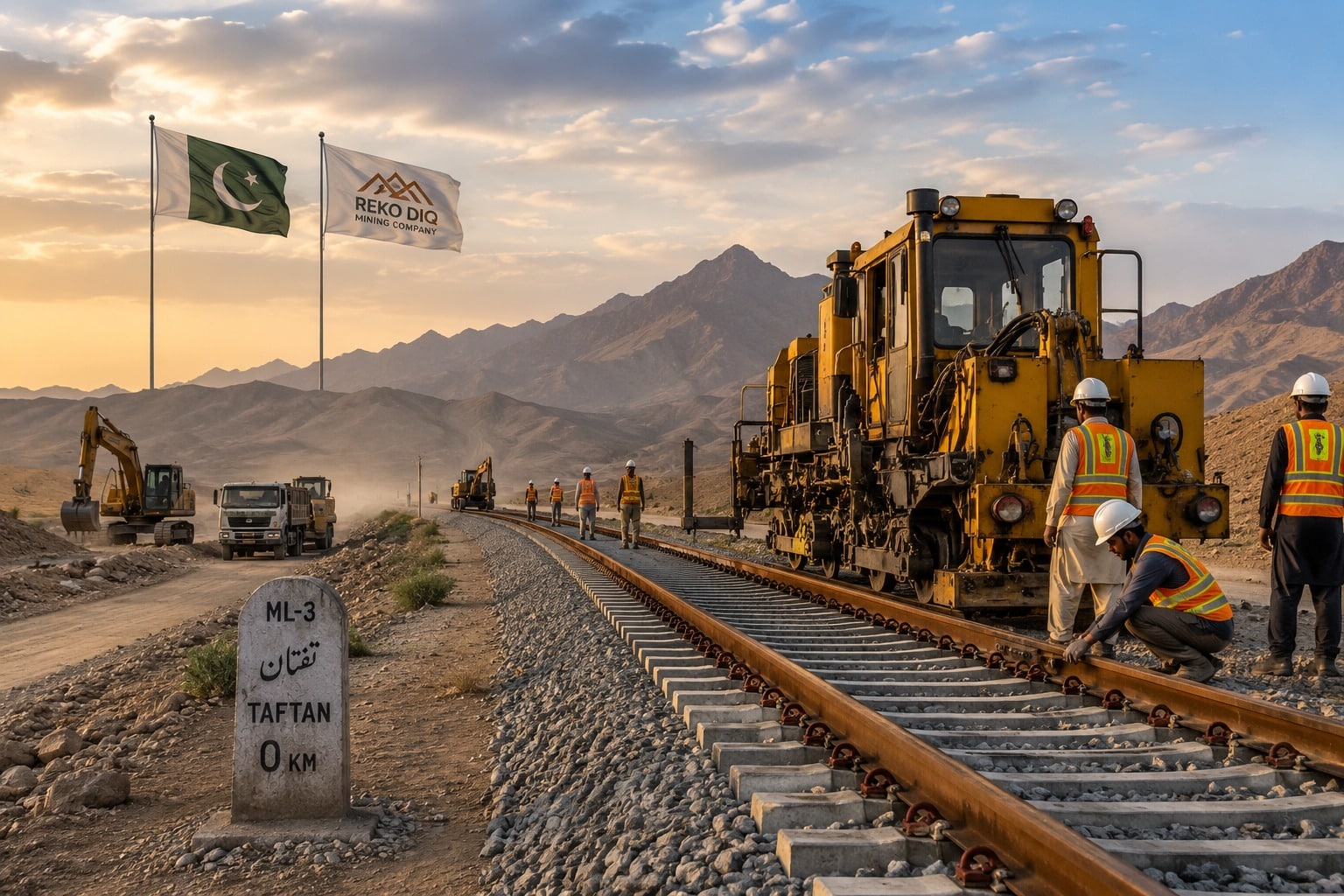
QUETTA: Pakistan has proposed allocating more than Rs46 billion ($165 million) for security as part of a Rs278.6 billion ($995 million) railway upgrade linking Rohri in Sindh province with Taftan in southwestern Balochistan.
According to official planning documents, the project aims to support the development of the Reko Diq copper and gold mine, a joint venture between Canada’s Barrick Gold and the governments of Pakistan and Balochistan. The mine is expected to generate tens of billions of dollars in exports over the coming decades.
The upgraded railway will transport minerals from Reko Diq while strengthening rail connectivity with Iran and Türkiye.
The proposed security budget accounts for nearly 17% of the project’s total estimated cost, reflecting persistent militant threats in Balochistan, where separatist groups have repeatedly targeted infrastructure projects, security forces, and foreign interests.
Pakistan’s Ministry of Planning has submitted the proposal to the Central Development Working Party (CDWP), which reviews major public-sector development projects before they receive final government approval.
The planning document says the existing road network cannot handle the transportation demands of the Reko Diq project.
“The existing road infrastructure in the region is incapable of handling the large-scale transportation requirements of the mining project,” the document states.
It adds that poor road conditions and limited capacity make rail transport essential for the long-term movement of minerals.
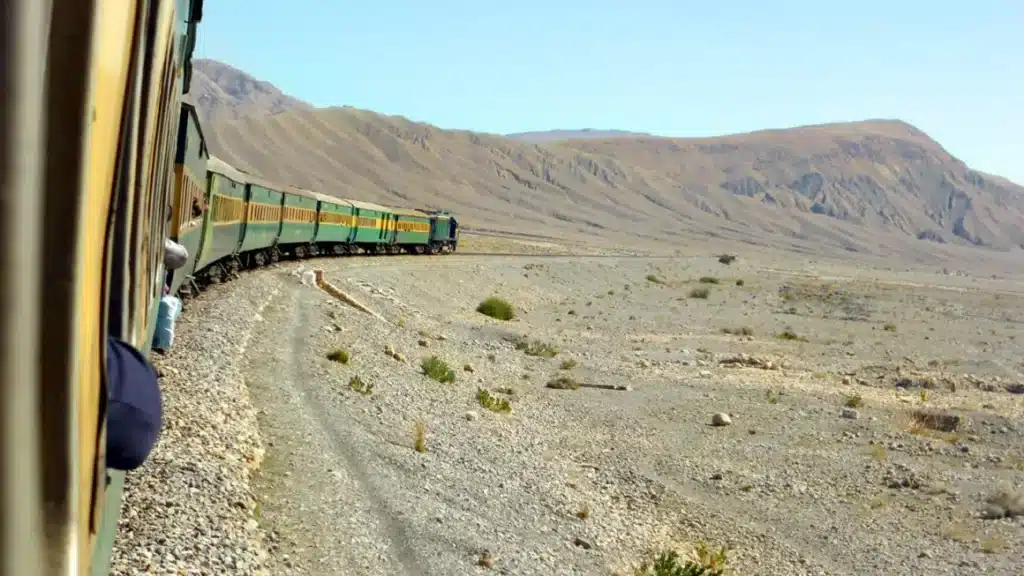
The project is scheduled to run from July 2026 to June 2033. It proposes upgrading 996 kilometers of Pakistan Railways’ ML-3 corridor in two phases.
Funding would come from the federal Public Sector Development Programme (PSDP) and a proposed $390 million bridge financing facility from the Reko Diq Mining Company (RDMC). The government plans to repay the loan by June 2028.
The project includes renewing 831 kilometers of railway track, building 11 new stations, replacing 304 turnouts, rehabilitating bridges and embankments, and installing modern communication systems and track equipment.
The planning paper describes the ML-3 corridor as strategically important for domestic freight and regional trade because it connects Pakistan with Iran and Türkiye, providing access to markets in Europe and Central Asia.
However, Planning Commission reviewers raised several concerns before recommending the project for approval.
They said the sponsoring ministry had not submitted a quantified cost-benefit analysis, making it difficult to assess the project’s financial viability.
The reviewers also requested detailed traffic forecasts, revenue projections, a revenue-sharing mechanism with RDMC, and estimates for future operation and maintenance costs.
Officials questioned whether projected demand justified increasing the corridor’s capacity from two train pairs to 26 train pairs. They also highlighted financial risks associated with repaying the proposed bridge financing.
Technical reviewers asked the Railways Ministry to submit detailed engineering designs, justify project costs, clarify land acquisition plans, explain procurement and implementation strategies, and provide a comprehensive security plan for operating trains through militancy-affected areas of Balochistan.
Arab News sought comments from Railways Minister Hanif Abbasi and Pakistan Railways Chairman Mazhar Ali Shah but did not receive responses before publication.
Last year,Hanif Abbasi had siad that RDMC had agreed to provide $390 million in bridge financing for the Rohri-Nokundi section of the railway.
He said the upgraded line would transport around one million tons of copper annually, eliminating the need for more than 28,000 truck trips each year.
Also Read: US approves $1.3 billion loan for Pakistan’s Reko Diq mine
Abbasi also said the government had agreed to provide security for the railway infrastructure.
“As far as security is concerned, we have an agreement with RDMC. Track security will be the responsibility of the state. The Federal Constabulary will be deployed on these trains,” he said.