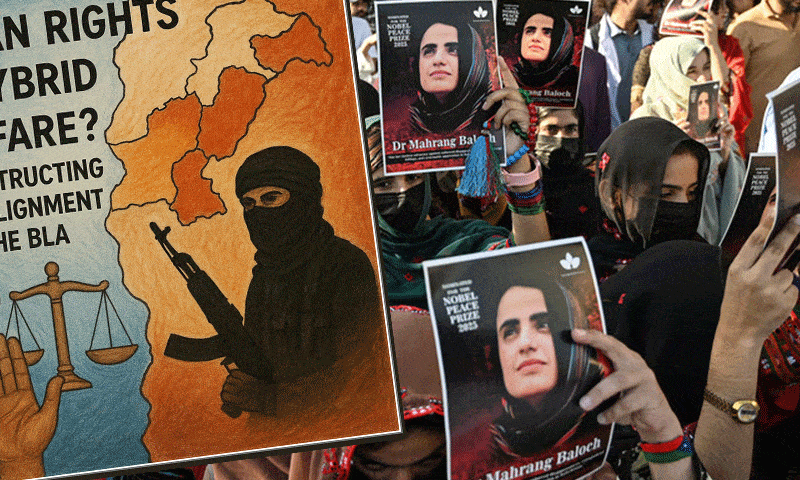
QUETTA: The Baloch Yakjehti Committee (BYC), political face of the Fitna al Hindustan, has intensified its social media campaign against state institutions and the judiciary in Pakistan, following the sentencing of Mahrang Baloch (Langove), Shah Jee Sibghatullah and other leaders.
The group described the verdicts as an attempt to suppress Baloch political voices. However, critics said the narrative presents only one side of a complex situation in Balochistan.
They said the campaign ignores security challenges, including terrorism, sabotage and threats to civilian lives and property in the province.
Judicial process and legal framework
Critics stressed that Pakistan operates under a constitutional system where courts issue rulings based on law and evidence.
They said citizens have the right to challenge verdicts through appeals, but rejecting the entire judicial process on disagreement alone is not justified.
They added that the Constitution provides full legal remedies for review and appeal.
Security situation in Balochistan
Observers noted that Balochistan has faced long-term instability, including militancy, targeted killings and sabotage.
They said civilians, including workers, teachers, engineers, doctors, transporters and security personnel, have been among the victims.
They added that terrorism and armed violence have caused the greatest damage to development and stability in the province.
Calls for rejection of violence
Critics said all forms of violence must be condemned without exception.
They said attacks on civilians, workers, passengers or public property cannot be justified under any political or ideological cause.
They stressed that human life must remain above all political narratives.
Political activity and legal limits
Observers said the Constitution of Pakistan guarantees political expression and protest within legal boundaries.
They said the state has a responsibility to maintain law and order and protect citizens.
They added that enforcement actions should not always be interpreted as suppression of political activity.
Development and economic priorities
Observers said Balochistan’s future is linked to education, employment, industry, investment and political stability.
They highlighted projects such as the China-Pakistan Economic Corridor (CPEC) and Gwadar Port as key drivers of economic growth.
They said legitimate political demands over development benefits are part of democratic rights, but obstruction of development projects may harm long-term public interest.
Public needs and governance
They said people in Balochistan need education, healthcare, infrastructure, digital access and job opportunities.
They added that sustained unrest and protest politics have failed to resolve structural problems.
Role of youth
Observers said young people and students are the future of the province.
They called for engagement in education, skills development, dialogue and constructive political participation.
Political choices ahead
They said Balochistan faces a choice between violence and peaceful politics, instability and development, isolation and opportunity, and unrest and stability.
They said democratic institutions in Pakistan provide multiple constitutional avenues for political participation.
Rule of law
Observers said no individual or organisation is above the law.
They added that public welfare depends on stability, development and education rather than confrontational narratives.
Outlook
They said Balochistan deserves peace, dignity and equal opportunities.
They added that these goals can be achieved through constitutional struggle, democratic engagement and development policies.
They warned that narratives promoting division and confrontation risk weakening the province’s future.
They said poverty, unemployment, underdevelopment and terrorism remain the key challenges.
They concluded that law enforcement, judicial respect and peaceful political engagement form the foundation of a stable democratic society.