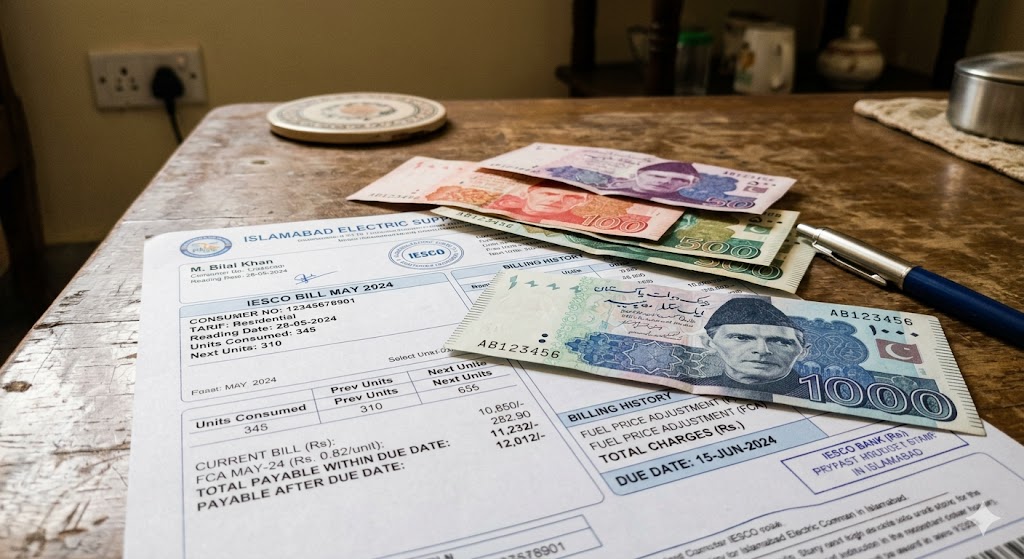
ISLAMABAD: The Central Power Purchasing Agency (CPPA) has formally submitted a petition to the National Electric Power Regulatory Authority (NEPRA) to increase the electricity tariff across Pakistan by 82 paise per unit.
According to NEPRA, this request has been filed under the monthly Fuel Price Adjustment (FCA) mechanism for the month of May.
A public hearing to review the petition is scheduled for June 30, where a technical evaluation will determine whether the power prices will be increased or maintained.
Source indicators suggest that if NEPRA approves the petition, an additional financial burden of 12 billion rupees will be passed on to power consumers.
In its official stance, the CPPA clarified that the average fuel cost for power generation during the month of May stood at 9 rupees and 25 paise per unit.
Context: Pakistan’s Power Sector and Tariff Dynamics
Pakistan’s electricity pricing structure relies on a multi-tiered base tariff combined with monthly variable adjustments.
Under this framework, end-consumer prices are highly volatile and significantly influenced by fluctuating global commodity rates.
Because the country depends heavily on imported fuels—such as Re-gasified Liquefied Natural Gas (RLNG), coal, and furnace oil—any shifts in international energy markets or depreciation of the Pakistani Rupee immediately drive up generation costs.
These variations are passed directly to consumers through monthly Fuel Price Adjustments (FCA), like the current 82 paise petition.
Beyond fuel costs, the single largest component inflating Pakistan’s per-unit electricity price is “capacity charges.
” Under take-or-pay contracts signed with Independent Power Producers (IPPs), the government must pay for a baseline level of available power generation capacity regardless of actual electricity consumed. This creates an immense structural imbalance.
Compounding the problem are systemic inefficiencies within the power distribution companies (DISCOs).
High Transmission and Distribution (T&D) losses, technical faults, and widespread electricity theft create massive financial deficits.
To recover these lost revenues, the regulator periodically adjusts tariffs upward, shifting the economic burden onto paying consumers.
Additionally, the government has introduced fixed monthly charges alongside volumetric unit rates to secure predictable revenues, manage the energy sector’s massive circular debt, and meet fiscal conditions tied to international financial assistance programs.