WASHINGTON: Israel has launched a new military strike in Lebanon, disrupting ongoing efforts to establish peace in the Middle East.
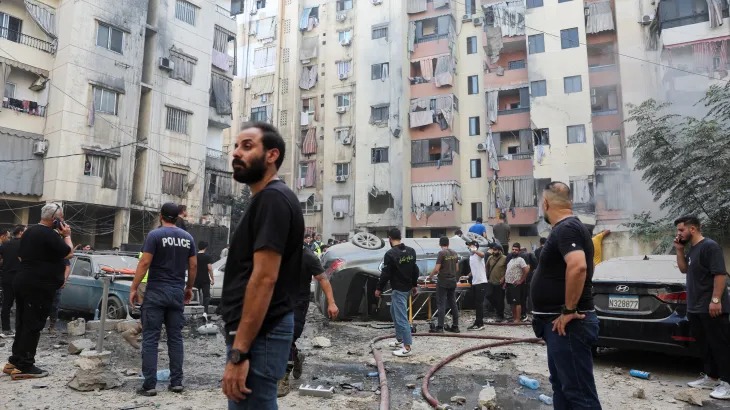
According to Arab media reports, the Israeli military fired four additional missiles into Beirut. Concurrently, Israeli forces resumed bombardments in Gaza, resulting in reported casualties and injuries among unarmed Palestinians.
In response to the escalation, U.S. President Donald Trump publicly expressed his strong disapproval of the strike on the Lebanese capital via social media.
Writing on his platform, Truth Social, the U.S. President stated that Israel’s attack on Beirut should not have occurred.
He explicitly demanded that Israel cease its bombing campaign in Lebanon and urged Hezbollah to halt its attacks on Israel.
Calling on both sides to exercise restraint, President Trump emphasized that negotiations are very close to a breakthrough, assuring that peace will ultimately be established across Lebanon and the wider region.
Israel’s Direct Operations in Gaza and Lebanon
The recent strikes in Beirut and Gaza underscore Israel’s dual-front military strategy, which has systematically reshaped the security landscape of the Middle East.
In Gaza, Israel’s military campaign has led to unprecedented structural devastation and a staggering humanitarian crisis, characterized by continuous aerial bombardments targeting high-density urban areas.
While Israel maintains these operations are essential to dismantle militant infrastructure, the offensive has resulted in massive civilian casualties and the near-total displacement of the enclave’s population, drawing widespread international condemnation.
Simultaneously, Israel has expanded its parameters of engagement into Lebanon, striking deep into major urban centers like Beirut.
This northern front is driven by the objective of neutralizing Hezbollah’s launch sites and command structures to secure Israel’s northern border.
However, the use of heavy missile strikes in densely populated Lebanese neighborhoods has escalated fears of a total regional war.
By actively engaging both Gaza and Lebanon at the same time, Israel’s intensive military operations continue to severely challenge international diplomatic frameworks.
This makes permanent ceasefires incredibly difficult to secure, even as global mediators push for immediate de-escalation.