TEHRAN: Iran has announced that it will not impose tolls on commercial ships passing through the Strait of Hormuz, but will instead charge fees for navigation support, maritime security, and environmental services provided jointly with Oman.
Deputy Foreign Minister Kazem Gharibabadi, in an interview with Iran’s semi‑official Mehr news agency, categorically stated that the Islamic Republic “does not seek to collect passage fees, transit duties, or payments for transit rights” in exchange for using the strategic waterway.
However, Gharibabadi clarified that the Strait of Hormuz lies “entirely within the territorial waters of Iran and Oman,” and that both nations have sovereign rights over the strait under international maritime law. Because Tehran and Muscat jointly provide a range of maritime services – including navigation assistance, search and rescue operations, security and safety measures, and environmental clean‑up in case of pollution – they are considering charging “appropriate compensation” for these services.
The deputy foreign minister stressed that any fees would be consistent with international law, while acknowledging that the arrangement “will not 100% satisfy some countries.”
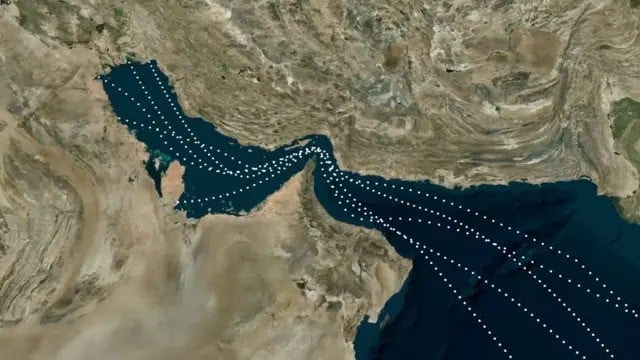
The Strait of Hormuz connects the Persian Gulf with the Gulf of Oman and the Arabian Sea, and is the world’s most important oil shipping route. Roughly 20 percent of all seaborne oil passes through this narrow choke point – about 16 million barrels of crude and 3.8 million barrels of refined products daily. Any disruption in the strait has an immediate impact on global energy markets and oil prices