
ISLAMABAD: The Secretary of the Russian Security Council, Sergei Shoigu, has raised serious concerns over the growing threats of terrorism and drug trafficking originating from Afghanistan.
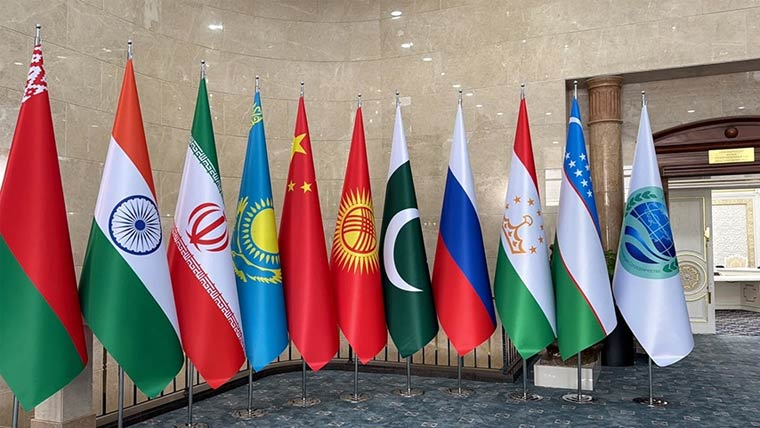
Addressing the 21st meeting of the Shanghai Cooperation Organisation (SCO) Security Council Secretaries in Bishkek, Shoigu claimed that between 18,000 and 23,000 fighters belonging to over 20 extremist groups are currently active in the country, posing a severe threat to regional security.
While acknowledging that the Taliban are actively fighting against ISIS-Khorasan (ISIS-K), the Russian official noted that several extremist factions still remain completely outside of the Taliban’s control.
According to Russian news agencies, Shoigu emphasized that the situation in Afghanistan has become a pivotal issue for regional stability, highlighting that around 3,000 ISIS-K fighters are present in the country.
He noted that during 2025, ISIS carried out 12 major terrorist attacks, resulting in the deaths of 40 military personnel and 25 civilians, while leaving over 50 others injured.
Furthermore, the Russian official pointed out an increasing influx of Uyghur, Tajik, and Uzbek fighters into Afghanistan from Syria—some of whom were previously associated with Hay’at Tahrir al-Sham—which has further heightened regional security anxieties.
He added that while the Taliban’s security agencies are monitoring these incoming extremist elements, certain Islamist groups still operate beyond their authority.
On the issue of narcotics, Shoigu discussed the Taliban government’s anti-drug measures, stating that since they came to power, poppy cultivation and opium production in Afghanistan have dropped by approximately 90%. However, he warned that the production of synthetic drugs, particularly methamphetamine, has seen a rise, with over 30 tons of synthetic drugs seized along Afghanistan’s borders over the course of 2025.
The Russian official added that due to the severe economic crisis gripping the nation, around 4 million people in Afghanistan remain financially dependent on drug-related crop cultivation.
During the meeting, Shoigu also criticized Western nations, stating that roughly $590 billion in assets belonging to countries like Russia, Cuba, Venezuela, Iraq, Iran, North Korea, Libya, and Afghanistan have been frozen in the West. He suggested that this current dynamic may prompt many countries worldwide to reconsider keeping their national reserves stored in Western nations.



