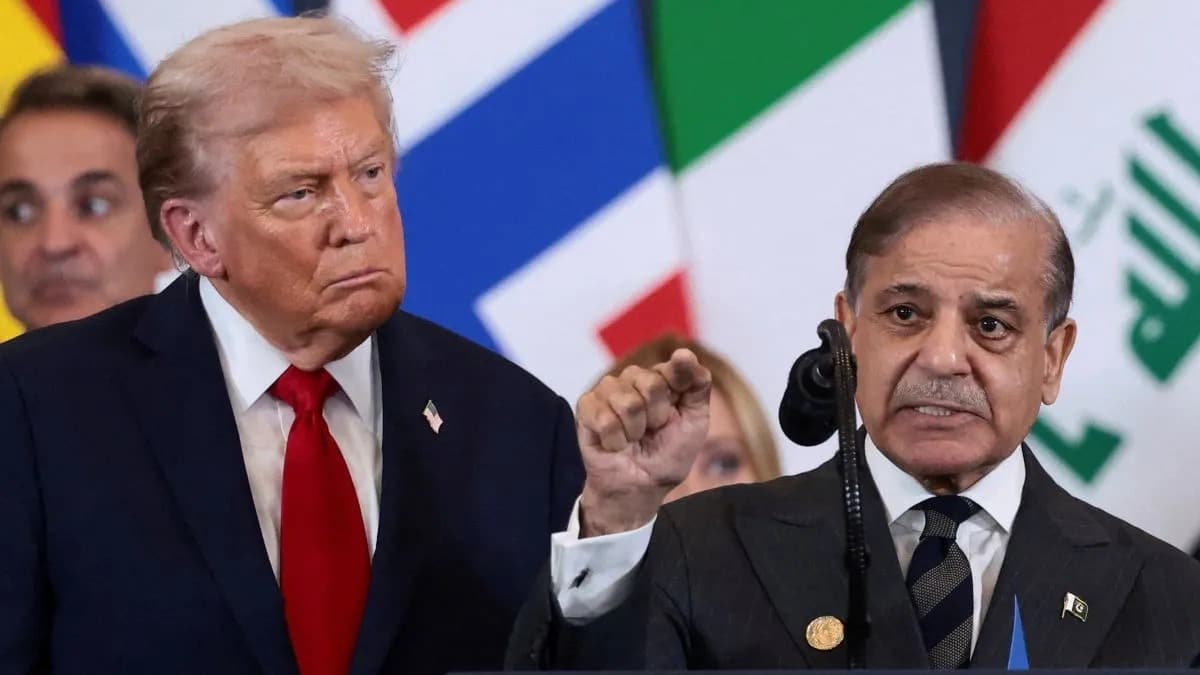
ISLAMABAD: Prime Minister Shehbaz Sharif on Wednesday welcomed US President Donald Trump’s decision to pause “Project Freedom,” an operation aimed at guiding stranded commercial vessels through the Strait of Hormuz.
Shehbaz Sharif said the move would support regional peace and stability after Pakistan and several other countries urged Washington to halt the operation.
Commercial vessels have remained stranded since war broke out in late February following U.S.-Israeli strikes on Tehran and Iran’s subsequent blockade of the waterway.
Trump announced the pause on Tuesday after rising tensions around the strait and reported exchanges of fire between U.S. and Iranian forces.
Shehbaz Sharif thanked Trump for what he called timely and constructive leadership in responding to requests from Pakistan and other countries, including Saudi Arabia.
He said the decision could help advance peace, stability and reconciliation during a sensitive period.
The Strait of Hormuz, a key route for global energy shipments, has remained a focal point of tensions between the United States and Iran since the conflict began.
Despite the pause, Trump said a U.S. naval blockade on Iranian ports would continue.
I am grateful to President Donald Trump for his courageous leadership and timely announcement regarding the pause in Project Freedom in the Strait of Hormuz.
President Trump’s gracious response to the request made by Pakistan and other brotherly countries, particularly the…
— Shehbaz Sharif (@CMShehbaz) May 6, 2026
He also said progress had been made toward a possible agreement with Iran but gave no further details.
Tensions had escalated earlier this week after the launch of “Project Freedom,” with Iran warning against U.S. interference in the waterway.
Iranian media reported that missiles struck a U.S. Navy vessel in the strait, but U.S. Central Command denied the claim and said American forces had targeted small Iranian boats.
Sharif said Pakistan would continue to support diplomatic efforts to reduce tensions.
He reaffirmed Pakistan’s commitment to resolving conflicts through dialogue and diplomacy.
He expressed hope that ongoing efforts would lead to a lasting agreement and durable regional stability.