Oil Prices Surge Past $116 as Middle East Tensions Escalate

Global oil markets surged on Monday as escalating tensions in the Middle East fueled fears of a wider conflict. Prices spiked sharply after Iran warned it was fully prepared for a potential US ground invasion. Brent crude, the global benchmark, climbed more than 3%, crossing $116 per barrel—its highest level since March 19, when it briefly touched $119 during earlier phases of the crisis. Tehran’s rhetoric intensified geopolitical concerns, with a senior Iranian parliamentary official warning that the country was ready to confront US forces and retaliate against their regional allies. The situation further deteriorated over the weekend as Iranian-backed Houthi forces launched missiles at Israel for the first time in the ongoing war. Simultaneously, Israel expanded its military operations into southern Lebanon, opening another front in the conflict. Strait of Hormuz disruption deepens crisis The effective closure of the Strait of Hormuz has severely disrupted global energy supplies. As a critical chokepoint handling nearly one-fifth of the world’s oil and liquefied natural gas, any disruption in the strait has far-reaching consequences. Analysts now warn the world could be heading toward one of the most severe energy crises in decades. Global markets react sharply Asian stock markets reacted negatively to the escalating crisis, with Japan’s Nikkei 225 and South Korea’s KOSPI both falling more than 4% in early trading. Crude prices have surged nearly 60% since the conflict began on February 28, triggering a wave of rising fuel costs worldwide. Several countries have already begun implementing emergency energy-saving measures to cope with the situation. US pressure and diplomatic signals US President Donald Trump has warned Iran that its energy infrastructure could be “obliterated” if it fails to ease restrictions over the Strait of Hormuz by April 6. Although he recently extended the deadline by 10 days, he also hinted at a possible diplomatic breakthrough. “I do see a deal in Iran… Could be soon,” he said while speaking to reporters aboard Air Force One. However, Iran has rejected the US proposal, instead demanding war reparations and formal recognition of its control over the strait. Greg Newman, CEO of Onyx Capital Group, cautioned that the full impact of the disruption has yet to materialize. He noted that Europe is only beginning to feel supply shortages due to delays in oil shipment cycles. “Brent is starting to reflect reality, and we think it’s a steady rise toward $120 and beyond,” he said, adding that the scale of disruption remains unprecedented and not fully priced into global markets. While Iran has permitted limited passage for non-US and non-Israeli vessels, overall maritime traffic remains significantly reduced. Pakistan’s Foreign Minister Ishaq Dar confirmed that 20 Pakistani-flagged ships were allowed to transit the strait, while Malaysian Prime Minister Anwar Ibrahim reported similar clearance for Malaysian vessels. Despite these allowances, daily ship traffic remains well below pre-war levels of approximately 120 vessels, underscoring the ongoing strain on global energy supply chains.


DUBAI: Global oil markets surged on Monday as escalating tensions in the Middle East fueled fears of a wider conflict. Prices spiked sharply after Iran warned it was fully prepared for a potential US ground invasion.

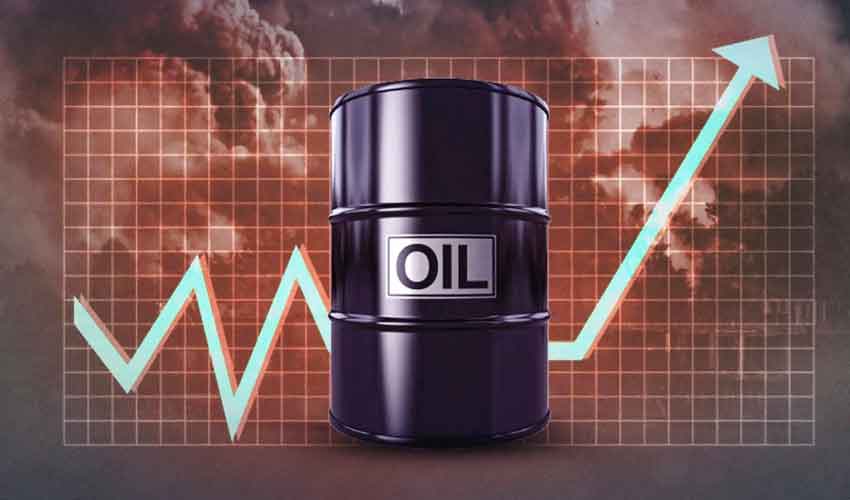
Brent crude, the global benchmark, climbed more than 3%, crossing $116 per barrel—its highest level since March 19, when it briefly touched $119 during earlier phases of the crisis.

Tehran’s rhetoric intensified geopolitical concerns, with a senior Iranian parliamentary official warning that the country was ready to confront US forces and retaliate against their regional allies.

The situation further deteriorated over the weekend as Iranian-backed Houthi forces launched missiles at Israel for the first time in the ongoing war. Simultaneously, Israel expanded its military operations into southern Lebanon, opening another front in the conflict.

Strait of Hormuz disruption deepens crisis

The effective closure of the Strait of Hormuz has severely disrupted global energy supplies. As a critical chokepoint handling nearly one-fifth of the world’s oil and liquefied natural gas, any disruption in the strait has far-reaching consequences.

Analysts now warn the world could be heading toward one of the most severe energy crises in decades.

Global markets react sharply

Asian stock markets reacted negatively to the escalating crisis, with Japan’s Nikkei 225 and South Korea’s KOSPI both falling more than 4% in early trading.

Crude prices have surged nearly 60% since the conflict began on February 28, triggering a wave of rising fuel costs worldwide. Several countries have already begun implementing emergency energy-saving measures to cope with the situation.

US pressure and diplomatic signals

US President Donald Trump has warned Iran that its energy infrastructure could be “obliterated” if it fails to ease restrictions over the Strait of Hormuz by April 6. Although he recently extended the deadline by 10 days, he also hinted at a possible diplomatic breakthrough.

“I do see a deal in Iran… Could be soon,” he said while speaking to reporters aboard Air Force One.

However, Iran has rejected the US proposal, instead demanding war reparations and formal recognition of its control over the strait.

Greg Newman, CEO of Onyx Capital Group, cautioned that the full impact of the disruption has yet to materialize. He noted that Europe is only beginning to feel supply shortages due to delays in oil shipment cycles.

“Brent is starting to reflect reality, and we think it’s a steady rise toward $120 and beyond,” he said, adding that the scale of disruption remains unprecedented and not fully priced into global markets.

While Iran has permitted limited passage for non-US and non-Israeli vessels, overall maritime traffic remains significantly reduced. Pakistan’s Foreign Minister Ishaq Dar confirmed that 20 Pakistani-flagged ships were allowed to transit the strait, while Malaysian Prime Minister Anwar Ibrahim reported similar clearance for Malaysian vessels.

Despite these allowances, daily ship traffic remains well below pre-war levels of approximately 120 vessels, underscoring the ongoing strain on global energy supply chains.

Scroll to Top