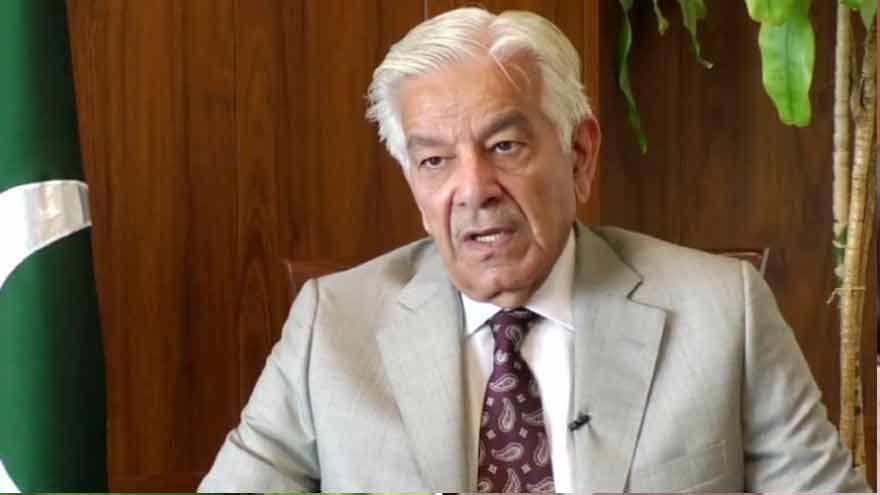
ISLAMABAD: Defense Minister Khawaja Asif has issued a stark warning to the Afghan Taliban regime, declaring that Pakistan’s patience has expired and that the country is now engaged in “open confrontation” following cross-border aggression.
In a strongly worded statement, the Defense Minister outlined Pakistan’s decades of patience and hospitality toward Afghans, while accusing the Taliban of betraying regional stability by becoming what he described as a “proxy of India.”
“After NATO forces withdrew, it was expected that peace would prevail in Afghanistan and that the Taliban would focus on the interests of the Afghan people and regional stability,” Asif stated. “However, the Taliban turned Afghanistan into a colony of India.”
The Minister accused the Taliban regime of gathering terrorists from around the world on Afghan soil and exporting terrorism to its neighbors. He further criticized the regime for depriving their own people of basic human rights, particularly women, stating they had taken away “the rights that Islam grants them.”
Asif detailed Pakistan’s extensive diplomatic efforts to maintain stability, noting that Islamabad made every effort “both directly and through friendly countries” and carried out extensive diplomacy. However, he claimed these efforts were undermined as “the Taliban became a proxy of India.”
Addressing the ongoing military operation, the Defense Minister affirmed that Pakistani armed forces are giving a “decisive response” to aggression directed at the country.
“In the past, Pakistan’s role has been positive. It has hosted five million Afghans for 50 years. Even today, hundreds of thousands of Afghans are earning their livelihood on our soil,” Asif emphasized, contrasting Pakistan’s hospitality with what he termed as betrayal by the Taliban regime.
The Minister then delivered a firm warning: “Our patience has reached its limit. Now it is open confrontation. Now there will be decisive action.”
In a pointed message to the Taliban leadership, Asif concluded: “Pakistan’s army has not come from across the seas — we are your neighbors, and we know your reality well.”
The statement marks a significant rhetorical escalation, framing the current military operation not merely as a retaliatory action but as the beginning of a sustained confrontational phase between the two neighbors.