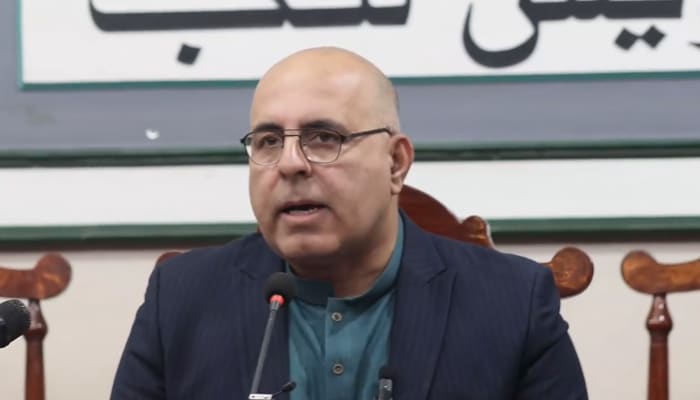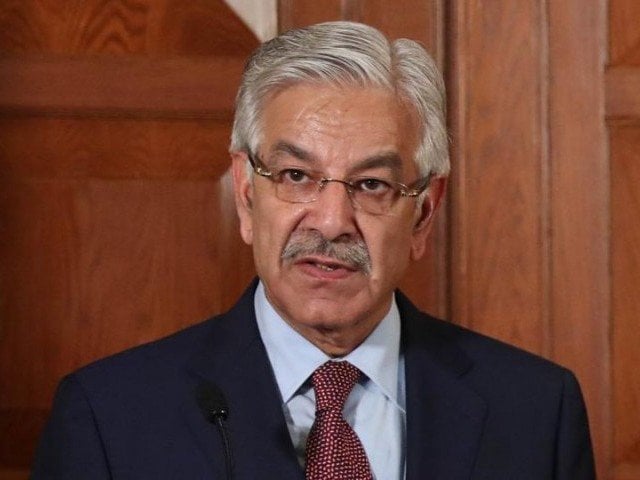
ISLAMABAD: In a sharp escalation of rhetorical tensions, Pakistan’s Defense Minister Khawaja Asif has launched a pointed critique against what he termed the “hypocritical face” of Indian liberals, questioning their relevance and standing in a society he claims is dominated by Hindutva ideology.
The minister took to the social media platform X (formerly Twitter) on Monday to articulate his views, suggesting that when confronted with facts and logical arguments, these liberals are reduced to making empty noise. “If answered with facts and arguments, Indian liberals will be left with nothing but noise,” Asif stated in his post, framing them as a group struggling to maintain credibility.
His commentary delved into the socio-political landscape of India, asserting that liberals are merely attempting to “justify their existence” in an environment increasingly shaped by majoritarian nationalist politics. He further claimed that their societal acceptance is so diminished that “people in India are not even ready to rent accommodation to such so-called liberals,” implying a severe marginalization.
Analysts view Asif’s remarks as part of the ongoing war of words between the two nations, often extending beyond military and diplomatic spheres into cultural and ideological critiques. The defense minister’s decision to comment on India’s internal social dynamics underscores the depth of the political divide, using the platform to challenge the narrative and influence of India’s liberal voices while positioning the critique within the broader context of bilateral discord.
Meanwhile the Space and Upper Atmosphere Research Commission (Suparco) has released its astronomical forecast regarding the moon sighting for the holy month of Rajab-ul-Murajjab 1447 Hijri.
Furthermore, the new moon of Rajab-ul-Murajjab is expected to be born on December 20, 2025, at 06:43 am (PST). .
The commission stated that astronomical models and observational data were used to determine the timing of the lunar conjunction and the likelihood of moon visibility.