DHAKA: The death of a prominent Bangladeshi youth leader in Singapore has ignited protests and sharp political tensions in Dhaka, with demonstrators directing anger toward neighboring India.
Sharif Osman Hadi, 32, the spokesperson for the student protest group Inqilab Moncho, died on Thursday night from injuries sustained in an assassination attempt a week prior. Masked attackers shot Hadi as he left a mosque in Dhaka on December 12. After initial treatment in Bangladesh, he was airlifted to Singapore General Hospital under government supervision, where he succumbed to his wounds.
His death was announced by his group on Facebook, declaring him a “martyr in the struggle against Indian hegemony.” This framing has fueled the public response.
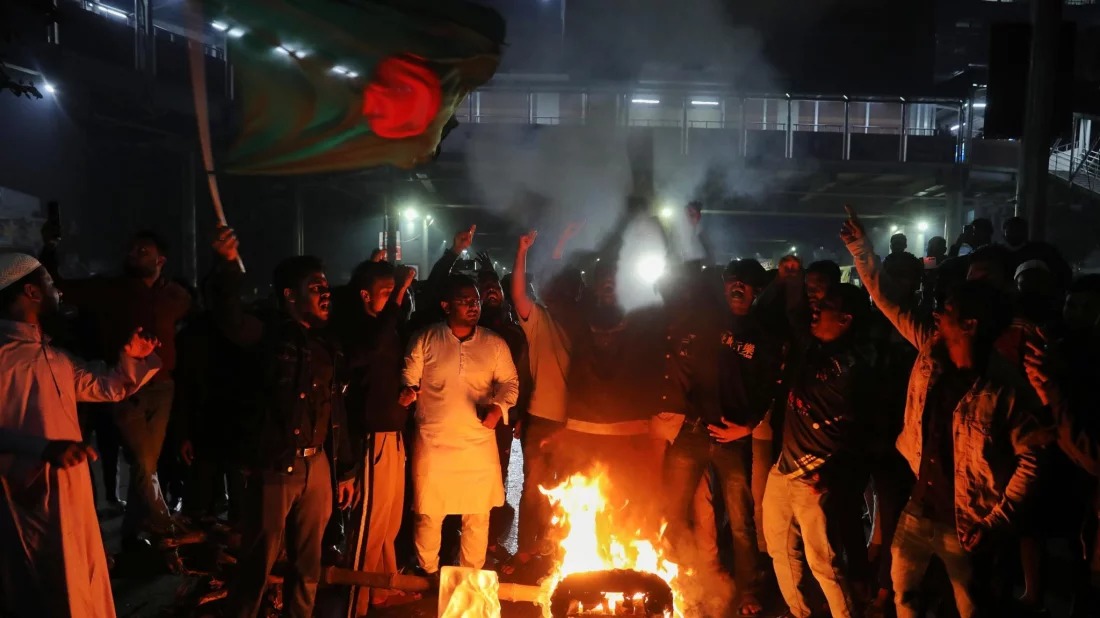
Shortly after the news spread, student organizations including the Dhaka University Central Students’ Union (Ducsu) and the National Citizen Party’s student wing launched a sit-in demonstration at Shahbagh. Protesters gathered at the Raju Memorial Sculpture, chanting slogans demanding justice for Hadi’s killing. Police heightened security in the area with barricades, though traffic reportedly remained normal.
Hadi was a recognizable figure from the 2024 student uprising, and his killing has tapped into broader sentiments regarding regional influence. While the Singapore Ministry of Foreign Affairs confirmed his death and is assisting with repatriation, the focus within Bangladesh has quickly shifted to the political symbolism of his passing and the grievances it has amplified, with India emerging as a focal point of protester rhetoric.
Last month a Bangladeshi court on Monday handed down the death sentence to former prime minister Sheikh Hasina, concluding a lengthy trial that found her responsible for ordering a violent crackdown on a student-led uprising last year.
The verdict comes just months before the parliamentary elections expected in early February.
With the Awami League already barred from participating, the ruling has raised fears of renewed political instability ahead of the polls.
The International Crimes Tribunal, Bangladesh’s domestic court that handles war crimes cases delivered the judgment in Dhaka under heavy security.
Hasina was not present, having fled to India in August 2024.
Her conviction can still be challenged in the Supreme Court.
However, her son and political adviser, Sajeeb Wazed, told Reuters a day earlier that they would not file an appeal unless a democratically elected government takes power with the Awami League included in the electoral process.